Category: goodwe ESA

Read More

GoodWe 100kWh Commercial Battery Storage in NSW: Maximise Solar & Reduce Grid Reliance

For businesses across New South Wales, installing commercial solar is a major step towards reducing electricity costs. But without battery storage, much of the excess solar energy generated during the day is often exported to the grid instead of being used when your business needs it most.

The GoodWe BAT-C 100kWh commercial battery is designed to solve that problem.

Paired with the GoodWe ET 50kW Commercial Hybrid Inverter, it provides a reliable, scalable energy storage solution that helps businesses store excess solar power, reduce grid dependence, and better manage electricity usage throughout the day.

Whether you operate a warehouse, factory, office, retail store, farm, school, or hospitality venue, a GoodWe 100kWh Commercial Battery Storage in NSW can help you get more value from your solar investment.

Why NSW Businesses Are Investing in 100kWh Battery Storage

Many commercial properties generate plenty of solar energy during daylight hours, but their peak electricity usage often happens in the late afternoon, evening, or during periods of high demand.

A 100kWh battery bridges that gap.

How it works:

Solar Panels → GoodWe Battery → Your Business

Instead of exporting surplus solar energy for a relatively low feed-in tariff, your business stores that energy and uses it later when solar production drops or electricity prices increase.

Key benefits include:
  • Increased solar self-consumption.
  • Reduced reliance on expensive grid electricity.
  • Better management of peak electricity demand.
  • Lower operating energy costs.
  • Improved energy resilience during outages (when configured for backup).

GoodWe 100kWh Commercial Battery Storage in NSW Overview

The GoodWe BAT-C Series is purpose-built for commercial and industrial energy storage applications—not simply an oversized residential battery.

System Highlights
FeatureGoodWe BAT-C 100kWh
Nominal Capacity102.4kWh
Usable CapacityApproximately 100kWh
Battery ChemistryLiFePO₄ (Lithium Iron Phosphate)
Battery VoltageHigh-voltage commercial system
Protection RatingIP55-rated cabinet
Expansion CapabilityUp to approximately 450kWh with multiple battery cabinets

The BAT-C range includes battery capacities from approximately 60kWh to over 110kWh, making it suitable for businesses with different energy requirements.

Built for Commercial & Industrial Applications

The GoodWe BAT-C is ideal for businesses with significant daily electricity consumption and medium-to-large solar systems.

Suitable applications include:
  • Warehouses and logistics centres.
  • Manufacturing facilities.
  • Commercial offices.
  • Retail stores and shopping centres.
  • Workshops and trade businesses.
  • Farms and agricultural operations.
  • Hotels, cafés, and hospitality venues.
  • Schools, childcare centres, and community facilities.

If your business uses large amounts of electricity during business hours or into the evening, commercial battery storage can significantly improve how your solar system performs.

Safe, Reliable LiFePO₄ Battery Technology

Safety is critical in commercial battery installations.

The GoodWe BAT-C uses LiFePO₄ (Lithium Iron Phosphate) battery chemistry, known for its stability, long cycle life, and suitability for stationary energy storage systems.

Commercial safety features include:
  • Pack-level humidity monitoring.
  • Automatic dehumidification system.
  • Aerosol fire suppression at both battery pack and cabinet levels.
  • Intelligent thermal management.
  • IP55 weather-resistant enclosure for suitable outdoor commercial installations.

These features are designed to support reliable operation in commercial environments.

Pair the BAT-C Battery with the GoodWe ET 50kW Hybrid Inverter

A popular commercial configuration combines the GoodWe 100kWh Commercial Battery Storage in NSW with the GoodWe ET 50kW three-phase hybrid inverter.

Why this combination works
ComponentSpecification
Hybrid Inverter Output50kW AC (Three Phase)
Battery StorageApproximately 100kWh usable
Battery Voltage Range200V–800V
ApplicationCommercial & Industrial Solar + Storage

A 50kW inverter determines how much power can be delivered at one time, while the 100kWh battery determines how much energy can be stored and used later.

This balance suits many NSW commercial sites with substantial daytime solar production.

Reduce Electricity Costs with Peak Shaving & Load Management

Commercial battery storage offers more than just solar storage.

The GoodWe ET platform supports several energy management strategies that can help businesses reduce electricity costs.

Potential applications include:
  • Solar self-consumption.
  • Peak shaving during high-demand periods.
  • Time-of-use energy shifting.
  • Grid support where applicable.
  • Backup power for selected loads (depending on system design).

Businesses on time-of-use tariffs or demand-based electricity pricing may benefit from using stored energy during expensive periods instead of importing electricity from the grid.

Scalable Battery Storage for Growing Businesses

Your energy needs today may not be the same in five years.

The GoodWe BAT-C platform supports expansion by connecting multiple battery cabinets together.

Expansion options
  • Start with approximately 100kWh usable storage.
  • Expand up to approximately 450kWh total capacity (depending on system design and GoodWe specifications).
  • Suitable for growing businesses, additional solar capacity, EV charging, or future operational expansion.

This modular approach allows businesses to invest in battery storage progressively.

Is a 100kWh Battery the Right Size for Your Business?

The best battery size depends on your business—not just the biggest battery available.

A commercial battery assessment should consider:

  • Annual electricity consumption.
  • Interval or half-hourly energy usage data.
  • Existing solar system size.
  • Daytime versus evening energy demand.
  • Electricity tariff structure.
  • Demand charges (where applicable).
  • Solar export limits.
  • Switchboard capacity.
  • Backup power requirements.
  • Future business growth.

A business with high evening electricity usage and limited export value may see strong benefits from a 100kWh battery, while another business may achieve better returns with a smaller or larger system.

The goal is to size the battery around actual energy usage patterns.

Why Choose EcoBridge for Commercial Battery Storage in NSW?

At EcoBridge Solar, we design commercial solar and battery storage systems based on real energy data—not guesswork.

Our commercial energy assessment includes:
  • Electricity bill analysis.
  • Interval usage review.
  • Solar generation assessment.
  • Battery sizing recommendations.
  • ROI and payback analysis.
  • Commercial installation advice tailored to NSW businesses.

We help businesses maximise the value of their solar investment while planning for future energy needs.

Contact EcoBridge Solar

EcoBridge Solar

Commercial Solar & Battery Storage Specialists – NSW

Email : info@ecobridgeenergy.com

Website : https://ecobridgeenergy.com/

Service Area

New South Wales – Commercial Solar, Battery Storage & Energy Solutions

Frequently Asked Questions (FAQs)

1. How much energy can a GoodWe 100kWh battery store?

The GoodWe BAT-C has a 102.4kWh nominal capacity with approximately 100kWh of usable energy. This stored energy can be used when solar production is low or during periods of higher electricity demand.

2. Is the GoodWe 100kWh battery suitable for commercial businesses?

Yes. The BAT-C Series is specifically designed for commercial and industrial (C&I) applications, including warehouses, factories, offices, retail businesses, farms, schools, and hospitality venues.

3. Can the battery be installed with an existing commercial solar system?

In many cases, yes. Compatibility depends on your existing solar system, inverter setup, switchboard configuration, and site design. A commercial assessment is recommended before installation.

4. What inverter works with the GoodWe BAT-C battery?

The battery is commonly paired with the GoodWe ET 40kW or 50kW three-phase commercial hybrid inverter, which is designed to integrate solar generation and battery storage into one commercial energy system.

5. Does a 100kWh battery provide backup power?

It can, depending on how the system is designed and configured. Backup capability is an optional design consideration and may support selected essential loads during grid outages.

6. Can the GoodWe BAT-C battery help reduce electricity bills?

Yes. By storing excess solar energy and using it during periods of higher electricity prices or reduced solar generation, businesses can increase self-consumption and reduce grid electricity imports.

7. What is peak shaving?

Peak shaving is the process of using battery energy during periods of high electricity demand to reduce grid consumption. This can help businesses manage electricity costs, particularly where demand charges or time-of-use tariffs apply.

8. Is the GoodWe BAT-C battery safe?

The BAT-C uses LiFePO₄ battery chemistry and includes commercial safety features such as humidity monitoring, automatic dehumidification, thermal management, aerosol fire suppression, and an IP55-rated enclosure.

9. Can the battery system be expanded later?

Yes. The GoodWe BAT-C platform supports multiple battery cabinets connected in parallel, allowing systems to expand to approximately 450kWh of storage capacity, depending on the project design.

10. How do I know if a 100kWh battery is the right size for my business?

The correct battery size depends on your electricity usage profile, solar generation, tariff structure, export limits, and future energy needs. EcoBridge Solar can assess your energy data and recommend the most suitable battery capacity for your business.

Ready to Maximise Your Commercial Solar Investment?

If your NSW business is considering a GoodWe 100kWh commercial battery, EcoBridge Solar can assess your electricity usage, solar production, and tariff structure to recommend the right battery storage solution for maximum savings and long-term performance.

Contact EcoBridge Solar today for a commercial solar and battery storage assessment across New South Wales.
Read More

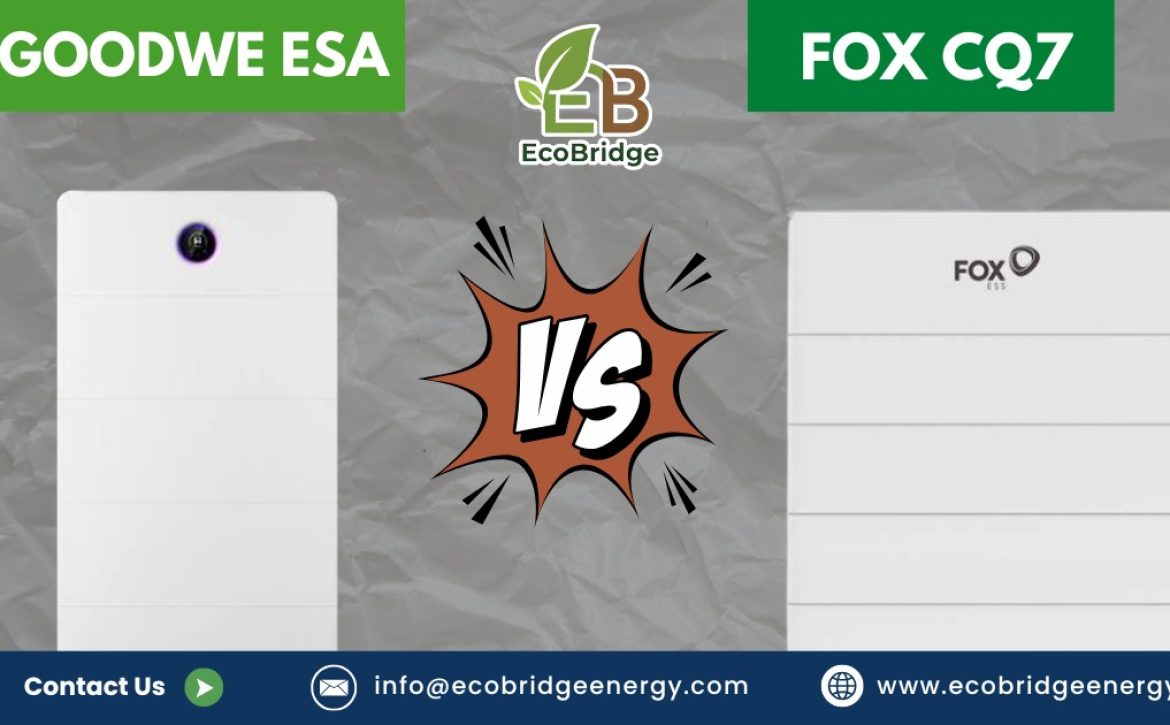
GoodWe ESA vs Fox ESS CQ7: Which Solar Battery System Is Better for Australian Homes?

As electricity demand continues to rise in the evening, more Australian homeowners are looking for ways to store excess solar energy during the day and use it when they need it most.

Solar batteries can help households increase solar self-consumption, reduce reliance on grid electricity and gain greater control over their energy usage. However, choosing the right battery is about more than simply comparing storage capacity or upfront price.

Two solutions attracting attention in the Australian residential energy market are the Compare GoodWe ESA vs Fox ESS CQ7 for Australian homes. Explore battery capacity, backup power, solar self-consumption, expandability and monitoring.. Both are designed for modern solar-plus-storage systems, but their suitability can vary depending on your household’s electricity consumption, solar system, backup requirements and future energy plans.

At EcoBridge Australia, we help homeowners understand their energy requirements and select energy storage solutions that are designed around how their homes actually use electricity.

What Is the GoodWe ESA?

The GoodWe ESA is an integrated energy storage solution designed to combine battery storage and power conversion in a streamlined system.

GoodWe offers a range of residential solar, inverter and energy storage products for the Australian market. Depending on the selected configuration, an integrated energy storage system can help homeowners make better use of excess solar generation while managing household energy consumption.

Potential benefits of an integrated battery system include:

  • Better use of excess solar energy
  • Increased solar self-consumption
  • Reduced reliance on grid electricity
  • Energy monitoring and management
  • Stored energy for evening and overnight consumption
  • Backup power capability where supported by the complete system configuration

The right GoodWe solution depends on several factors, including the home’s daily electricity consumption, solar PV capacity, electrical phase configuration, available installation space and backup requirements.

What Is the Fox ESS CQ7?

The Fox ESS CQ7 is part of Fox ESS’s residential battery storage range and is designed to work as part of a solar-plus-storage system.

Fox ESS systems can be paired with compatible hybrid inverters and configured to suit different household energy requirements. Depending on the system design, features can include LFP battery technology, modular storage capacity, smart monitoring and backup functionality.

One of the key advantages of a modular battery system is flexibility. Homeowners can select a configuration that suits their current electricity requirements while considering future changes such as:

  • Electric vehicle charging
  • Increased hot-water electricity consumption
  • Heat-pump installation
  • Air-conditioning use
  • Larger solar PV systems
  • Higher evening electricity demand
  • Greater energy independence

For households planning to increase their electricity consumption in the future, choosing a battery system with appropriate expansion options can be an important part of long-term system design.

GoodWe ESA vs Fox ESS CQ7: What Are the Key Differences?

There is no universal winner between Compare GoodWe ESA vs Fox ESS CQ7 for Australian homes. Explore battery capacity, backup power, solar self-consumption, expandability and monitoring..

The better option depends on the complete energy system rather than the battery alone. Homeowners should consider storage capacity, inverter compatibility, backup requirements, system monitoring, installation requirements and future energy consumption.

1. Battery Capacity

Battery capacity is often the first specification homeowners compare, but choosing the largest available battery is not always the best approach.

A battery should be appropriately sized around factors such as:

  • Average daily electricity consumption
  • Evening and overnight electricity usage
  • Solar PV generation
  • Available excess solar energy
  • Electricity tariffs
  • Future energy requirements

A household with high evening consumption may benefit from greater storage capacity, while a smaller household with lower electricity usage may achieve better value from a smaller system.

Fox ESS provides modular battery configurations, while GoodWe offers a range of residential storage solutions that can be matched with compatible inverter and battery configurations.

The goal should be to select a battery that can store a useful amount of your excess solar energy without unnecessarily oversizing the system.

2. Solar Self-Consumption

One of the main reasons Australian homeowners install batteries is to use more of the solar electricity they generate themselves.

Solar panels generally produce the most electricity during the middle of the day. However, household electricity demand can increase later in the afternoon and evening, when solar generation begins to fall.

Without sufficient storage, excess daytime solar may be exported to the grid while the household later purchases electricity when solar production is low.

A battery can change this pattern.

During the day:

Solar panels generate electricity → The home uses electricity → Excess solar charges the battery.

During the evening:

Solar generation falls → The battery supplies stored energy → The home can rely less on grid electricity.

Both GoodWe and Fox ESS systems can be designed to support this type of energy management, subject to the exact equipment and installation configuration.

3. Backup Power

Backup capability is another important consideration when comparing home battery systems.

Depending on the selected inverter, battery, backup equipment and installation configuration, a solar battery system may be able to provide electricity during a grid outage.

However, backup functionality should never be assumed simply because a system includes a battery.

Before installation, homeowners should ask:

  • Which appliances can operate during an outage?
  • Which circuits will be backed up?
  • Is whole-home backup available?
  • Is additional backup equipment required?
  • Can the system provide three-phase backup where required?
  • What is the available backup power output?

EcoBridge Australia offers Fox ESS configurations designed for residential backup applications, including options suitable for certain three-phase installations.

The exact backup capability depends on the complete system design, so it is important to confirm the proposed configuration with your installer.

4. Expandability and Future Energy Needs

Household electricity consumption can change significantly over the life of a solar and battery system.

You may eventually purchase an EV, install a heat pump, add air conditioning, increase hot-water usage or expand your solar PV system.

For this reason, future energy requirements should be considered before selecting a battery.

Fox ESS offers modular and expandable configurations, while GoodWe also provides multiple battery and inverter combinations across its residential product range.

A properly designed system can give homeowners greater flexibility as their energy needs evolve.

5. Smart Energy Monitoring

Energy monitoring is becoming an increasingly important part of modern solar and battery systems.

Monitoring platforms can provide visibility into:

  • Solar generation
  • Household electricity consumption
  • Battery charging
  • Battery discharge
  • Grid imports
  • Solar exports
  • Overall energy flows

Fox ESS systems can be monitored through the FoxESS Cloud platform, while GoodWe provides its own monitoring ecosystem for compatible products.

Monitoring your system can help you understand when electricity is being generated, stored and consumed. This information can also help identify opportunities to shift energy-intensive activities into periods when solar or stored energy is available.

GoodWe ESA vs Fox ESS CQ7: Practical Comparison

FeatureGoodWe ESAFox ESS CQ7
Residential energy storageYesYes
Solar self-consumptionYesYes
Smart energy managementYesYes
Modular optionsConfiguration dependentYes
LFP battery optionsAvailable across GoodWe rangeYes
Backup capabilityConfiguration dependentConfiguration dependent
MonitoringGoodWe monitoring ecosystemFoxESS Cloud
Australian residential applicationsYesYes
Best suited systemDepends on household requirementsDepends on household requirements

Specifications, compatibility, capacity, inverter options and backup functionality can vary according to the exact model and installation configuration. Always confirm the final system design and current specifications with a qualified Australian installer.

Which Battery Is Better for Australian Homes?

The best battery is the one that fits the way your household generates and uses electricity.

Rather than selecting a system based solely on battery capacity or purchase price, homeowners should consider the complete energy profile of the property.

Key considerations include:

  1. Average daily electricity consumption
  2. Evening and overnight electricity usage
  3. Existing solar PV capacity
  4. Single-phase or three-phase electricity supply
  5. Desired backup capability
  6. Future EV charging requirements
  7. Available installation space
  8. Future electricity consumption
  9. Warranty and manufacturer support
  10. Installer experience and after-sales service

For example, a household with high evening electricity consumption and an EV may need considerably more storage than a smaller home with modest energy usage.

Similarly, a homeowner who places a high priority on blackout protection may need to prioritise backup capability and inverter configuration rather than battery capacity alone.

How to Choose the Right Battery Size

Battery sizing should begin with your home’s actual energy consumption.

Look at your electricity bills and, where possible, review your hourly consumption data. Pay particular attention to how much electricity your household uses after solar production declines.

A useful assessment should consider:

Solar generation: How much electricity does your solar system produce during the day?

Daytime consumption: How much solar energy is used immediately by the household?

Excess solar: How much electricity is available to charge the battery?

Evening consumption: How much electricity is typically required after solar generation falls?

Overnight consumption: How much stored energy is likely to be required until solar generation resumes?

Future demand: Will an EV, heat pump, air conditioning or other electrical appliances increase consumption?

This approach can help prevent both under-sizing and unnecessary over-sizing.

Why Backup Power Should Be Considered Separately

Battery capacity and backup power are related, but they are not the same thing.

A battery may have sufficient stored energy but still require the appropriate inverter and backup configuration to power selected household circuits during a blackout.

If backup power is important to your household, discuss your priorities with your installer before choosing the equipment.

You may want to identify essential loads such as:

  • Refrigeration
  • Lighting
  • Internet equipment
  • Security systems
  • Essential power outlets
  • Selected kitchen appliances
  • Medical or other essential equipment where applicable

Your installer can then determine whether the proposed system can support those loads and whether additional equipment is required.

Why Choose EcoBridge Australia?

At EcoBridge Australia, we believe choosing a solar battery should start with understanding how your home uses electricity.

A battery is a significant investment, so the right solution should be based on your property’s solar generation, electricity consumption, available space, electrical configuration and future energy goals.

EcoBridge can help homeowners assess suitable energy storage options and design systems around their individual requirements.

Our focus includes:

  • Quality solar battery solutions
  • Professional system design
  • Australian installation support
  • Residential energy storage solutions
  • Smart energy management
  • Backup power solutions
  • Future-ready solar and battery systems

EcoBridge currently offers Fox ESS battery and inverter solutions for residential and higher-demand applications.

Contact EcoBridge Australia

If you’re considering a solar battery and aren’t sure whether GoodWe, Fox ESS or another solution is right for your home, EcoBridge Australia can help you understand your options.

Website:https://ecobridgeenergy.com/

Email: info@ecobridgeenergy.com

For more information about solar batteries and energy storage solutions, visit EcoBridge Australia’s website and speak with the team about your household’s energy requirements.

Final Thoughts

Both GoodWe ESA and Fox ESS CQ7 can be suitable options for Australian homeowners looking to increase solar self-consumption and make better use of their renewable energy.

However, the best battery isn’t necessarily the one with the largest capacity or the lowest upfront price.

The right system should balance:

  • Solar generation
  • Household electricity consumption
  • Evening and overnight demand
  • Battery capacity
  • Inverter performance
  • Backup requirements
  • Installation considerations
  • Future energy needs
  • Warranty and support

If you’re comparing GoodWe ESA vs Fox ESS CQ7, start with your home’s energy profile rather than the battery specification alone.

EcoBridge Australia can help you assess your requirements and identify a suitable solar and battery solution for your property.

Frequently Asked Questions

1. What is the difference between GoodWe ESA and Fox ESS CQ7?

GoodWe ESA and Fox ESS CQ7 are energy storage solutions designed to help households store electricity and use it when required. The main differences depend on the specific battery, inverter, capacity, monitoring platform and system configuration selected.

2. Is GoodWe ESA suitable for Australian homes?

GoodWe offers residential energy storage products for the Australian market. Whether a particular ESA configuration is suitable depends on factors such as the home’s solar system, electricity supply, energy consumption and backup requirements.

3. Is Fox ESS CQ7 suitable for Australian homes?

Fox ESS provides residential battery storage solutions designed for different household energy requirements. A CQ7 system may be suitable for a range of homes, subject to the compatibility of the battery, inverter and other system components.

4. Can Fox ESS batteries provide backup power?

Certain Fox ESS configurations can provide backup power during grid outages. The available backup capacity and which household circuits can remain powered depend on the inverter, battery, backup equipment and overall system design.

5. Which is better: GoodWe or Fox ESS?

There is no universal winner. GoodWe may be the better fit for one household, while Fox ESS may be more appropriate for another. Storage capacity, inverter requirements, backup functionality, budget, installation conditions and future electricity demand should all be considered.

6. How much battery storage does my home need?

Battery capacity should be determined using your electricity consumption, solar generation and typical evening and overnight usage. Future requirements such as EV charging should also be considered. A professional system assessment can help determine an appropriate battery size.

7. Can I add an EV to a solar battery system?

Yes. However, EV charging can significantly increase household electricity demand. If you are planning to purchase an EV, it is worth considering its expected charging requirements when designing your solar and battery system.

8. Can a solar battery reduce electricity bills?

A battery can increase the amount of solar electricity your household consumes rather than exporting excess generation to the grid. Potential savings depend on factors including electricity tariffs, solar generation, household consumption, battery capacity and system performance.

9. Does EcoBridge install solar batteries in Australia?

EcoBridge Australia provides solar battery and energy storage solutions for Australian customers. Its current product range includes Fox ESS battery and inverter configurations designed for different residential and higher-demand applications.

10. Should I choose a larger battery?

Not necessarily. A larger battery is only beneficial if there is enough solar energy available to charge it and sufficient household demand to use the stored energy. Correct system sizing is generally more important than simply choosing the largest available capacity.

11. Is battery storage worth it for a home with solar panels?

Battery storage can be valuable for households that generate excess solar energy during the day and consume significant amounts of electricity later in the day or at night. The financial benefit depends on your electricity usage, tariffs, solar generation, battery cost and system performance.

12. What should I ask an installer before buying a battery?

Ask about battery capacity, usable energy, inverter compatibility, backup functionality, expansion options, warranty, monitoring, installation requirements and expected system performance. You should also confirm which appliances or circuits will operate during a blackout.

Ready to take greater control of your home’s energy? Contact EcoBridge Australia to discuss your solar battery and energy storage requirements.

Read More

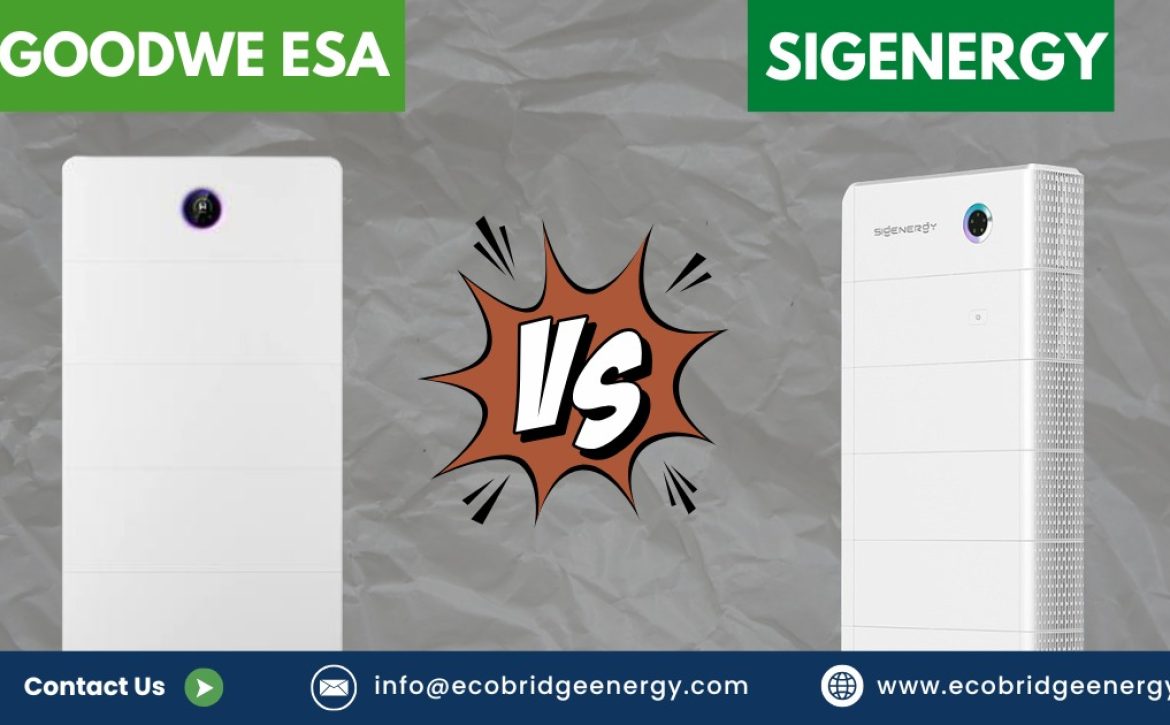
GoodWe ESA vs Sigenergy Battery: Everything You Need to Know Before Buying

As electricity prices continue to rise across Australia, more homeowners are investing in battery storage to maximise their solar savings and gain greater energy independence. Two of the most talked-about battery solutions today are the GoodWe ESA and Sigenergy Battery (SigenStor).

In this guide, we’ll compare GoodWe ESA vs Sigenergy Battery to help Australian homeowners choose the right energy storage solution for their needs.


GoodWe ESA Overview

This is an all-in-one residential energy storage solution that combines:

  • Hybrid inverter
  • Battery storage
  • Smart energy management
  • Backup power capability

GoodWe is known worldwide for producing reliable solar inverters, and the ESA system continues that reputation with a simple, efficient, and homeowner-friendly design.

Key Features
  • Modular battery expansion
  • Integrated hybrid inverter
  • Smart monitoring via mobile app
  • Backup power during outages
  • High charging and discharging efficiency
  • Compact installation

Sigenergy Battery (SigenStor) Overview

Sigenergy has quickly become one of the most innovative names in home energy storage. The SigenStor platform combines multiple technologies into one intelligent energy hub.

Unlike traditional batteries, Sigenergy integrates:

  • Battery storage
  • Hybrid inverter
  • AI-powered energy management
  • EV DC charging compatibility
  • Modular battery expansion
  • Whole-home backup

Its modern design and intelligent software make it one of Australia’s fastest-growing battery systems.


GoodWe ESA vs Sigenergy Battery Comparison

FeatureGoodWe ESASigenergy Battery
Battery TypeLiFePO4LiFePO4
Modular ExpansionYesYes
Hybrid InverterBuilt-inBuilt-in
Backup PowerYesYes
Smart MonitoringYesAdvanced AI
EV Charging IntegrationNoYes
ScalabilityGoodExcellent
InstallationSimpleFlexible
Best ForStandard homesFuture-ready smart homes

Performance Comparison

GoodWe ESA

GoodWe focuses on dependable performance and straightforward operation.

Benefits include:

  • Stable daily performance
  • Excellent inverter efficiency
  • Reliable backup operation
  • Easy installation
  • Lower complexity

It’s ideal for homeowners wanting a reliable battery without unnecessary complexity.


Sigenergy Battery

Sigenergy is designed around intelligent energy optimisation.

Advantages include:

  • AI-based energy scheduling
  • Faster software updates
  • Real-time energy optimisation
  • EV charging integration
  • Smart load management
  • Future software upgrades

This makes it one of the smartest battery systems currently available.


Battery Capacity

Both systems offer expandable battery storage.

GoodWe ESA
  • Modular battery design
  • Suitable for small to large homes
  • Easy future expansion
Sigenergy
  • Highly scalable architecture
  • Larger storage options
  • Better suited for high energy consumption homes
  • Supports growing household energy needs

Backup Power

During power outages, both systems provide backup power.

GoodWe ESA

Provides reliable backup for essential household loads.

Sigenergy

Offers advanced whole-home backup options with intelligent switching and smart energy management.


Smart Monitoring

Both systems include mobile apps.

GoodWe App
  • Solar production
  • Battery status
  • Household consumption
  • Historical performance
Sigenergy App

Offers more advanced features including:

  • AI optimisation
  • Weather forecasting integration
  • Intelligent charging schedules
  • EV charging management
  • Remote diagnostics

Installation

GoodWe ESA
  • Faster installation
  • Compact design
  • Suitable for most Australian homes
Sigenergy
  • Modular architecture
  • Flexible installation options
  • Easily expandable over time

Which Battery is Better?

Choose GoodWe ESA if you want:
  • Proven inverter technology
  • Reliable daily performance
  • Simple installation
  • Excellent value for money
  • Straightforward battery storage

Choose Sigenergy if you want:
  • AI-powered energy management
  • EV charging compatibility
  • Future-ready smart home integration
  • Maximum flexibility
  • Premium battery technology

Final Verdict

Both GoodWe ESA and Sigenergy Battery are excellent choices for Australian homeowners looking to reduce electricity bills and increase energy independence.

GoodWe ESA is ideal for homeowners seeking a dependable, easy-to-use battery with strong value and reliable performance. Sigenergy, on the other hand, is better suited to those who want cutting-edge smart features, advanced automation, EV integration, and a system that can grow with future energy needs.

The best choice ultimately depends on your home’s energy usage, budget, and long-term goals. A professional assessment can help determine which solution delivers the greatest return on investment for your property.


Why Choose EcoBridge Australia?

At EcoBridge Australia, we help homeowners choose the right battery system based on their energy consumption, solar setup, and future requirements. Our experienced team provides expert advice, quality installation, and ongoing support to ensure you get the most from your investment. We proudly supply and install premium solar batteries across Australia, helping families lower electricity costs and improve energy security.


Contact EcoBridge Australia

Ready to install a home battery or upgrade your solar system?

EcoBridge Australia

EcoBridge Australia proudly serves homeowners across Australia with premium solar panels, battery storage, EV charging solutions, and heat pumps.


Frequently Asked Questions (FAQs)

1. Is GoodWe ESA a good battery for Australian homes?

Yes. GoodWe ESA offers reliable performance, integrated backup power, and modular expansion, making it an excellent choice for many Australian households.

2. Is Sigenergy better than GoodWe?

Sigenergy offers more advanced smart features, AI-powered energy management, and EV charging integration, while GoodWe focuses on simplicity, reliability, and value. The better choice depends on your needs.

3. Which battery has better backup power?

Both provide backup power. GoodWe is ideal for essential loads, while Sigenergy supports more advanced whole-home backup configurations.

4. Can both batteries work with solar panels?

Yes. Both GoodWe ESA and Sigenergy are designed to integrate seamlessly with residential solar systems.

5. Which battery is easier to expand?

Both are modular, but Sigenergy generally offers greater flexibility for larger future expansions.

6. Are these batteries suitable for blackout protection?

Yes. Both systems can supply backup power during outages when installed with the appropriate backup configuration.

7. Which battery is better for EV owners?

Sigenergy is generally the better choice because it supports integrated EV charging and intelligent energy management.

8. Does EcoBridge Australia install both GoodWe ESA and Sigenergy batteries?

Yes. EcoBridge Australia supplies and installs premium home battery systems and can recommend the best solution based on your home’s energy requirements and budget.