
Read More

How Much Can a 10kW Solar System Save You Each Year in Australia?

With electricity prices continuing to rise across Australia, more homeowners are investing in solar power to reduce their energy bills and gain greater energy independence. For larger households or homes with high electricity usage, a 10kW solar system is one of the most popular and cost-effective solutions.

At EcoBridge Australia, we specialise in solar panel and solar battery installation, helping Australian households maximise their savings with tailored renewable energy solutions.

So, how much can a 10kW solar system actually save you each year? Let’s break it down.

What Is a 10kW Solar System?

A 10kW solar system usually consists of around 22–25 solar panels, depending on panel wattage and system design.

This system size is ideal for households that:

  • Run air conditioning regularly
  • Have electric hot water systems or heat pumps
  • Charge an electric vehicle (EV)
  • Work from home
  • Use significant electricity during daylight hours
  • Want to future-proof against rising electricity prices

Because of its larger capacity, a 10kW system can generate substantial energy and dramatically reduce reliance on grid electricity.

How Much Electricity Does a 10kW Solar System Produce?

Solar production varies depending on:

  • Location
  • Roof orientation and tilt
  • Shade levels
  • Seasonal weather conditions
  • System quality and installation

On average, a professionally installed 10kW solar system can produce:

LocationDaily ProductionAnnual Production
Perth40–45 kWh14,600–16,400 kWh
Brisbane38–44 kWh13,800–16,000 kWh
Sydney35–42 kWh12,700–15,300 kWh
Melbourne30–38 kWh11,000–13,900 kWh
Adelaide38–45 kWh13,800–16,400 kWh

Homes in sunnier regions generally see higher solar output and faster returns on investment.

How Much Can You Save Each Year?

The biggest factor affecting solar savings is how much of the energy you use yourself rather than exporting back to the grid.

Scenario 1: High Daytime Electricity Usage

If your household uses most of its electricity during daylight hours, you may consume 60–80% of the power generated.

Typical annual savings:

$2,500–$4,000+ per year

This is common for households with:

  • Remote workers
  • Large families
  • Air conditioning use
  • EV charging
  • Electric heating or hot water systems

Scenario 2: Moderate Daytime Usage

If household members are away during the day but still use some solar power, savings are usually:

$1,800–$3,000 per year

While some energy may be exported to the grid, solar still significantly lowers electricity bills.

Bigger Savings with Solar Batteries

At EcoBridge Australia, we are experts in solar battery installation, helping homeowners store unused solar energy for use at night and during peak pricing periods.

Adding battery storage to your 10kW system can increase self-consumption and reduce dependence on the grid.

Potential annual savings with battery storage:

$3,500–$6,000+ per year

Benefits of solar batteries include:

  • Lower electricity bills
  • Greater energy independence
  • Backup power during outages
  • Reduced exposure to rising energy prices
  • Better use of excess solar generation

For many Australian households, combining solar with battery storage creates the most effective long-term energy solution.

What Factors Affect Solar Savings?

No two homes are exactly the same. Several factors influence how much you save.

Electricity Prices

Higher electricity tariffs mean greater savings from self-generated solar energy.

Feed-in Tariffs

Excess electricity exported to the grid earns a feed-in tariff. Although rates have declined in recent years, they still contribute to overall savings.

Energy Usage Habits

Running appliances during daylight hours improves solar self-consumption.

This includes:

  • Air conditioners
  • Dishwashers
  • Washing machines
  • Pool pumps
  • Heat pumps
  • EV charging

Battery Storage

Battery systems maximise solar usage and reduce evening grid dependence, making them increasingly popular for Australian homes.

How Long Does a 10kW Solar System Take to Pay for Itself?

For most Australian households, a 10kW solar system offers a payback period of approximately:

3–6 years

After this period, the electricity generated is essentially free apart from minimal maintenance and monitoring costs.

With quality components and professional installation, solar systems are designed to deliver value for 20–25 years or more.

Is a 10kW Solar System Right for You?

A 10kW system is often a smart investment if:

  • Your electricity bills are high
  • You use air conditioning regularly
  • You have electric hot water or a heat pump
  • You own or plan to buy an EV
  • You want long-term savings and energy independence
  • You’re considering solar battery storage

The right system size depends on your energy usage, roof space, and future electricity needs.

Why Choose EcoBridge Australia?

EcoBridge Australia provides tailored renewable energy solutions including:

  • Solar panel installation
  • Solar battery installation
  • Heat pumps
  • EV chargers
  • Ongoing support and expert advice

Our certified team handles everything from system design and rebate guidance to installation and after-sales support.
We focus on delivering high-quality systems built for Australian conditions and designed to maximise long-term savings.

Frequently Asked Questions (FAQs)

Is a 10kW solar system too big for a home?

Not necessarily. A 10kW system is ideal for medium-to-large households or homes with high electricity consumption.

Can I install a battery later?

Yes. Many homeowners install solar panels first and add battery storage later as energy needs or budgets change.

Will solar work on cloudy days?

Yes. Solar panels still generate electricity during cloudy weather, although output will be lower than on sunny days.

How long do solar panels last?

Most quality solar panels last 25 years or more, with performance warranties commonly included.

Do solar batteries provide backup power?

Some battery systems can provide backup power during outages, depending on the system design and battery type.

Are government rebates available?

Eligible solar systems may qualify for federal incentives and state-based rebates, helping reduce upfront costs.

Final Thoughts

A 10kW solar system can save Australian households anywhere from $1,800 to more than $4,000 annually, with even higher savings possible when paired with battery storage.

As electricity prices continue to rise, investing in solar is one of the smartest ways to lower household expenses and reduce your environmental impact.

If you’re considering solar or battery installation, a tailored assessment is the best place to start.

Contact EcoBridge Australia

Ready to explore your solar savings?

Website: EcoBridge Australia
Email: info@ecobridgeenergy.com
sales@ecobridgeenergy.com
Phone: +61 0485985213

Contact EcoBridge Australia today for a free solar and battery assessment and discover the right energy solution for your home.
Read More

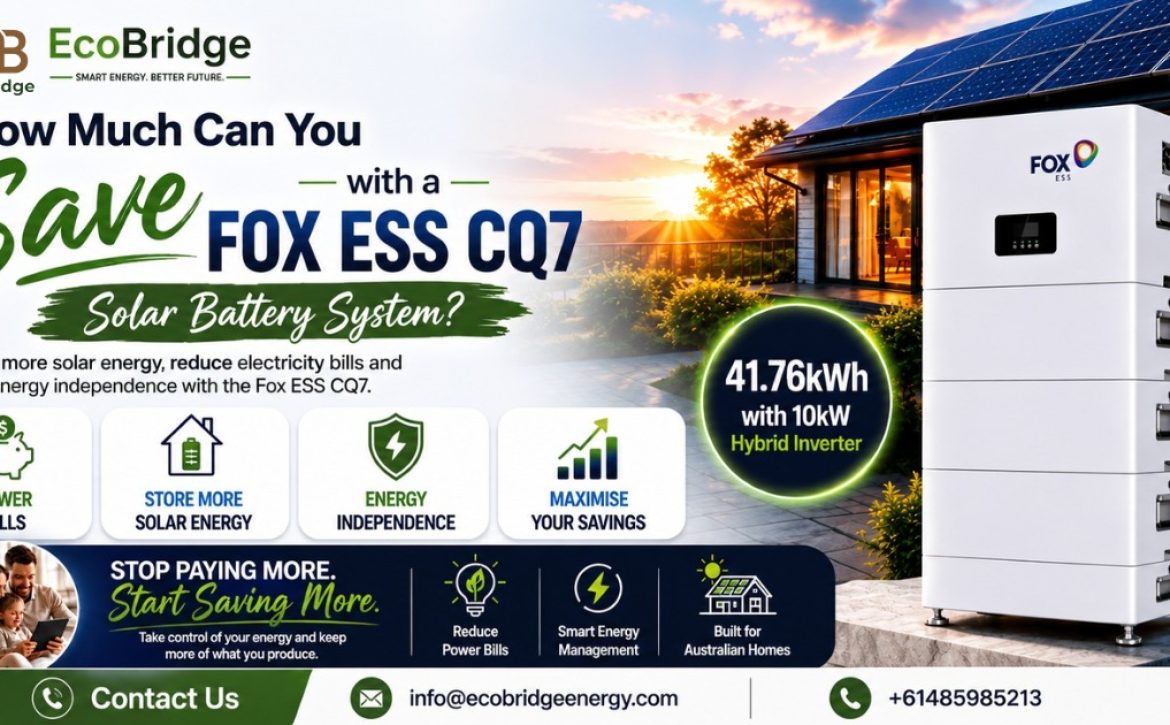
How Much Can You Save with a Fox ESS CQ7 Solar Battery System

If your solar panels are working hard all day but you are still relying on expensive grid power every evening, you are not alone. Many Australian households generate plenty of solar energy during daylight hours only to export it at lower feed-in rates and then buy electricity back at higher prices later.

This is where battery storage changes the equation. A system like the Fox ESS CQ7 solar battery can help households store excess daytime solar and use it when energy demand rises after sunset. But the real question is not simply whether battery storage works. It is how much you can actually save and whether the battery suits your lifestyle and energy usage.

At EcoBridge, we believe battery decisions should be practical, not driven by hype. Understanding how a battery fits into your solar setup is the key to making a smart long-term investment.

What Is the Fox ESS CQ7 Battery Designed to Do?

The Fox ESS CQ7 battery is designed to store surplus solar energy generated during the day so it can be used later when your household needs it most.

Without storage, excess solar power is often sent back to the grid. While feed-in tariffs can provide some return, they are typically much lower than the retail rates charged when you draw electricity from the grid at night.

Battery storage changes that pattern.

Instead of relying heavily on the grid during evening hours, homeowners can use stored solar energy to power lighting, appliances, entertainment systems and other everyday household loads.

For many homes, this creates two major benefits:

  • Better solar self-consumption
  • Reduced dependence on rising electricity prices

The result is a solar system that works harder across more hours of the day.

How Much Can You Save with a Fox ESS CQ7 Battery?

The answer depends on how you use electricity.

There is no universal savings figure because battery performance is tied directly to your energy habits, solar generation and system design. However, homes with strong daytime solar production and significant evening energy use often see the greatest benefit.

Savings are influenced by several factors:

1. Your Evening Electricity Usage

Homes that consume more power after sunset usually benefit most from battery storage.

Examples include households that:

  • Run air conditioning during the evening
  • Cook and use kitchen appliances after work
  • Do laundry at night
  • Charge phones, laptops and devices overnight
  • Have families returning home during peak tariff periods

Without a battery, much of this electricity comes directly from the grid.

2. Your Solar System Size

A battery can only store energy your solar system produces.

If your solar array regularly generates more electricity than your home uses during the day, battery storage may help capture energy that would otherwise be exported.

However, if your system is undersized or daytime production is limited, expanding solar generation may offer stronger value before adding storage.

At EcoBridge, we assess solar output and household demand together rather than treating the battery as a standalone upgrade.

3. Electricity Tariffs and Feed-In Rates

One reason batteries are becoming more attractive across Australia is the gap between feed-in credits and retail electricity costs.

Many households receive relatively modest returns for exported solar while paying considerably more for evening electricity imports.

Battery storage can help reduce exposure to this pricing imbalance by increasing the percentage of solar energy used directly within the home.

Who Is the Fox ESS CQ7 Best Suited For?

Not every battery suits every property.

The Fox ESS CQ7 sits in a practical middle category that can appeal to homes seeking meaningful energy storage without moving immediately into a very large battery bank.

It may suit:

  • Families with moderate to high evening power use
  • Homes planning future electrification
  • Solar owners wanting improved self-consumption
  • Buyers adding storage in stages
  • Households seeking greater energy independence

It can also be a good option for people considering future upgrades such as electric vehicle charging or increased air-conditioning demand.

The most important factor is fit, not simply battery size.

Why Battery Capacity Is Only Part of the Story

Many buyers compare batteries based on capacity alone.

While storage size matters, it only tells part of the story.

A battery must work within a complete energy ecosystem that includes:

  • Solar production
  • Inverter compatibility
  • Household load profile
  • Backup expectations
  • Future energy requirements

If the battery is too small, it may discharge quickly and provide limited evening coverage.

If it is too large relative to your solar generation, it may not recharge efficiently enough to maximise value.

That is why EcoBridge focuses on tailored system design rather than one-size-fits-all recommendations.

Backup Power Expectations Matter

One of the most common misconceptions about solar batteries is blackout protection.

Many homeowners assume a battery automatically powers the entire home during an outage.

In reality, backup capability depends on how the system is designed and configured.

Important questions include:

  • Do you want backup for essential circuits only?
  • Are you expecting broader household support?
  • Which appliances need priority during outages?

The Fox ESS CQ7 can contribute to a well-designed backup strategy, but planning these requirements early is essential to avoid unrealistic expectations.

Looking Beyond the Battery Itself

Choosing a battery should never be based on brand alone.

A successful installation depends on:

  • Correct system sizing
  • Experienced installation
  • Warranty support
  • Product compatibility
  • Ongoing service and aftercare

At EcoBridge, we encourage homeowners to look beyond marketing claims and ask practical questions about expected performance and long-term value.

Battery storage is not a magic fix for issues such as:

  • Roof shading
  • Undersized solar systems
  • Poor load matching
  • Irregular consumption patterns

These factors must be addressed as part of a complete energy strategy.

Is the Fox ESS CQ7 a Good Choice for Australian Homes?

For many Australian households, battery storage is becoming increasingly practical as electricity costs rise and export returns decline.

The Fox ESS CQ7 can be a strong option for homes seeking:

  • Better solar utilisation
  • Lower reliance on retailers
  • Greater energy control
  • Future-ready flexibility

However, the right solution always depends on your property and usage profile.

Some homes may benefit from larger battery systems. Others may achieve stronger savings by upgrading solar capacity first and adding storage later.

That is why professional assessment matters.

The Smarter Way to Compare Solar Batteries

The best battery decisions come from asking better questions.

Before comparing specifications, consider:

  • How much excess solar do you produce?
  • How much electricity do you use after sunset?
  • Is your goal lower bills, backup power or future electrification?
  • Are you planning EV charging or major appliance upgrades?

Once these answers are clear, comparing options like the Fox ESS CQ7 becomes much easier.

At EcoBridge, we help homeowners design solar and battery systems around real-world energy usage, not generic sales pitches. The goal is simple — a system that improves control, lowers long-term energy costs and helps your solar investment work harder every day. Get free quote

FAQs About the Fox ESS CQ7 Solar Battery

How much money can a Fox ESS CQ7 battery save?

Savings vary depending on solar production, electricity tariffs and evening energy use. Homes with strong daytime solar generation and high night-time consumption generally see the biggest benefit.

Is the Fox ESS CQ7 suitable for blackout backup?

It can support backup functionality when designed with compatible components and appropriate system configuration. Backup capability depends on installation design rather than the battery alone.

Can I add a Fox ESS CQ7 battery to an existing solar system?

In many cases, yes. Compatibility depends on your current inverter setup and overall system design. A professional assessment is recommended.

Is a larger battery always better?

Not necessarily. Oversized batteries may not charge efficiently if solar generation is limited. The best battery size depends on your usage and solar production.

Should I install more solar panels before adding a battery?

If your current solar system produces limited excess energy, increasing panel capacity may deliver stronger value before battery storage. A tailored assessment can help determine the best approach.

Why choose EcoBridge for solar battery advice?

EcoBridge focuses on practical system design, transparent recommendations and long-term energy performance. Our approach is based on matching technology to how households actually use electricity.