Category: Guide for Homes

Read More

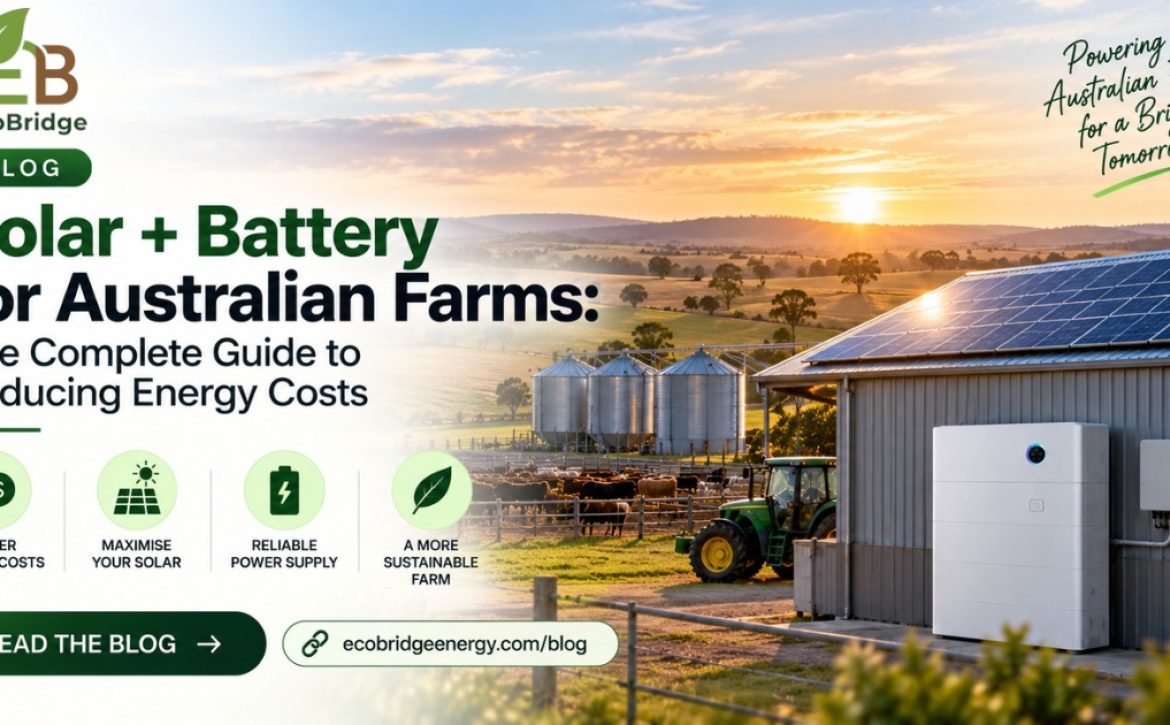
Solar + Battery for Australian Farms: The Complete Guide by EcoBridge Solar

Australian farms face rising electricity costs while relying on energy-intensive equipment every day. From irrigation pumps and dairy systems to cool rooms, workshops, and water infrastructure, farms often consume far more electricity than a typical home.

At EcoBridge Solar, we design solar and battery systems specifically for Australian farms and rural businesses. Rather than offering one-size-fits-all packages, we assess your property’s energy usage, electrical infrastructure, and future needs to recommend a system that works for your operation.

Whether you’re running a dairy farm, vineyard, orchard, grain property, poultry farm, or mixed agricultural business, the right solar and battery setup can help you use more of your own renewable energy and reduce reliance on grid electricity.

Why Solar Makes Sense for Australian Farms

Agricultural properties are well suited to solar because they typically have:

  • Large shed and workshop roofs ideal for solar panels.
  • Significant daytime electricity consumption.
  • High energy costs from pumps, refrigeration, machinery, and processing equipment.
  • Space for future system expansion or ground-mounted solar.

Common farm equipment powered by solar includes:

  • Irrigation and bore pumps
  • Dairy and milking systems
  • Refrigeration and cool rooms
  • Grain handling equipment
  • Water pumping systems
  • Workshop machinery
  • Ventilation and extraction systems
  • Electric fencing
  • Farm offices
  • Lighting
  • Heating and cooling systems

When solar production matches daytime farm activity, more electricity can be used directly on-site instead of being purchased from the grid.

Solar Only vs Solar + Battery

A solar-only system generates electricity during daylight hours. A battery stores surplus solar energy so it can be used later when solar production drops.

Solar Only
  • Solar powers farm equipment during the day.
  • Excess electricity is exported to the grid.
  • Evening and overnight electricity is supplied by the grid.
Solar + Battery
  • Solar powers daytime loads.
  • Surplus solar charges the battery.
  • Stored energy powers the farm during evenings, mornings, or peak tariff periods.

Battery storage can increase on-site solar self-consumption, but the value depends on electricity tariffs, export rates, battery settings, and when the farm uses electricity.

How Much Solar Does a Farm Need?

There is no standard system size for every farm.

The right system depends on your property’s electricity profile, including:

  • Annual electricity usage.
  • Time-of-day consumption.
  • Maximum demand.
  • Seasonal irrigation or harvesting schedules.
  • Existing solar capacity.
  • Three-phase or single-phase supply.
  • Future electrification plans.

A tailored assessment ensures the system is sized around your farm’s actual energy requirements—not simply the largest system possible.

Choosing the Right Battery Size

Battery capacity is measured in kilowatt-hours (kWh), while power output is measured in kilowatts (kW).

Both matter on farms.

Battery CapacitySuitable For
10–20 kWhSmaller rural properties or backup loads.
20–40 kWhMedium-sized farms with evening energy use.
40–60+ kWhLarger farms, refrigeration, pumps, and higher overnight loads.

A battery also needs enough power output to start and run motors, pumps, refrigeration equipment, and multiple loads simultaneously.

EcoBridge Solar assesses both storage capacity and power requirements before recommending a battery.

Solar & Battery for Irrigation Pumps

Irrigation is often one of the biggest electricity users on Australian farms.

Solar works particularly well when pumps operate during daylight hours.

When irrigation occurs early morning, evening, or overnight, battery storage may help reduce grid electricity usage.

Important design considerations include:

  • Pump starting current.
  • Running load.
  • Irrigation schedules.
  • Seasonal pumping requirements.
  • Three-phase compatibility.

Three-Phase Solar Systems for Farms

Many agricultural properties operate on three-phase power because of large motors and equipment.

Three-phase systems require careful design around:

  • Three-phase inverters.
  • Battery compatibility.
  • Load balancing across phases.
  • Switchboard capacity.
  • Export limits from the local network.
  • Existing electrical infrastructure.

A site inspection ensures the system integrates correctly with the property’s electrical supply.

Backup Power for Farms

Not all solar systems provide electricity during a blackout.

If backup power is important, the system must be specifically designed for it.

Backup circuits can supply essential equipment such as:

  • Refrigeration and cool rooms.
  • Water pumps.
  • Communications equipment.
  • Security systems.
  • Essential lighting.
  • Farm office equipment.
  • Selected agricultural machinery.

EcoBridge Solar can design systems with backup capability based on your operational priorities.

Off-Grid & Hybrid Farm Solar Systems

Some rural properties have limited or unreliable grid access.

An off-grid or hybrid solar system may include:

  • Solar panels.
  • Battery storage.
  • Backup generator integration.
  • Smart energy management.
  • Critical load prioritisation.

These systems are designed for reliability throughout the year, including periods of lower solar generation.

Solar for Farm Sheds & Agricultural Buildings

Farm sheds often provide ideal installation locations.

Before installation, EcoBridge Solar assesses:

  • Roof condition.
  • Roof orientation and pitch.
  • Structural suitability.
  • Shading.
  • Available roof area.
  • Cable routing.
  • Switchboard location.
  • Inverter installation area.

Where roof installation isn’t suitable, ground-mounted systems may also be an option.

Why Choose EcoBridge Solar?

EcoBridge Solar specialises in solar and battery solutions for homes, farms, and commercial properties across Australia.

What Makes EcoBridge Different?
  • Tailored farm solar design based on your electricity usage.
  • CEC-compliant installations using quality equipment.
  • Battery storage expertise for rural and agricultural applications.
  • Three-phase solar system design for pumps and machinery.
  • Hybrid and backup power solutions for critical farm loads.
  • Transparent quotes with system performance estimates.
  • Ongoing monitoring and support after installation.
  • Scalable systems that can grow with your farm.

We work with farmers to design systems that match seasonal energy demands, future expansion plans, and available infrastructure.

How EcoBridge Designs Your Farm Solar System

Our assessment process focuses on your property’s actual electricity usage.

Step 1 — Review Your Electricity Usage

We analyse:

  • Recent electricity bills.
  • Tariff structure.
  • Peak demand.
  • Daily and seasonal usage patterns.
Step 2 — Assess Your Property

We review:

  • Roof or ground space.
  • Switchboard.
  • Three-phase supply.
  • Existing solar.
  • Major electrical equipment.
Step 3 — Recommend System Options

We compare different configurations, including:

  1. Solar only.
  2. Larger solar + smaller battery.
  3. Solar + larger battery.
  4. Solar + battery + backup power.

This helps you understand which option best matches your farm’s operating requirements.

Ready to Reduce Your Farm’s Energy Costs?

Every Australian farm has different energy needs.

EcoBridge Solar provides tailored solar and battery assessments based on your property’s electricity usage, equipment, and future plans.

If you have a recent electricity bill, we can assess:

  • Recommended solar system size.
  • Suitable battery capacity.
  • Potential backup options.
  • Three-phase compatibility.
  • Estimated solar generation and self-consumption.

Contact EcoBridge Solar today for a customised Farm Solar & Battery Assessment.

Contact EcoBridge Solar

What we’ll assess:

  • Recommended solar system size.
  • Suitable battery capacity.
  • Three-phase compatibility.
  • Backup power options.
  • Estimated solar generation and self-consumption.
  • System expansion options for future farm growth.

Frequently Asked Questions (FAQs)

1. Is solar worth it for Australian farms?

Many Australian farms have high daytime electricity consumption, making solar an effective way to offset electricity purchased from the grid. The benefits depend on your energy usage, tariffs, and system design.

2. What size solar system does a farm need?

There is no standard size. The right system depends on annual electricity consumption, peak demand, irrigation schedules, available roof space, and future energy needs.

3. Should I add a battery to my farm solar system?

A battery may be beneficial if your farm produces excess solar energy during the day and uses significant electricity during evenings, mornings, or peak tariff periods.

4. What battery size is best for a farm?

Battery sizes vary depending on the property’s energy profile. Smaller farms may require around 10–20 kWh, while larger agricultural operations may benefit from 30–60 kWh or more.

5. Can a battery run irrigation pumps?

Yes, provided the battery and inverter are correctly sized for the pump’s starting and running power requirements.

6. Do farm solar systems work with three-phase power?

Yes. EcoBridge Solar designs three-phase solar and battery systems for farms operating pumps, motors, refrigeration, and other three-phase equipment.

7. Will solar panels power my farm during a blackout?

Standard grid-connected solar systems typically shut down during a blackout. Backup power requires compatible battery storage and backup system design.

8. Can EcoBridge Solar install off-grid systems?

Yes. EcoBridge Solar designs off-grid and hybrid solar systems for rural properties where grid access is unavailable or unreliable.

9. Can I install solar on a farm shed?

In many cases, yes. Farm sheds often provide excellent roof space for solar panels, subject to structural and site assessment.

10. Can I expand my solar system later?

Many systems can be designed with future expansion in mind, allowing additional solar panels or battery storage as your farm’s energy requirements grow.

11. How long does a farm solar installation take?

Installation time depends on system size, site conditions, electrical infrastructure, and network approvals. EcoBridge Solar provides an installation timeline during the quoting process.

12. What information do I need for a solar assessment?

The best starting point is a recent electricity bill, along with details about your property’s major electrical equipment, irrigation schedules, existing solar system (if any), and future energy plans.
Read More

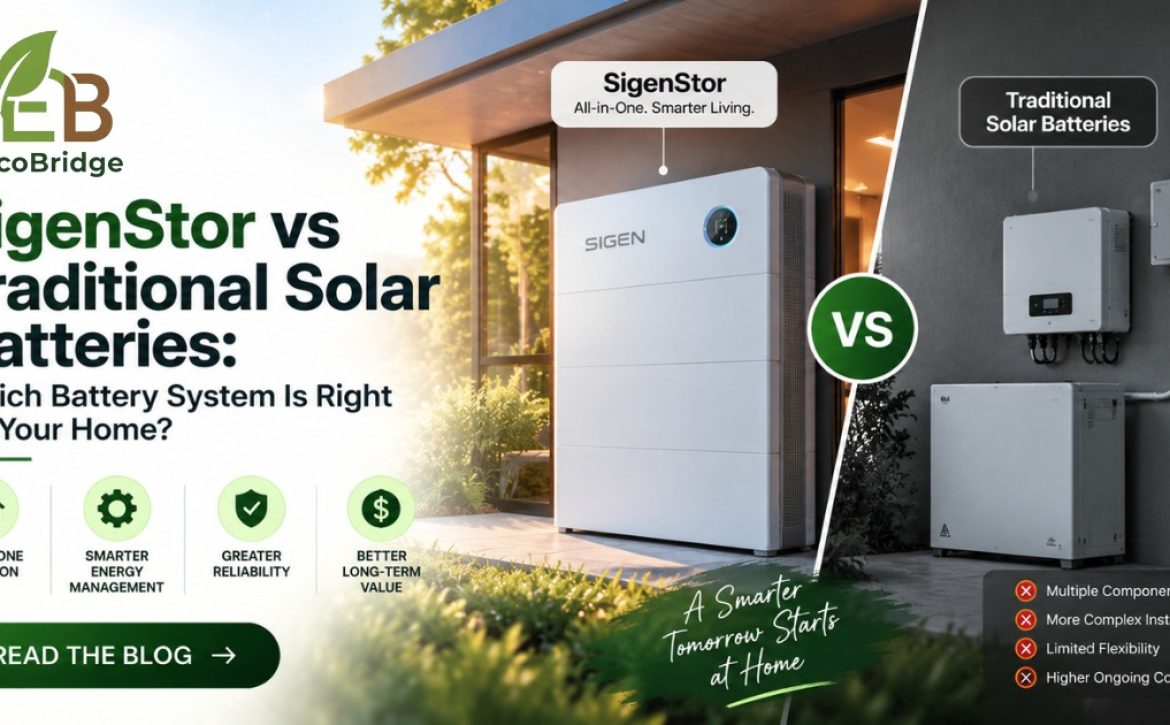
SigenStor vs Traditional Solar Batteries: Which Home Battery Is Right for Your Australian Home?

Australia’s solar market has changed dramatically over the past few years. Solar panels are now a common feature on homes across the country, and battery storage is becoming an essential part of helping households reduce grid reliance and make better use of their solar energy.

But choosing a home battery isn’t just about comparing battery size or price anymore.

Today’s homeowners can choose between traditional solar battery systems and newer integrated energy platforms like SigenStor by Sigenergy. While both store excess solar energy, they take very different approaches to managing your home’s electricity.

At EcoBridge, we help homeowners compare battery options based on their property, energy usage, and long-term goals. Whether you’re considering a traditional solar battery or an integrated system like SigenStor by Sigenergy, understanding the differences can help you make a more informed decision.

So which option is the better fit for your home? Here’s what you need to know.

What Is SigenStor?

SigenStor is an integrated home energy storage system developed by Sigenergy. Instead of treating the battery as a standalone component, it combines multiple energy technologies into a single coordinated platform.

Depending on your installation, a SigenStor system can include:

  • Solar energy storage
  • Battery storage
  • Hybrid inverter functionality
  • Backup power
  • EV charging integration
  • Smart home energy management

The goal is to create one connected ecosystem that manages how your home generates, stores and uses electricity throughout the day.

For homeowners installing a new solar and battery system, this integrated approach can simplify both installation and energy management.

What Is a Traditional Solar Battery System?

A traditional solar battery system is typically made up of separate components that work together.

A common setup looks like this:

Solar Panels → Inverter → Battery → Home → Electricity Grid

Depending on the installation, the battery may be added to an existing solar system or installed alongside a new one.

Traditional battery systems remain popular because they provide a reliable way to store excess solar energy for later use while allowing homeowners to choose equipment from different manufacturers.

SigenStor vs Traditional Solar Batteries: Key Differences

The biggest difference is how the overall system is designed.

FeatureSigenStorTraditional Solar Battery
System designIntegrated energy ecosystemSeparate components from one or more manufacturers
Energy managementCentralised smart energy management platformBattery and inverter managed independently
Battery storageStores excess solar energy for later useStores excess solar energy for later use
Modular designExpandable modular battery capacityVaries depending on battery brand and model
Backup powerSupports backup functionality when configuredBackup available on compatible systems
EV charging integrationBuilt into the broader energy ecosystemUsually requires separate EV charging equipment
1. Integrated Energy Management

Traditional solar battery systems often combine products from multiple manufacturers, such as solar panels from one brand, an inverter from another, and a battery from a third.

SigenStor is designed as one coordinated platform that manages:

  • Solar generation
  • Battery charging and discharging
  • Household energy consumption
  • Grid imports and exports
  • EV charging (where applicable)

This unified approach allows homeowners to monitor and manage their energy through a single system rather than multiple devices or apps.

2. Battery Storage: SigenStor vs Traditional Solar Batteries Store Solar Energy

Whether you choose SigenStor vs Traditional Solar Batteries, the core function remains the same.

During the day:

  1. Solar panels generate electricity.
  2. Your home uses solar energy first.
  3. Excess electricity charges the battery or is exported to the grid.

Later, when solar production drops, the battery supplies stored energy back to the home.

Daytime

Solar powers the home firstAny surplus energy charges the battery before being exported, depending on your settings and tariff.

Evening & Night

Stored solar energy powers the homeThis helps reduce electricity imported from the grid during peak usage periods.

The amount of energy stored and used depends on your solar production, battery capacity, household usage, and electricity tariff.

3. Modular Battery Capacity

One of SigenStor’s distinguishing features is its modular battery design.

Instead of installing one fixed battery size, capacity can be expanded by adding battery modules, depending on the system design.

This can be useful if your household’s energy needs grow over time, for example if you:

  • Install additional solar panels.
  • Purchase an electric vehicle.
  • Increase electricity usage.
  • Want greater backup capacity.

Traditional battery systems may also offer expansion, but this varies by manufacturer and model.

4. Backup Power During Grid Outages

Many homeowners now consider backup power an important reason for installing a battery.

A battery system can be configured to supply power to selected household circuits during a blackout.

Examples of backup circuits may include:

  • Lighting
  • Refrigerator
  • Internet equipment
  • Selected power outlets

The exact backup capability depends on:

  • Battery size
  • System configuration
  • Switchboard design
  • Installer setup

Both SigenStor vs Traditional Solar Batteries can provide backup functionality when installed with compatible equipment.

5. EV Charging Integration

Electric vehicles are becoming part of many Australian households’ energy plans.

Traditional systems often require:

  • Solar system
  • Battery
  • Separate EV charger
  • Independent energy management

SigenStor is designed to integrate EV charging into the broader home energy system.

This allows homeowners to consider solar generation, battery storage and vehicle charging together rather than as separate systems.

For households planning to buy an EV in the next few years, this integrated approach may be worth considering during system design.

How Does SigenStor Work With Solar?

The operating principle is straightforward.

Solar panels generate electricity during the day.Solar energy is used by the home first.

Your home uses available solar power first.Excess electricity is directed to battery storage or exported to the grid.

The battery stores surplus solar energy.Stored energy is available later when solar production decreases.

Evening energy comes from the battery where available.This can reduce reliance on electricity imported from the grid.

The overall performance depends on factors including:

  • Solar system size.
  • Battery capacity.
  • Household electricity consumption.
  • Time-of-use electricity tariffs.
  • Seasonal solar generation.

How Much Battery Storage Does Your Home Need?

There isn’t a universal battery size that suits every home.

A larger battery does not automatically deliver greater savings.

The right battery size should be matched to your home’s energy profile, including:

🏠Annual electricity consumption.
☀️Solar system size and expected generation.
🌙Evening and overnight electricity usage.
📈How much solar energy is currently exported to the grid.
⚡Electricity tariff structure.
🔌Backup power requirements.
🚗Future energy needs, including EV charging.

For example:

  • A small household with low evening consumption may only need modest storage.
  • A larger family with significant evening electricity use may benefit from greater storage capacity.

The best battery size is usually determined using actual electricity usage rather than advertised battery capacity alone.

Can SigenStor Be Added to an Existing Solar System?

In many cases, yes—but compatibility needs to be assessed.

Factors include:

  • Existing inverter type.
  • Solar panel configuration.
  • Switchboard capacity.
  • System age.
  • Existing electrical equipment.

Some homes can add battery storage with minimal changes, while others may require inverter upgrades or switchboard modifications.

A qualified installer should assess the existing solar installation before recommending the most suitable battery configuration.

Which System Is Better for Different Homes?

The better choice depends on your current setup and future energy plans.

A Traditional Solar Battery May Suit You If…SigenStor May Suit You If…
You already have a compatible solar system.You’re installing a new solar and battery system together.
Your main goal is storing excess solar energy.You want one integrated energy management platform.
You prefer a straightforward battery installation.Backup power is an important priority.
You don’t currently need EV charging integration.You own or plan to purchase an electric vehicle.
Your energy system requirements are relatively simple.You want flexibility to expand your energy system over time.

Neither option is automatically “better.” The right system depends on how your household generates and consumes electricity.

What About Battery Payback?

Battery payback varies from one household to another.

Several factors influence the financial return:

  • Electricity prices.
  • Feed-in tariff rates.
  • Solar generation.
  • Battery utilisation.
  • Household consumption patterns.
  • Installation cost.
  • Financing arrangements.
  • Future electricity price changes.

A battery that closely matches a home’s usage profile may provide better value than an oversized battery that spends much of its capacity unused.

Rather than relying on a generic payback estimate, homeowners should evaluate potential savings using their own electricity bills and solar generation data.

SigenStor and the Future of Home Energy

Home batteries are no longer just storage devices.

Modern home energy systems increasingly coordinate:

  • Solar generation.
  • Battery storage.
  • Household electricity demand.
  • Backup power.
  • EV charging.
  • Smart energy management.

This integrated approach aims to help households make better use of their own solar energy while adapting to changing energy needs over time.

For homeowners planning a new solar installation, it’s worth thinking beyond battery capacity alone and considering how the entire energy system will work together.

Is SigenStor Worth Considering?

If your goal is simply to store excess solar energy from an existing solar system, a traditional battery system may be an effective and practical solution.

SigenStor offers a different proposition. It combines battery storage with energy management, backup capability and EV integration into a single coordinated platform, making it particularly relevant for homeowners planning a broader long-term home energy solution.

The best choice depends on several factors, including:

  • Your property’s existing solar setup.
  • Household electricity consumption.
  • Budget.
  • Backup power needs.
  • Future plans, such as adding an EV or expanding solar capacity.

A personalised assessment is the best way to determine which battery configuration aligns with your home’s energy usage and future requirements.

Find the Right Solar & Battery System for Your Home

Choosing a battery shouldn’t begin with “Which battery has the biggest capacity?”

It should begin with understanding how your home uses electricity.

A personalised assessment can consider:

  • Your electricity bills.
  • Solar generation.
  • Daily and evening energy usage.
  • Existing solar exports.
  • Future household energy needs.

Whether you’re comparing SigenStor vs Traditional Solar Batteries or planning a complete solar and battery upgrade, designing the system around your household’s actual energy profile is the best way to compare suitable options.

Ready to explore your options? A personalised solar and battery assessment can help determine the battery size and system configuration that best fits your home.

Contact EcoBridge :

If you’d like a free solar and battery assessment or have questions about solar panels, batteries, heat pumps, or EV chargers, you can contact EcoBridge Australia using the details below.

Ecobridge

Website: ecobridgeenergy.com 

Email :info@ecobridgeenergy.com

Frequently Asked Questions

Is SigenStor a solar battery?

SigenStor is more than a standalone solar battery. It’s an integrated home energy storage system that can combine battery storage, inverter functionality, smart energy management, backup power and EV charging, depending on the configuration.

Is SigenStor suitable for Australian homes?

Yes. SigenStor is designed for residential solar and battery applications and can be configured to suit different Australian homes, subject to an assessment by a qualified installer.

Can SigenStor provide backup power?

Yes, when configured for backup operation. The amount of backup power available depends on the installation design, battery capacity and which household circuits are connected to the backup supply.

Does SigenStor work with solar panels?

Yes. SigenStor is designed to operate as part of a solar and battery system when installed with compatible solar equipment.

Can I add SigenStor to an existing solar system?

In many cases, yes. Compatibility depends on your existing inverter, solar system design, switchboard and electrical setup, so an installer should assess the system before recommending an upgrade.

Is a bigger battery always better?

No. The ideal battery size depends on your electricity consumption, solar production, export levels and evening energy use. An oversized battery may not deliver the best value if much of its storage remains unused.

Should I install solar panels and a battery together?

It depends on your circumstances. Installing both together allows the system to be designed as a complete solution, while many existing solar systems can also be upgraded with battery storage later if they’re compatible.

How do I know what battery size I need?

Your electricity bills, solar generation, household energy usage and backup requirements provide the best indication of the battery size that suits your home. A professional assessment can provide a tailored recommendation.

Is SigenStor better than a traditional solar battery?

Neither is universally better. Traditional battery systems are often a good option for homeowners who simply want energy storage, while SigenStor is designed for households looking for a more integrated energy ecosystem that includes smart management, backup power and EV charging capabilities.

Read More

GoodWe 100kWh Commercial Battery Storage in NSW: Maximise Solar & Reduce Grid Reliance

For businesses across New South Wales, installing commercial solar is a major step towards reducing electricity costs. But without battery storage, much of the excess solar energy generated during the day is often exported to the grid instead of being used when your business needs it most.

The GoodWe BAT-C 100kWh commercial battery is designed to solve that problem.

Paired with the GoodWe ET 50kW Commercial Hybrid Inverter, it provides a reliable, scalable energy storage solution that helps businesses store excess solar power, reduce grid dependence, and better manage electricity usage throughout the day.

Whether you operate a warehouse, factory, office, retail store, farm, school, or hospitality venue, a GoodWe 100kWh Commercial Battery Storage in NSW can help you get more value from your solar investment.

Why NSW Businesses Are Investing in 100kWh Battery Storage

Many commercial properties generate plenty of solar energy during daylight hours, but their peak electricity usage often happens in the late afternoon, evening, or during periods of high demand.

A 100kWh battery bridges that gap.

How it works:

Solar Panels → GoodWe Battery → Your Business

Instead of exporting surplus solar energy for a relatively low feed-in tariff, your business stores that energy and uses it later when solar production drops or electricity prices increase.

Key benefits include:
  • Increased solar self-consumption.
  • Reduced reliance on expensive grid electricity.
  • Better management of peak electricity demand.
  • Lower operating energy costs.
  • Improved energy resilience during outages (when configured for backup).

GoodWe 100kWh Commercial Battery Storage in NSW Overview

The GoodWe BAT-C Series is purpose-built for commercial and industrial energy storage applications—not simply an oversized residential battery.

System Highlights
FeatureGoodWe BAT-C 100kWh
Nominal Capacity102.4kWh
Usable CapacityApproximately 100kWh
Battery ChemistryLiFePO₄ (Lithium Iron Phosphate)
Battery VoltageHigh-voltage commercial system
Protection RatingIP55-rated cabinet
Expansion CapabilityUp to approximately 450kWh with multiple battery cabinets

The BAT-C range includes battery capacities from approximately 60kWh to over 110kWh, making it suitable for businesses with different energy requirements.

Built for Commercial & Industrial Applications

The GoodWe BAT-C is ideal for businesses with significant daily electricity consumption and medium-to-large solar systems.

Suitable applications include:
  • Warehouses and logistics centres.
  • Manufacturing facilities.
  • Commercial offices.
  • Retail stores and shopping centres.
  • Workshops and trade businesses.
  • Farms and agricultural operations.
  • Hotels, cafés, and hospitality venues.
  • Schools, childcare centres, and community facilities.

If your business uses large amounts of electricity during business hours or into the evening, commercial battery storage can significantly improve how your solar system performs.

Safe, Reliable LiFePO₄ Battery Technology

Safety is critical in commercial battery installations.

The GoodWe BAT-C uses LiFePO₄ (Lithium Iron Phosphate) battery chemistry, known for its stability, long cycle life, and suitability for stationary energy storage systems.

Commercial safety features include:
  • Pack-level humidity monitoring.
  • Automatic dehumidification system.
  • Aerosol fire suppression at both battery pack and cabinet levels.
  • Intelligent thermal management.
  • IP55 weather-resistant enclosure for suitable outdoor commercial installations.

These features are designed to support reliable operation in commercial environments.

Pair the BAT-C Battery with the GoodWe ET 50kW Hybrid Inverter

A popular commercial configuration combines the GoodWe 100kWh Commercial Battery Storage in NSW with the GoodWe ET 50kW three-phase hybrid inverter.

Why this combination works
ComponentSpecification
Hybrid Inverter Output50kW AC (Three Phase)
Battery StorageApproximately 100kWh usable
Battery Voltage Range200V–800V
ApplicationCommercial & Industrial Solar + Storage

A 50kW inverter determines how much power can be delivered at one time, while the 100kWh battery determines how much energy can be stored and used later.

This balance suits many NSW commercial sites with substantial daytime solar production.

Reduce Electricity Costs with Peak Shaving & Load Management

Commercial battery storage offers more than just solar storage.

The GoodWe ET platform supports several energy management strategies that can help businesses reduce electricity costs.

Potential applications include:
  • Solar self-consumption.
  • Peak shaving during high-demand periods.
  • Time-of-use energy shifting.
  • Grid support where applicable.
  • Backup power for selected loads (depending on system design).

Businesses on time-of-use tariffs or demand-based electricity pricing may benefit from using stored energy during expensive periods instead of importing electricity from the grid.

Scalable Battery Storage for Growing Businesses

Your energy needs today may not be the same in five years.

The GoodWe BAT-C platform supports expansion by connecting multiple battery cabinets together.

Expansion options
  • Start with approximately 100kWh usable storage.
  • Expand up to approximately 450kWh total capacity (depending on system design and GoodWe specifications).
  • Suitable for growing businesses, additional solar capacity, EV charging, or future operational expansion.

This modular approach allows businesses to invest in battery storage progressively.

Is a 100kWh Battery the Right Size for Your Business?

The best battery size depends on your business—not just the biggest battery available.

A commercial battery assessment should consider:

  • Annual electricity consumption.
  • Interval or half-hourly energy usage data.
  • Existing solar system size.
  • Daytime versus evening energy demand.
  • Electricity tariff structure.
  • Demand charges (where applicable).
  • Solar export limits.
  • Switchboard capacity.
  • Backup power requirements.
  • Future business growth.

A business with high evening electricity usage and limited export value may see strong benefits from a 100kWh battery, while another business may achieve better returns with a smaller or larger system.

The goal is to size the battery around actual energy usage patterns.

Why Choose EcoBridge for Commercial Battery Storage in NSW?

At EcoBridge Solar, we design commercial solar and battery storage systems based on real energy data—not guesswork.

Our commercial energy assessment includes:
  • Electricity bill analysis.
  • Interval usage review.
  • Solar generation assessment.
  • Battery sizing recommendations.
  • ROI and payback analysis.
  • Commercial installation advice tailored to NSW businesses.

We help businesses maximise the value of their solar investment while planning for future energy needs.

Contact EcoBridge Solar

EcoBridge Solar

Commercial Solar & Battery Storage Specialists – NSW

Email : info@ecobridgeenergy.com

Website : https://ecobridgeenergy.com/

Service Area

New South Wales – Commercial Solar, Battery Storage & Energy Solutions

Frequently Asked Questions (FAQs)

1. How much energy can a GoodWe 100kWh battery store?

The GoodWe BAT-C has a 102.4kWh nominal capacity with approximately 100kWh of usable energy. This stored energy can be used when solar production is low or during periods of higher electricity demand.

2. Is the GoodWe 100kWh battery suitable for commercial businesses?

Yes. The BAT-C Series is specifically designed for commercial and industrial (C&I) applications, including warehouses, factories, offices, retail businesses, farms, schools, and hospitality venues.

3. Can the battery be installed with an existing commercial solar system?

In many cases, yes. Compatibility depends on your existing solar system, inverter setup, switchboard configuration, and site design. A commercial assessment is recommended before installation.

4. What inverter works with the GoodWe BAT-C battery?

The battery is commonly paired with the GoodWe ET 40kW or 50kW three-phase commercial hybrid inverter, which is designed to integrate solar generation and battery storage into one commercial energy system.

5. Does a 100kWh battery provide backup power?

It can, depending on how the system is designed and configured. Backup capability is an optional design consideration and may support selected essential loads during grid outages.

6. Can the GoodWe BAT-C battery help reduce electricity bills?

Yes. By storing excess solar energy and using it during periods of higher electricity prices or reduced solar generation, businesses can increase self-consumption and reduce grid electricity imports.

7. What is peak shaving?

Peak shaving is the process of using battery energy during periods of high electricity demand to reduce grid consumption. This can help businesses manage electricity costs, particularly where demand charges or time-of-use tariffs apply.

8. Is the GoodWe BAT-C battery safe?

The BAT-C uses LiFePO₄ battery chemistry and includes commercial safety features such as humidity monitoring, automatic dehumidification, thermal management, aerosol fire suppression, and an IP55-rated enclosure.

9. Can the battery system be expanded later?

Yes. The GoodWe BAT-C platform supports multiple battery cabinets connected in parallel, allowing systems to expand to approximately 450kWh of storage capacity, depending on the project design.

10. How do I know if a 100kWh battery is the right size for my business?

The correct battery size depends on your electricity usage profile, solar generation, tariff structure, export limits, and future energy needs. EcoBridge Solar can assess your energy data and recommend the most suitable battery capacity for your business.

Ready to Maximise Your Commercial Solar Investment?

If your NSW business is considering a GoodWe 100kWh commercial battery, EcoBridge Solar can assess your electricity usage, solar production, and tariff structure to recommend the right battery storage solution for maximum savings and long-term performance.

Contact EcoBridge Solar today for a commercial solar and battery storage assessment across New South Wales.