Read More

NSW Commercial Battery Rebate : A Complete Guide for Businesses | EcoBridge Australia

NSW Commercial Battery Rebate: Save Up to 50% on Business Battery Storage

The NSW Government is introducing one of Australia’s most significant NSW Commercial Battery Rebate incentives through the Peak Demand Reduction Scheme (PDRS). Eligible businesses can access substantial upfront incentives for installing commercial battery energy storage systems (BESS), making battery investments more affordable than ever.

Depending on the battery size, system design, and prevailing certificate prices, eligible businesses may receive incentives covering approximately 20% to 50% of the installed battery cost.

At EcoBridge Australia, we help businesses understand their eligibility, maximise available incentives, and deliver turnkey commercial solar and battery solutions that reduce energy costs and improve energy security.


What is the NSW Commercial Battery Rebate?

The rebate is delivered through the NSW Government’s Peak Demand Reduction Scheme (PDRS).

Rather than providing a fixed cash grant, the scheme creates Peak Reduction Certificates (PRCs) for eligible battery installations. These certificates have a market value and are generally assigned to an Accredited Certificate Provider, who passes the value on as an upfront discount.

The number of certificates generated depends on several factors, including:

  • Battery size
  • Battery inverter output
  • Distribution network
  • Whether new solar PV is installed with the battery
  • Current PRC market price

Because certificate prices change over time, the total rebate value also varies.


New Commercial Battery Incentives: BESS4 and BESS5

The NSW Government has introduced two new commercial battery activities under the PDRS.

BESS4 – Small and Medium Businesses

Suitable for batteries with:

  • More than 20 kWh usable capacity
  • Up to 200 kWh usable capacity

Ideal for:

  • Offices
  • Retail stores
  • Warehouses
  • Schools
  • Medical centres
  • Small manufacturing facilities

BESS5 – Commercial & Industrial Batteries

Suitable for larger battery systems with:

  • More than 200 kWh
  • Up to 30 MWh usable capacity

Designed for:

  • Manufacturing plants
  • Industrial facilities
  • Distribution centres
  • Agricultural operations
  • Community energy projects
  • Large commercial buildings

Who Can Apply?

To qualify for the NSW commercial battery incentive:

  • The installation must be located in New South Wales.
  • The site must be commercial, industrial, or community-based.
  • Residential properties are not eligible under these activities.
  • Data centres are excluded.
  • The site must not have previously received a BESS4 or BESS5 incentive.
  • Planning approvals must be completed where required

BESS4 Eligibility Requirements

Businesses installing batteries between 20 kWh and 200 kWh must ensure:

  • Battery and inverter are listed on approved Clean Energy Council product lists.
  • Installation is completed by a Solar Accreditation Australia (SAA) accredited installer.
  • Installation complies with AS/NZS 5139.
  • Battery duration does not exceed six hours.
  • When installed with new solar, the solar array must meet the required sizing ratio.

An additional advantage is that eligible battery systems up to 100 kWh may also qualify for the Federal Cheaper Home Batteries Program where applicable.


BESS5 Eligibility Requirements

For battery systems larger than 200 kWh:

  • Battery must pass UL9540A fire safety testing.
  • Battery duration must not exceed six hours.
  • Solar sizing requirements apply where new solar is installed.
  • System capacity must remain below 30 MWh.

These projects are generally suited to medium and large commercial or industrial facilities.


How Much Could Your Business Save?

The incentive depends on certificate creation and current PRC prices, so every project is different.

Typical examples include:

Example ProjectApproximate Project CostEstimated IncentivePotential Saving
100 kW Solar + 200 kWh Battery$220,000$65,000+Around 30%
1.3 MW / 5 MWh Battery$3,000,000$1.47 MillionUp to 49%

These figures are indicative only. Actual savings depend on battery specifications, network location, electricity usage, and certificate prices.


Why Install a Commercial Battery?

A commercial battery delivers value beyond the government incentive.

Increase Solar Self-Consumption

Store excess daytime solar energy and use it during evenings or cloudy periods, reducing electricity purchased from the grid.

Reduce Peak Demand Charges

Battery systems can discharge during demand spikes, lowering expensive demand charges that often form a significant portion of commercial electricity bills.

Energy Price Arbitrage

Charge the battery when electricity prices are low and discharge when prices increase, helping reduce operating costs.

Backup Power

Maintain business operations during outages, improving operational resilience and reducing downtime.

Lower Carbon Emissions

Battery storage enables businesses to maximise renewable energy usage and support sustainability goals.


Why Choose EcoBridge Australia?

EcoBridge Australia specialises in commercial renewable energy solutions tailored to Australian businesses.

Our services include:

  • Commercial battery feasibility studies
  • Energy consumption analysis
  • Solar and battery system design
  • Government rebate guidance
  • PDRS incentive support
  • Commercial solar installation
  • Battery installation
  • Ongoing maintenance and support

Our experienced team works with businesses across multiple industries to deliver solutions that maximise long-term energy savings while ensuring compliance with all applicable standards.


Get a Free Commercial Battery Assessment

Thinking about installing a commercial battery?

EcoBridge Australia can help you:

  • Assess eligibility for NSW incentives
  • Estimate potential rebate value
  • Compare battery technologies
  • Calculate return on investment
  • Design the right battery size for your business

Speak with our team today for a no-obligation commercial battery assessment.


Contact EcoBridge Australia

EcoBridge Australia

✉️ Email:info@ecobridgeenergy.com

🌐 Website:https://ecobridgeenergy.com/

Book a free consultation to discover how much your business could save with commercial battery storage and available NSW Government incentives.


Frequently Asked Questions (FAQs)

1. What is the NSW Commercial Battery Rebate?

The rebate is an incentive available under the NSW Peak Demand Reduction Scheme (PDRS) that reduces the upfront cost of eligible commercial battery installations through Peak Reduction Certificates (PRCs).

2. When does the rebate begin?

Eligible battery installations completed from 1 September 2026 can access the new commercial battery incentives.

3. How much money can my business save?

Depending on your battery size and project details, incentives may reduce installation costs by approximately 20% to 50%.

4. What is the difference between BESS4 and BESS5?

BESS4 applies to batteries between 20 kWh and 200 kWh, while BESS5 covers systems larger than 200 kWh up to 30 MWh.

5. Can I install solar and a battery together?

Yes. Installing new solar alongside your battery may increase the number of certificates generated, resulting in a larger incentive if the required sizing criteria are met.

6. Are residential properties eligible?

No. BESS4 and BESS5 are designed for commercial, industrial, and community facilities. Separate programs exist for residential battery installations.

7. Are data centres eligible?

No. Data centres are specifically excluded from these commercial battery activities.

8. How is the rebate calculated?

The rebate is based on the number of Peak Reduction Certificates (PRCs) created, which depends on battery size, inverter capacity, electricity network, and current PRC market prices.

9. Can EcoBridge Australia help with the application?

Yes. EcoBridge Australia assists businesses with project assessment, system design, rebate eligibility, documentation, installation, and ongoing support.

10. How do I get started?

Simply contact EcoBridge Australia to arrange a free consultation. Our team will assess your site, estimate available incentives, and recommend the most suitable commercial battery solution for your business.

Read More

Canberra Electricity Prices vs Solar: How Much Can You Really Save?

Electricity prices have become one of the biggest household expenses for many Canberra families. As energy costs continue to fluctuate, more homeowners are looking for long-term solutions that provide greater control over their power bills. Solar panels, combined with modern battery storage, have become one of the most effective ways to reduce reliance on the grid while increasing energy independence.

But how much can you actually save with solar in Canberra? The answer depends on your energy usage, the size of your solar system, and whether you choose to include a battery. This guide explains what Canberra homeowners should know before investing in solar energy.

Why Canberra Homeowners Are Turning to Solar

Canberra enjoys excellent solar conditions, with abundant sunshine throughout the year. While winter days are shorter, the ACT still receives enough sunlight to make solar a worthwhile investment.

Many households are choosing solar because it can help:

  • Reduce rising electricity bills
  • Protect against future electricity price increases
  • Increase energy independence
  • Lower carbon emissions
  • Improve property value
  • Store excess energy with battery systems for evening use

With electricity prices remaining a concern for many families, generating your own power can significantly reduce ongoing energy costs.

Understanding Your Electricity Bill

Your electricity bill typically includes several charges:

  • Daily supply charges
  • Energy usage charges (charged per kilowatt-hour)
  • Network costs
  • Government and market charges

While you cannot eliminate every component of your bill, solar can dramatically reduce the amount of electricity you need to purchase from the grid.

The more solar energy you consume directly during the day, the greater your potential savings.

How Solar Helps Lower Electricity Costs

Solar panels generate electricity whenever the sun is shining.

Instead of buying all of your electricity from the grid, your home uses the energy produced by your solar system first.

During sunny periods:

  • Appliances can run using free solar energy.
  • Excess electricity may be exported to the grid (depending on your retailer’s feed-in tariff).
  • Battery systems can store surplus energy for use after sunset.

This reduces the amount of electricity you need to purchase during expensive evening periods.

Adding a Battery Can Increase Your Savings

While solar panels reduce daytime electricity costs, many households use the most electricity during the evening.

A battery stores excess solar energy produced during the day and makes it available later when your household needs it most.

Benefits of battery storage include:

  • Lower evening electricity costs
  • Reduced dependence on the electricity grid
  • Backup power capability (with compatible systems)
  • Better use of your own solar generation
  • Increased protection against future electricity price increases

For households with high evening energy consumption, batteries can significantly improve overall savings.

Factors That Affect Your Savings:

Every home is different, and the amount you save depends on several factors.

  1. Your Daily Electricity Usage

Homes with higher electricity consumption generally benefit more from larger solar systems.

  1. Energy Usage Patterns

Using appliances during daylight hours increases the amount of solar energy you consume directly, reducing the need to purchase electricity.

  1. Solar System Size

A properly sized system ensures you generate enough electricity without producing excessive unused energy.

  1. Battery Capacity

Choosing the right battery size helps maximise self-consumption and reduce evening grid usage.

  1. Roof Orientation and Shade

North-facing roofs typically achieve the highest solar production, although east- and west-facing roofs can also deliver excellent results depending on your usage patterns.

Is Canberra a Good Location for Solar?

Absolutely.

Canberra has one of Australia’s highest rates of rooftop solar adoption, thanks to:

  • Strong solar irradiation
  • High electricity prices
  • Environmentally conscious homeowners
  • Suitable residential roof designs
  • Growing interest in battery storage

These factors make solar a practical investment for many ACT households.

Choosing the Right Solar System

Not every home requires the same solution.

A professional assessment should consider:

  • Annual electricity usage
  • Roof size and orientation
  • Household occupancy
  • Future energy needs
  • Electric vehicle charging
  • Air conditioning usage
  • Planned battery installation

Installing the right-sized system from the beginning can maximise long-term value.

Why Professional Installation Matters

The quality of your installation is just as important as the equipment itself.

A reputable installer will:

  • Assess your property’s suitability
  • Design a system tailored to your needs
  • Use quality components
  • Ensure compliance with Australian standards
  • Provide warranty support
  • Explain system monitoring and maintenance

Selecting experienced professionals helps ensure reliable performance for years to come.

Contact EcoBridge Australia

You can get in touch with EcoBridge Australia for a free commercial solar consultation:

Website:https://ecobridgeenergy.com/

Email:info@ecobridgeenergy.com

Frequently Asked Questions

1. Is solar still worth installing in Canberra?

For many households, solar remains an effective way to reduce electricity costs while increasing energy independence. Individual savings will depend on your energy usage and system design.

2.Should I install a battery with my solar system?

If your household uses a significant amount of electricity in the evening or wants greater energy independence, a battery may provide additional value by storing excess daytime generation.

3.How long do solar panels last?

Most quality solar panels are designed to operate efficiently for decades, with manufacturer performance warranties commonly extending to 25 years or more.

4.Can solar increase my home’s value?

Many buyers view solar as an attractive feature because it can reduce future electricity costs and improve a home’s energy efficiency.

5.Start Saving with the Right Solar Solution

Every Canberra home has unique energy needs. The right combination of solar panels and battery storage can help reduce electricity costs, improve energy independence, and provide long-term value.

If you’re considering solar, the best first step is a professional assessment of your roof, electricity usage, and future energy goals. A tailored system design can help you maximise your savings while ensuring your investment meets your household’s needs for years to come.

Looking for a customised solar and battery solution in Canberra? Contact our team today for a free, no-obligation assessment and discover how much your home could save with the right system.

Read More

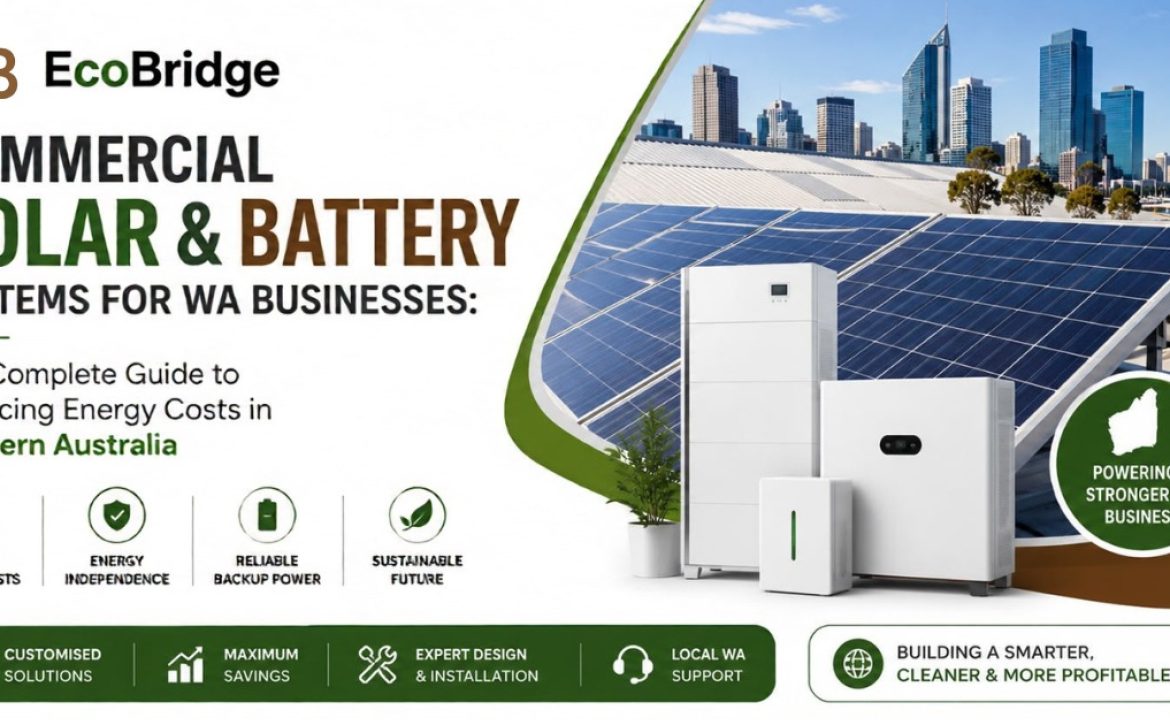
Commercial Solar and Battery Systems for WA Businesses: The Complete Guide to Reducing Energy Costs in Western Australia

Electricity prices continue to rise across Western Australia, putting pressure on businesses of all sizes. Whether you operate a warehouse in Perth, a manufacturing facility in Kwinana, a retail store in Fremantle, or a regional agricultural business, energy costs are becoming one of the largest operating expenses.

Commercial solar and battery storage systems offer a practical, long-term solution. By generating your own electricity during the day and storing excess energy for use during peak periods or outages, businesses can dramatically reduce power bills while improving energy reliability.


At EcoBridge Australia, we help Western Australian businesses design and install commercial solar and battery solutions that maximize savings and deliver long-term returns.

Why WA Businesses Are Investing in Commercial Solar

Western Australia enjoys some of the highest solar radiation levels in the world, making it one of the best locations for commercial solar installations.

Businesses benefit from:

  • Lower electricity costs
  • Protection from rising energy prices
  • Reduced carbon emissions
  • Improved energy independence
  • Better business sustainability
  • Increased property value
  • Positive environmental branding

For many businesses, commercial solar pays for itself within several years while continuing to generate savings for more than 25 years.


Why Add Battery Storage?

Solar panels generate electricity during daylight hours. However, many businesses consume significant energy early in the morning, evenings, or during cloudy periods.

Battery storage solves this problem by storing excess solar energy generated during the day.

Benefits include:

Lower Peak Demand Charges

Commercial electricity bills often include demand charges. Batteries help reduce these expensive peak demand periods.

Backup Power During Outages

Battery systems provide backup power, helping businesses continue operating during unexpected blackouts.

Increased Solar Self-Consumption

Instead of exporting excess electricity back to the grid at low feed-in tariffs, businesses can use stored energy when electricity prices are highest.

Energy Independence

Less dependence on the electricity grid means greater protection against future price increases.


Which Businesses Benefit Most?

Commercial solar and battery storage systems are ideal for:

  • Manufacturing facilities
  • Warehouses
  • Retail centres
  • Shopping complexes
  • Hotels
  • Restaurants
  • Farms
  • Schools
  • Hospitals
  • Office buildings
  • Automotive workshops
  • Cold storage facilities
  • Logistics companies
  • Mining support businesses

Any business with daytime electricity usage can significantly reduce operating costs with solar.


Typical Commercial Solar System Sizes

The right system depends on your business’s electricity usage.

Business TypeRecommended Solar Size
Small Office20–30 kW
Retail Store30–50 kW
Medium Warehouse50–100 kW
Factory100–250 kW
Industrial Facility250 kW+

Battery capacity is selected based on your load profile and backup requirements.


How Much Can WA Businesses Save?

Savings depend on:

  • Electricity consumption
  • System size
  • Battery capacity
  • Peak demand charges
  • Energy usage patterns

Many businesses reduce electricity costs by 40% to 80%, depending on how much solar energy they consume on-site.

For businesses with high daytime electricity usage, commercial solar can generate substantial annual savings while providing excellent return on investment.


Components of a Commercial Solar and Battery System

A complete commercial energy solution includes:

Solar Panels

High-efficiency commercial solar panels convert sunlight into electricity.

Commercial Inverters

Inverters convert DC electricity into AC electricity suitable for business operations.

Battery Storage

Commercial batteries store unused solar power for later use.

Energy Monitoring

Smart monitoring systems provide real-time insights into:

  • Solar production
  • Battery performance
  • Grid usage
  • Energy savings

Business owners can monitor their systems remotely through mobile apps or online dashboards.


Government Incentives for WA Businesses

Australian businesses may be eligible for government incentives that reduce the upfront cost of commercial solar installations.

These may include:

  • Small-scale Technology Certificates (STCs) for eligible systems
  • Large-scale Generation Certificates (LGCs) for larger installations
  • Accelerated depreciation benefits (subject to current tax regulations)
  • State-based commercial energy initiatives where applicable

Our team helps businesses identify available incentives and maximize potential savings.


Commercial Battery Options

Modern battery systems offer excellent performance and scalability.

Popular commercial battery technologies include:

  • Sungrow
  • Sigenergy
  • Alpha ESS
  • BYD
  • Tesla Powerwall (small commercial)
  • Huawei

The best battery depends on:

  • Energy consumption
  • Backup requirements
  • Available installation space
  • Budget

EcoBridge Australia helps businesses choose the most suitable solution.


Commercial solar and battery storage systems Installation Process

1. Energy Assessment

We analyse your electricity bills and energy usage.

2. Site Inspection

Our experts assess roof space, switchboards, shading, and structural suitability.

3. System Design

A customised solar and battery solution is designed for your business.

4. Quote

You’ll receive a transparent proposal outlining projected savings, costs, and ROI.

5. Installation

CEC-accredited installers complete the installation safely and efficiently.

6. Commissioning

Why Choose EcoBridge Australia?

At EcoBridge Australia, we specialise in delivering reliable renewable energy solutions tailored to Australian businesses.

Your system is tested, connected, and monitored to ensure optimal performance.

Our advantages include:

  • CEC-accredited installers
  • Premium solar panels and battery systems
  • Custom commercial designs
  • Honest advice
  • Ongoing local support
  • High-quality workmanship
  • Competitive pricing
  • Long-term warranties

Our goal is to help Western Australian businesses reduce operating costs while transitioning to clean, renewable energy.


Future-Proof Your Business

Electricity prices are unlikely to decrease in the coming years.

Businesses that invest in commercial solar and battery systems today gain:

  • Lower operating costs
  • Greater energy security
  • Improved sustainability
  • Stronger competitive advantage
  • Long-term financial savings

The earlier you switch, the sooner your business starts saving.


Get a Free Commercial Solar Quote

If you’re ready to reduce electricity costs and improve your business’s energy efficiency, EcoBridge Australia can help.

Our commercial solar specialists provide:

  • Free site assessments
  • Tailored system designs
  • Transparent pricing
  • Professional installation
  • Ongoing technical support

Contact us today to discover how much your Western Australian business could save with commercial solar and battery storage.


Contact EcoBridge Australia

You can get in touch with EcoBridge Australia for a free commercial solar consultation:

  • Website:https://ecobridgeenergy.com/
  • Email: info@ecobridgeenergy.com

Frequently Asked Questions (FAQs)

1. Is commercial solar worth it for businesses in Western Australia?

Yes. Western Australia receives abundant sunshine, making commercial solar one of the most cost-effective ways for businesses to reduce electricity bills and improve energy independence.


2. How much can my business save with commercial solar?

Savings vary depending on your energy usage and system size, but many WA businesses reduce electricity costs by 40%–80%.


3. Why should I install a battery with my commercial solar system?

Battery storage allows you to store excess solar energy for use during peak electricity pricing, at night, or during power outages, increasing your energy savings and reliability.


4. How long do commercial solar panels last?

Most high-quality commercial solar panels are designed to last 25 years or more, with minimal maintenance.


5. What size solar system does my business need?

The ideal system size depends on your electricity consumption, available roof space, and future energy requirements. EcoBridge Australia provides customised system designs based on your business needs.


6. Are government rebates available for commercial solar?

Eligible businesses may qualify for Australian renewable energy incentives such as STCs or LGCs, depending on the system size and applicable regulations.


7. Will solar work during a power outage?

Standard grid-connected solar systems shut down during outages for safety reasons. However, a battery system with backup capability can continue supplying power to selected business circuits.


8. How long does installation take?

Most commercial solar installations are completed within a few days to several weeks, depending on the project size, site conditions, and approvals.


9. What maintenance does a commercial solar system require?

Commercial systems require periodic inspections, cleaning when necessary, and performance monitoring to ensure optimal efficiency.


10. Why choose EcoBridge Australia for commercial solar in WA?

EcoBridge Australia offers tailored commercial solar and battery solutions, CEC-accredited installations, premium equipment, transparent advice, and ongoing support to help businesses maximize long-term energy savings.