


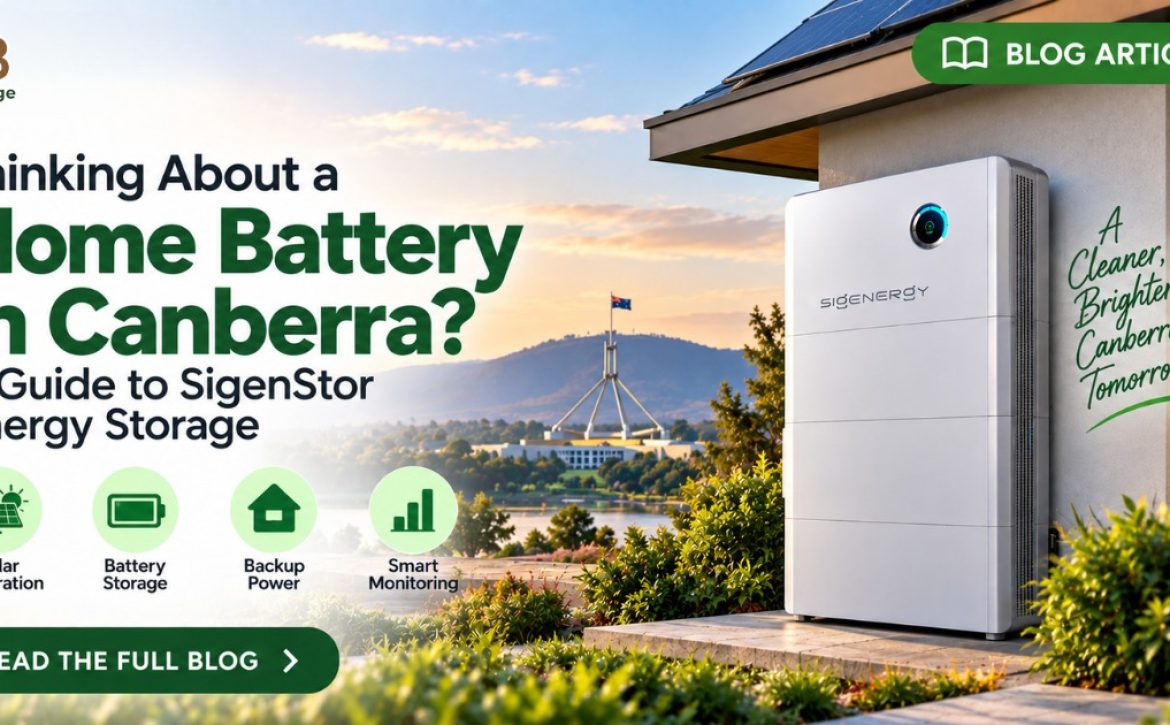
Thinking About a Home Battery in Canberra? A Guide to SigenStor Energy Storage
For many Canberra homeowners, installing solar panels is only the first step towards taking greater control of household energy use. Solar panels can generate electricity during the day, but much of a home’s electricity consumption can occur later in the afternoon and evening, when solar generation is falling or has stopped.
This is where battery storage can play an important role.
A home battery allows excess solar energy generated during the day to be stored and used later, helping households make greater use of the electricity their solar system produces.
One system attracting attention in the home energy storage market is SigenStor by Sigenergy.
SigenStor Battery Canberra is designed as an integrated energy system combining solar conversion, battery storage, energy management and EV charging in one platform. But what does that actually mean for a Canberra homeowner, and is an integrated system suitable for every home?
Let’s take a closer look.
What Is SigenStor?
SigenStor is a modular home energy storage system designed by Sigenergy.
Rather than treating the solar inverter, battery, energy management system and EV charger as completely separate products, SigenStor brings multiple functions together within an integrated platform.
The system can combine:
- Solar inverter
- Battery storage
- Battery power conversion
- Energy management
- EV charging
- Home energy monitoring
- Backup power functionality
The EV charging component can be included depending on the homeowner’s requirements.
This integrated approach can be useful for homeowners who are thinking beyond simply adding a battery and want to coordinate solar generation, energy storage, household consumption and potentially EV charging.
How Does SigenStor Work With Solar?
A typical solar-only system works by converting sunlight into electricity that can be used by the home.
For example:
Solar panels → Home electricity consumption → Excess solar exported to the grid
The challenge is that solar production and household consumption don’t always occur at the same time.
A household might produce substantial solar energy around midday while nobody is home. Later in the evening, the household may be using electricity for lighting, cooking, heating, cooling, hot water or other appliances when the solar panels are producing little or no electricity.
With battery storage, the energy flow can become:
Solar panels → Home → SigenStor battery → Home
Instead of exporting all excess solar immediately, surplus generation can be stored and subsequently used when required.
SigenStor’s integrated energy management system is designed to coordinate energy generation, storage and consumption.
The system can also provide monitoring and energy management through its connected platform, allowing homeowners to understand how their solar, battery and household energy consumption are interacting.
Why Consider Battery Storage in Canberra?
Battery storage can be useful for households that already have solar but still purchase electricity from the grid.
The main concept is simple.
During the day
Solar panels generate electricity.
The home uses the electricity it needs first.
Excess solar can then be directed towards charging the battery.
During the evening
Solar production decreases.
The battery can supply stored energy to the home.
When solar and battery energy are insufficient
The home can continue drawing electricity from the grid according to the system’s configuration and operating conditions.
The objective isn’t necessarily to disconnect completely from the electricity grid.
Instead, battery storage can provide another source of household energy and give homeowners greater flexibility over when they use the electricity generated by their solar system.
Canberra’s Growing Interest in Home Batteries
Battery storage is becoming an increasingly important part of Canberra’s broader energy landscape.
More homeowners are looking at batteries as a way to make greater use of their solar generation, manage household energy consumption and prepare for increasing electrification.
The growth of electric vehicles, electric hot water systems, reverse-cycle heating and cooling and other electrical appliances can also increase the amount of electricity a household uses.
For homeowners considering multiple energy upgrades, battery storage can therefore become part of a larger home energy strategy.
How Much Battery Storage Does a Canberra Home Need?
There is no single battery size that is suitable for every Canberra home.
A common mistake is to choose a battery based only on the size of the solar system.
Instead, the battery should be considered alongside the household’s actual electricity consumption.
Important factors include:
1. Daily electricity consumption
How much electricity does the household normally use each day?
A home using 15 kWh per day will have different storage requirements from a home using 30 kWh or more.
2. Evening consumption
How much electricity is consumed after solar production falls?
This can include:
- Lighting
- Cooking
- Television and entertainment
- Heating and cooling
- Hot water
- Appliances
- Home office equipment
- EV charging
3. Solar system size
A larger solar system may generate more surplus energy available for charging the battery.
However, battery capacity should still be matched to actual energy consumption and expected solar generation.
4. Existing solar system
If you’re adding a battery to an existing solar installation, the existing inverter, system architecture and electrical configuration need to be assessed.
5. Backup requirements
Some homeowners primarily want to reduce grid purchases, while others also want backup power during outages.
These are different requirements and should be discussed during system design.
6. Future energy use
Think about what your household may look like in several years.
Are you planning to:
- Buy an EV?
- Install a heat pump?
- Replace gas appliances with electric alternatives?
- Add another air conditioner?
- Increase your household’s electricity consumption?
A modular battery system may provide more flexibility where future expansion is important.
SigenStor’s Modular Battery Design
One of SigenStor’s key characteristics is its modular design.
Depending on the configuration, battery modules can be combined to increase overall storage capacity.
The advantage of modular storage is that homeowners can have greater flexibility when designing their energy system.
For example, a household may initially require a smaller system and later need additional storage because of:
- EV ownership
- Increased electricity consumption
- Electrification of heating or hot water
- Changes in household occupancy
- Greater interest in backup power
The appropriate configuration still depends on the specific equipment, installation requirements and applicable Australian standards.
SigenStor and Home Backup Power
Battery storage and backup power are related, but they are not exactly the same thing.
A battery can store energy without necessarily providing backup power to the entire home during a grid outage.
A properly designed backup system needs to account for how the system detects an outage, isolates the home from the grid and supplies the selected loads.
For homeowners considering backup, it is important to ask:
What do you actually want to keep running during an outage?
You might want backup for selected essential loads such as:
- Refrigeration
- Lighting
- Internet
- Security systems
- Selected power outlets
- Essential appliances
Alternatively, you may want a larger backup system capable of supporting substantially more of the home’s electrical demand.
The required battery capacity, inverter capacity, switchboard configuration and backup equipment can vary considerably between properties.
A site assessment is therefore important before promising whole-home backup.
SigenStor and EV Charging
One of SigenStor’s distinguishing features is its integration with EV charging.
For households considering an electric vehicle, this can create an opportunity to connect several energy technologies together.
Instead of having separate systems for solar, battery storage and EV charging, an integrated system can coordinate these technologies around the home’s energy requirements.
The concept can look like this:
Solar → Home → Battery → EV
Depending on the equipment and configuration, the EV can also become part of the wider home energy ecosystem.
This makes SigenStor particularly relevant to homeowners who are considering both battery storage and EV ownership.
However, vehicle compatibility and supported charging functionality should always be confirmed before installation.
Solar + Battery + EV: Creating an Integrated Energy System
Consider a Canberra home with:
- Rooftop solar
- SigenStor battery
- Electric hot water
- Reverse-cycle heating and cooling
- EV charging
The energy system could be designed around the following concept:
Solar generation → Household consumption → Battery storage → EV charging → Grid
The energy management system can then coordinate these energy flows according to the system configuration and operating priorities.
This is different from installing several completely independent products that each operate separately.
For households considering multiple energy upgrades, system integration can therefore become an important part of the discussion.
Can SigenStor Be Added to an Existing Solar System?
Potentially, yes — but the answer depends on the existing solar installation.
Before adding battery storage, an installer should assess factors such as:
- Existing inverter
- Solar panel capacity
- Switchboard
- Phase configuration
- Metering
- Available installation space
- Existing protection equipment
- Network requirements
- Desired backup functionality
- Battery location
- Future EV charging requirements
A homeowner with an existing solar system should not assume that every battery can simply be connected to the existing installation without additional equipment or changes.
The most appropriate architecture should be determined during the site and electrical assessment.
Canberra Battery Incentives and Financing
For eligible Canberra households, government programs and financing options can be relevant when considering energy upgrades.
The ACT’s Sustainable Household Scheme provides eligible households with access to financing for a range of energy-efficient products and upgrades, including battery storage.
There may also be other battery-related incentives or federal programs available depending on the homeowner’s circumstances and the eligibility requirements at the time of installation.
Because government programs, eligibility criteria and incentive amounts can change, homeowners should always check the current requirements before making a purchasing decision.
Is SigenStor Suitable for Every Canberra Home?
Not necessarily.
A battery system should be selected based on the property’s energy requirements rather than simply choosing a particular brand.
SigenStor may be worth considering for homeowners who are looking for an integrated system that can combine:
- Solar
- Battery storage
- Energy management
- Backup functionality
- EV charging
- Future expansion
However, the right solution will depend on the home’s energy profile.
For example, a household with very low electricity consumption may have different requirements from a large home with electric heating, multiple air-conditioning systems, an EV and high evening consumption.
The important question isn’t simply:
“Which battery is best?”
Instead, consider:
“Which system configuration matches the way my home actually produces and uses energy?”
What Should You Compare Before Buying a Home Battery?
Before choosing a battery system in Canberra, consider more than just the advertised storage capacity.
Battery Capacity
How many usable kWh can the system store?
Power Output
How much power can the battery deliver at one time?
This matters when several appliances are operating simultaneously.
Solar Compatibility
Is the system suitable for your existing or planned solar configuration?
Backup Capability
Does the proposed system support backup, and which circuits will be backed up?
Expandability
Can additional battery modules be added later?
EV Integration
Are you planning to charge an EV at home?
If so, does the system support the charging approach you want?
Monitoring
Can you easily monitor solar production, battery state of charge, household consumption and grid imports?
Installation Requirements
Is there sufficient space, and does the proposed location meet the relevant installation and safety requirements?
Warranty and Support
Understand the battery warranty, performance warranty, installer support and manufacturer’s service arrangements.
Total Installed Cost
Don’t compare batteries purely on cost per kWh.
Installation, electrical work, backup equipment, switchboard modifications, monitoring equipment and other components can affect the total project cost.
SigenStor Battery Storage for New Solar Installations
If you don’t currently have solar, you have an opportunity to design the entire energy system together.
Instead of installing solar first and deciding about battery storage later, you can consider:
Solar + Battery + Backup + EV
as one overall energy strategy.
This can be particularly useful for new homes or households already planning several electrical upgrades.
The solar system can be sized around your electricity consumption, roof characteristics and future energy requirements, while battery storage can be considered alongside your expected evening consumption.
SigenStor Battery Canberra for Existing Solar Homes
For homeowners who already have solar, adding battery storage can be a different process.
Your existing system may already have:
- Solar panels
- String inverter
- Microinverters
- Hybrid inverter
- Existing monitoring
- Existing switchboard configuration
The compatibility and design options will depend on the equipment already installed.
An installer should therefore review your existing system before recommending a battery configuration.
A recent electricity bill, solar-system information and photographs of the switchboard and existing equipment can help provide an initial understanding of the property.
What Does a Battery Assessment in Canberra Involve?
A professional battery assessment should look at more than your roof.
A typical assessment may consider:
- Electricity Usage
How much energy are you consuming?
- Solar Generation
How much electricity is your existing or proposed solar system producing?
- Consumption Profile
When are you using the most electricity?
- Battery Requirement
How much storage could be useful?
- Backup Requirement
Which appliances or circuits need to operate during an outage?
- Electrical Infrastructure
Can the existing switchboard and electrical installation support the proposed system?
- Future Requirements
Are you planning an EV, heat pump, electric hot water or other major electrical loads?
These factors help determine whether battery storage makes sense and what type of configuration should be considered.
Is a Larger Battery Always Better?
Not necessarily.
A larger battery provides more storage capacity, but that does not automatically mean it will provide a better financial outcome for every household.
The battery should have a realistic opportunity to charge and discharge based on the property’s solar generation and electricity consumption.
For example, if a household has limited surplus solar and relatively low energy consumption, a very large battery may not operate in the same way as it would in a high-consumption home with substantial solar generation.
This is why battery sizing should be based on actual energy data wherever possible.
Why the Right System Design Matters
A home battery is not simply a box that stores electricity.
The complete system can involve:
Solar panels
↓
Solar inverter / energy controller
↓
Battery storage
↓
Home loads
↓
EV charging
↓
Grid
How these components interact affects the overall performance and functionality of the system.
A properly designed installation should therefore consider the household’s current needs as well as potential future changes.
Getting a SigenStor Battery Canberra Assessment
If you’re considering a SigenStor Battery Canberra, the first step should be understanding your home’s energy requirements.
You don’t necessarily need to decide on a battery size before speaking with an installer.
Instead, start with your:
- Recent electricity bill
- Existing solar-system details
- Typical household electricity consumption
- Preferred battery capacity
- Backup requirements
- EV plans
- Available installation space
From there, a solar and battery assessment can help determine the appropriate system configuration.
Ready to Explore Battery Storage for Your SigenStor Battery Canberra Home?
SigenStor brings solar generation, battery storage, intelligent energy management and EV charging into an integrated energy platform. Its modular design allows different system configurations depending on the property’s requirements, while its EV charging capability can make it relevant for households planning to electrify their transport as well.
But the right battery system ultimately depends on the individual home.
Whether you already have solar or you’re starting from scratch, the best place to begin is with an assessment of your electricity usage, solar generation, backup requirements and future energy plans.
Get a Personalised Solar & Battery Assessment
Thinking about installing a SigenStor Battery Canberra ?
Send us your recent electricity bill and details of your existing solar system, and we’ll help assess the battery capacity, solar configuration and backup options that may be suitable for your home.
Request Your Canberra Solar & Battery Assessment Today
Ready to Explore Battery Storage in Canberra?
Whether you’re installing a new solar system or adding battery storage to an existing one, EcoBridge Solar can help you design a SigenStor solution tailored to your home’s energy usage, backup needs, and future electrification plans.
Contact EcoBridge Solar
Looking for a personalised solar and battery assessment in Canberra?
EcoBridge Solar can help assess your home’s electricity usage, existing solar system, battery sizing, backup options, and EV charging requirements.
Email : info@ecobridgeenergy.com
Website : https://ecobridgeenergy.com/
Service Area
Canberra, ACT and surrounding regions.
Contact EcoBridge Solar today for a personalised solar and battery assessment in Canberra.
Frequently Asked Questions (FAQs)
1. What is SigenStor?
SigenStor is an all-in-one home energy storage system by Sigenergy that combines a solar hybrid inverter, battery storage, smart energy management, optional EV charging, and backup power capabilities into a single integrated platform.
2. Can I add a SigenStor battery to my existing solar system in Canberra?
Yes, in many cases. Compatibility depends on your existing inverter, switchboard, solar system design, metering, and backup requirements. A site assessment is recommended before installation.
3. How do I know what battery size I need?
The ideal battery size depends on your daily electricity consumption, evening energy usage, solar generation, future EV plans, and whether you want backup power—not just the size of your solar system.
4. Does SigenStor provide backup power during a blackout?
It can, if the system is designed with backup functionality. Backup can be configured for essential circuits or, in some homes, a larger portion of the home’s electrical load depending on the installation design.
5. Can SigenStor charge an electric vehicle using solar power?
Yes. SigenStor supports integrated EV charging, allowing compatible EV charging to be coordinated with your home’s solar generation and battery storage.
6. Is SigenStor suitable for single-phase and three-phase homes?
SigenStor is available in configurations suitable for different electrical supply types, but the appropriate setup depends on your home’s electrical infrastructure and installation requirements.
7. Can I expand my SigenStor battery later?
Yes. SigenStor uses a modular battery design, allowing additional battery modules to be added later if your household’s energy requirements increase.
8. Will a battery eliminate my electricity bill?
Not necessarily. A battery can help reduce grid electricity usage by storing excess solar energy, but most homes still remain connected to the electricity grid and may continue importing electricity when needed.
9. Are there battery incentives available in Canberra?
Eligible ACT households may be able to access financing through the ACT Sustainable Household Scheme for battery storage and other energy-efficient home upgrades. Eligibility should be confirmed at the time of application.
10. How long does a home battery installation take?
Most residential battery installations are completed within a day, although the total project timeline depends on system design, approvals, equipment availability, and any required switchboard upgrades.
