Read More

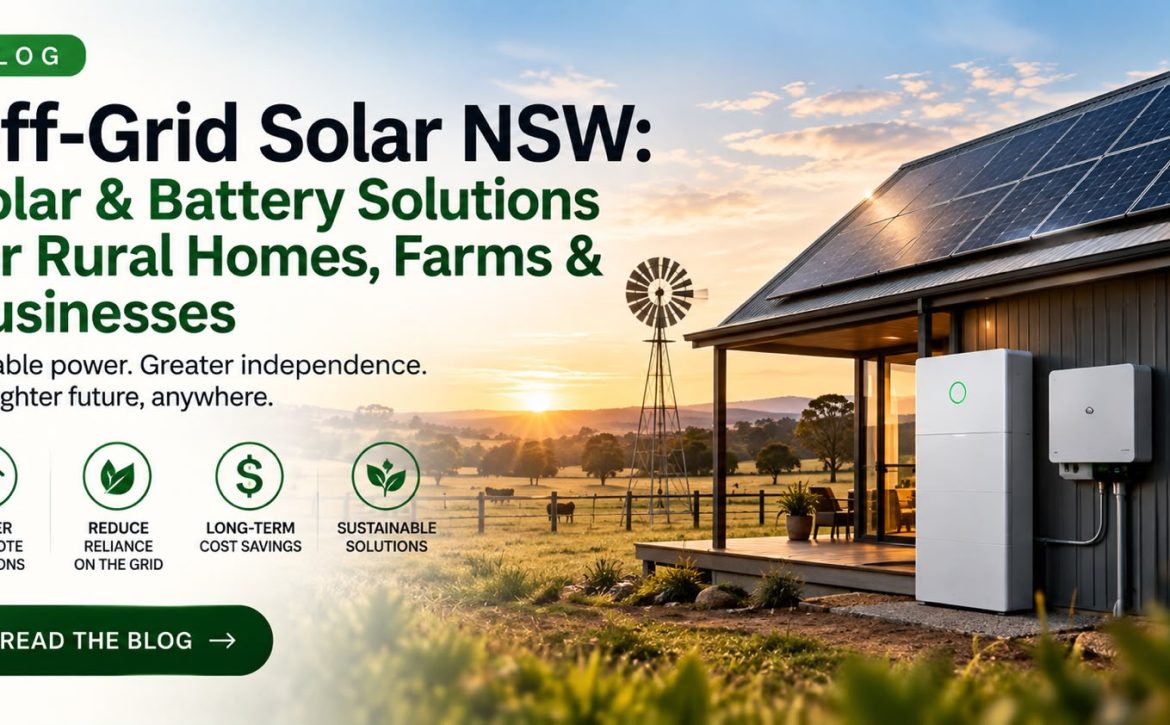
Off-Grid Solar NSW: Solar & Battery Solutions for Rural Homes, Farms & Businesses

Living in a rural or regional part of NSW can come with energy challenges that aren’t always experienced in major towns and cities. Some properties are located far from the electricity grid, while others experience unreliable supply, expensive Off-Grid Solar connection requirements or simply want greater energy independence.

An Off-Grid Solar NSW and battery system can provide an alternative by combining solar panels, battery storage and backup technology to create an independent power system.

Whether you’re powering a rural home, farm, shed, workshop or small business, the right system needs to be designed around your property’s actual electricity requirements.

At EcoBridge Solar, we help rural property owners across NSW design customised off-grid solar and battery solutions that match their energy needs, property size, and long-term goals.

What is an off-grid solar system?

An off-grid solar system generates and stores electricity without relying on the electricity grid.

A typical system includes:

  • Solar panels
  • Battery storage
  • Off-grid/hybrid inverter
  • Backup generator where required
  • Energy management and monitoring equipment

During the day, solar panels generate electricity. Excess energy can be stored in the battery and used later when solar generation is low or during the night.

For rural properties, system design is particularly important because there may be limited or no grid backup available.

Who can benefit from Off-Grid Solar NSW?

Off-grid systems can be suitable for a wide range of properties, including:

🏡 Rural homes
Properties located away from reliable grid infrastructure can use solar and batteries for everyday household electricity.

🌾 Farms and agricultural properties
Solar and battery systems can help power pumps, irrigation equipment, sheds, refrigeration and other agricultural loads.

🔨 Workshops and sheds
Off-grid power can provide electricity for lighting, tools, machinery and other equipment without requiring a conventional grid connection.

🏢 Rural businesses
Businesses operating in regional areas can explore solar and battery solutions to improve energy independence and reduce reliance on grid electricity.

🏕️ Remote properties
Properties used seasonally or located in remote areas can benefit from an appropriately sized standalone energy system.

How much solar and battery storage do you need?

There isn’t a single system size that works for every rural property.

Your system may need to account for:

  • Daily electricity consumption
  • Peak electricity demand
  • Number of occupants
  • Solar generation potential
  • Battery capacity
  • Seasonal energy usage
  • Pumps and motors
  • Refrigeration
  • Workshop equipment
  • Electric hot water
  • EV charging
  • Backup requirements

For example, a rural home with basic electricity requirements will have very different requirements from a farm running pumps, refrigeration and machinery.

That’s why getting the system correctly sized is one of the most important steps before purchasing an off-grid system.

Solar + battery vs generator

Many rural properties traditionally rely on generators for backup or primary power.

Solar and battery storage can reduce generator reliance by providing renewable electricity during the day and stored energy when solar generation isn’t available.

However, a generator can still be useful as additional backup for properties with particularly high energy requirements or during extended periods of poor solar generation.

The best solution depends on the property’s electricity usage and required level of energy security.

How much does an off-grid solar system cost in NSW?

The cost can vary significantly depending on the property and system requirements.

Factors include:

  • Solar panel capacity
  • Battery capacity
  • Inverter type
  • Backup requirements
  • Installation complexity
  • Distance from existing electrical infrastructure
  • Generator integration
  • Electrical upgrades
  • Property accessibility
  • Energy consumption

Rather than choosing a system based purely on the lowest upfront price, rural property owners should consider long-term reliability, battery capacity, system expandability and the cost of maintaining backup power.

Can you get government incentives for off-grid solar in NSW?

Eligibility for incentives can depend on the type of property, system, equipment and whether the installation is connected to the electricity grid.

This is particularly important for rural properties because off-grid systems can have different eligibility requirements from standard grid-connected solar installations.

Before making a purchase, check your eligibility and have the proposed system assessed against the relevant current requirements.

Get an Off-Grid Solar Assessment

Every rural property is different.

Before investing in an off-grid solar and battery system, get an assessment of your electricity consumption, solar potential and battery requirements.

Thinking about going off-grid in Regional NSW?

Get a free solar & battery assessment and find out what system could suit your property.

Contact EcoBridge Solar

EcoBridge Solar – Off-Grid Solar Specialists in NSW

Email : info@ecobridgeenergy.com

Website : https://ecobridgeenergy.com/

Book your FREE Solar & Battery Assessment today and discover an off-grid energy solution designed for your home, farm, shed or business.

Frequently Asked Questions (FAQs)

1. What is the difference between an off-grid and grid-connected solar system?

A grid-connected solar system remains connected to the electricity network and can import or export power. An off-grid solar system operates independently using solar panels, battery storage and, if required, a backup generator.

2. Is off-grid solar suitable for rural homes in NSW?

Yes. Off-grid solar is commonly used for rural homes that are located far from the electricity network or where connecting to the grid would be expensive or impractical.

3. How do I know what size off-grid solar system I need?

The correct system size depends on your daily electricity consumption, peak power demand, battery storage needs, seasonal usage and any equipment such as pumps, refrigeration or workshop machinery.

4. Can an off-grid solar system power a farm?

Yes. Off-grid systems can be designed to power irrigation pumps, sheds, refrigeration, livestock equipment, workshops and other agricultural operations, depending on the property’s energy requirements.

5. Do I need a battery with an off-grid solar system?

Yes. Battery storage is an essential part of an off-grid solar system because it stores excess solar energy for use during the evening, overnight and during periods of low solar generation.

6. Will I still need a generator?

Not always. Many properties rely primarily on solar panels and batteries, but a backup generator can provide additional energy during extended cloudy periods or when electricity demand is unusually high.

7. How long do off-grid solar batteries last?

Battery lifespan varies depending on the battery type, usage patterns and maintenance. Many modern battery systems are designed to provide years of reliable performance when properly managed.

8. Can I expand my off-grid solar system later?

In many cases, yes. Depending on the inverter, battery system and overall design, additional solar panels or battery capacity may be added in the future if your energy needs increase.

9. Are government rebates available for off-grid solar in NSW?

Eligibility depends on the property, system type and current government programs. It’s recommended to check the latest NSW and Australian Government incentive requirements before installation.

10. How much does an off-grid solar system cost in NSW?

Costs vary depending on solar panel capacity, battery storage, inverter size, backup generator integration, installation complexity and the property’s electricity requirements. A site assessment provides a more accurate estimate.

11. Can off-grid solar power a workshop or shed without a grid connection?

Yes. Standalone solar and battery systems can provide electricity for lighting, tools, machinery, compressors and other equipment in workshops, sheds and remote outbuildings.

12. How can EcoBridge Solar help with an off-grid installation?

EcoBridge Solar provides off-grid solar assessments, system design, battery storage solutions, installation and ongoing support for rural homes, farms, businesses, workshops and remote properties across Regional NSW.
Read More

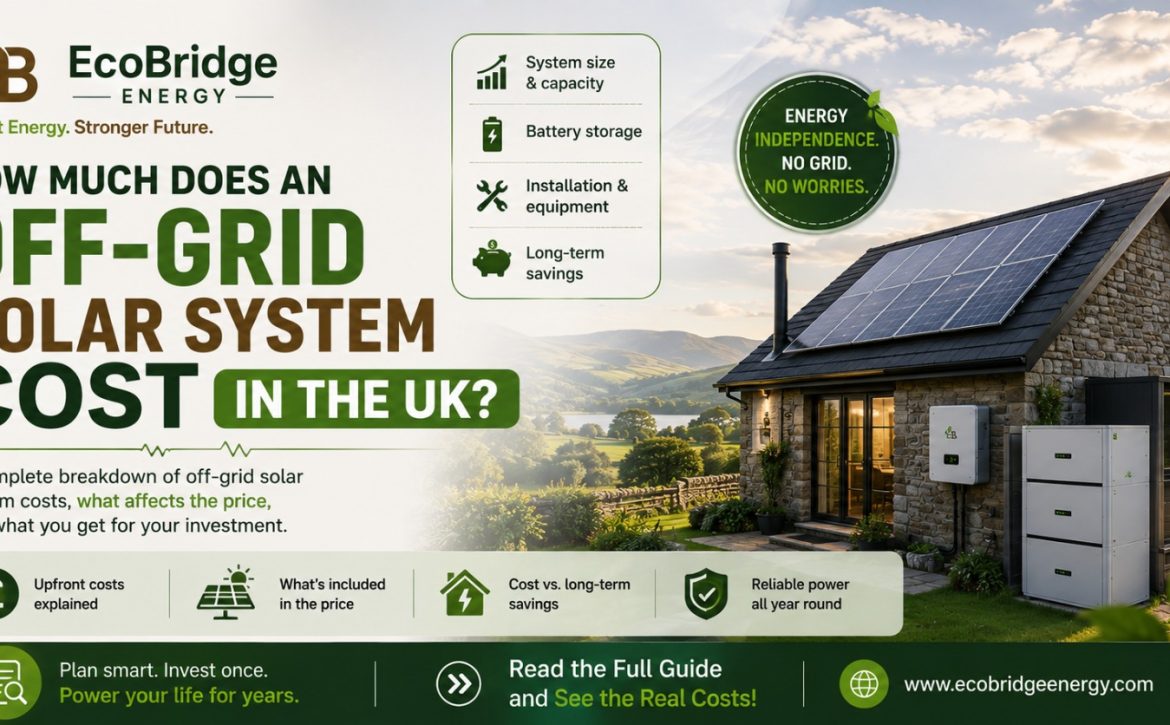
Off-Grid Solar System Costs in the UK: A Complete Homeowner’s Guide

As energy prices continue to fluctuate and homeowners look for greater energy independence, Off-Grid Solar System Cost UK are becoming an increasingly popular solution across the UK. Whether you own a remote countryside property, a cabin, a self-build home, or simply want to reduce your reliance on the National Grid, an off-grid solar system can provide reliable, renewable electricity all year round.

But one of the biggest questions homeowners ask is:

How much does an Off-Grid Solar System Cost UK ?

The answer depends on your property’s energy usage, battery storage requirements, and the size of the solar system you install. In this guide, EcoBridge UK explains the average costs, what’s included, and how to choose the right off-grid setup for your home.


Average Off-Grid Solar System Cost UK

The cost of an off-grid solar installation varies depending on how much electricity your property needs and how much battery backup you want during cloudy days or winter months.

System SizeIdeal ForEstimated Cost
1–2kWGarden offices, cabins, tiny homes, workshops£4,000–£7,000
4–6kWSmall to medium homes (2–3 bedrooms)£12,000–£18,000
8–12kWLarge family homes or rural properties£25,000–£45,000+

These estimates typically include:

  • Solar panels
  • Battery storage system
  • Off-grid inverter
  • Charge controller
  • Mounting equipment
  • Professional installation and commissioning

Unlike grid-connected systems, off-grid installations do not qualify for the Smart Export Guarantee because they do not export electricity back to the grid.


What Is an Off-Grid Solar System?

An off-grid solar system generates and stores electricity independently, allowing your property to operate without being connected to the UK’s electricity network.

A complete off-grid setup includes:

  • Solar panels that generate electricity.
  • Lithium battery storage to store excess energy.
  • An off-grid inverter that creates your home’s electricity supply.
  • Charge controllers that safely manage battery charging.
  • Optional backup generators for extended periods of poor weather.

This setup is particularly suitable for:

  • Remote rural homes.
  • Holiday lodges and cabins.
  • Agricultural buildings.
  • Self-build homes.
  • Properties where connecting to the grid is expensive.

What Affects the Cost of an Off-Grid Solar System?

1. Battery Storage

Battery storage is usually the largest investment in an off-grid system because your home depends on stored electricity overnight and during cloudy weather.

Typical battery costs in 2026:

Battery CapacityEstimated Cost
5kWh£2,500–£4,000
10kWh£5,000–£8,000
15–20kWh£8,000–£14,000+

Larger battery banks provide greater resilience during winter when solar generation is lower.

2. Off-Grid Inverter

Unlike standard solar inverters, off-grid inverters create an independent electrical supply for your home.

Typical cost:

£1,500–£3,500

The inverter manages electricity flowing between solar panels, batteries, and household appliances.

3. Solar Panels

Solar panels convert sunlight into electricity. Costs depend on panel efficiency, brand, and output.

Typical costs:

System SizeSolar Panel Cost
2kW£1,500–£2,500
4–6kW£3,000–£5,000
8–12kW£6,000–£10,000

Premium panels may cost more but often deliver better performance in limited roof space.


Installation Costs in the UK

Professional installation is essential for safety and long-term performance.

Typical installation costs:

Installation TypeCost
Small system£2,000–£3,000
Medium system£3,000–£4,000
Large system£4,000–£5,000+

Installation usually includes:

  • Electrical wiring.
  • Mounting framework.
  • Battery integration.
  • System testing.
  • Safety certification.

How Much Maintenance Does an Off-Grid System Need?

Off-grid systems require very little maintenance, but regular inspections help maximise lifespan.

Maintenance ItemTypical Cost
Annual system inspection£150–£250
Solar panel cleaningAround £100 (if required)
Inverter replacement (12–15 years)£800–£2,000

Most solar panels last 25–30 years, while batteries typically last 10–15 years, depending on usage.


What Can an Off-Grid Solar System Power?

Small System (1–2kW)

Suitable for:

  • LED lighting.
  • Wi-Fi router.
  • Laptop and phone charging.
  • Small refrigerator.
  • Television.
Medium System (4–6kW)

Suitable for:

  • Fridge freezer.
  • Washing machine.
  • Microwave.
  • Home office equipment.
  • Lighting throughout the property.
Large System (8–12kW)

Suitable for:

  • Family homes.
  • Dishwasher.
  • Water pumps.
  • Multiple appliances running simultaneously.
  • Electric vehicle charging (with sufficient battery storage).

Is Off-Grid Solar Worth It?

For many rural properties, yes.

A new connection to the National Grid can cost anywhere from £10,000 to £50,000, particularly in remote locations. In these cases, an off-grid solar system may be the more economical long-term solution.

Potential Return on Investment
ScenarioEstimated Payback
Remote property avoiding grid connectionImmediate to 10 years
Existing home switching off-gridAround 10–15 years

The financial benefits include reduced electricity bills and protection against future energy price rises.


Factors That Influence Your Final Quote

Your quotation will depend on several factors:

  • Daily electricity consumption.
  • Number of occupants.
  • Roof size and orientation.
  • Property location within the UK.
  • Battery capacity required.
  • Ground-mounted versus roof-mounted installation.
  • Backup generator requirements.

A detailed site survey helps determine the right system size for your property.


How to Reduce the Cost of Going Off-Grid

Homeowners can maximise savings by:

Choose Energy-Efficient Appliances

Lower electricity demand means fewer panels and smaller batteries.

Use Electricity During the Day

Run washing machines, dishwashers, and other heavy appliances during peak sunlight hours.

Monitor Battery Performance

Smart monitoring apps help you track energy production and battery levels.

Keep Panels Clean

Removing dirt, leaves, and debris helps maintain maximum energy production throughout the year.


Why Choose EcoBridge UK?

At EcoBridge UK, we design and install tailored off-grid solar systems for homes, farms, self-build projects, and commercial properties across the UK.

What We Offer
  • Free consultation and energy assessment.
  • Custom-designed off-grid solar solutions.
  • Premium solar panels and lithium battery systems.
  • Certified professional installation.
  • Ongoing maintenance and technical support.
  • Transparent pricing with no hidden costs.

Our team helps homeowners build reliable renewable energy systems that are designed for long-term performance and energy independence.


Get Your Free Off-Grid Solar Quote Today

Thinking about living independently from the grid?

EcoBridge UK can help you choose the right solar panels, battery storage, and inverter system for your property’s energy needs.

Contact EcoBridge UK today for a free consultation and personalised off-grid solar quote.

Contact EcoBridge UK

EcoBridge UK – Renewable Energy Specialists

Email: info@ecobridgeenergy.com

Website:https://ecobridgeenergy.com/

Frequently Asked Questions (FAQs)

1. How much does an off-grid solar system cost in the UK?

The average cost of an off-grid solar system in the UK ranges from £4,000 to over £45,000 depending on the size of the system, battery storage capacity, and installation requirements. A typical family home usually requires a 4kW–6kW system costing between £12,000 and £18,000.

2. Can I run my entire house off-grid with solar panels?

Yes. A properly designed off-grid solar system with sufficient solar panels and battery storage can power an entire home. Larger homes typically require 8kW–12kW systems combined with 15kWh–20kWh or more battery storage.

3. Do off-grid solar systems work during winter in the UK?

Yes. Off-grid systems continue generating electricity during winter, although production is lower due to shorter daylight hours. Larger battery storage and efficient energy management help maintain power during cloudy periods.

4. How many batteries do I need for an off-grid solar system?

The number of batteries depends on your daily electricity consumption. Most UK homes require 10kWh to 20kWh of battery storage to provide overnight power and backup during poor weather.

5. Is battery storage included in the price?

Most off-grid solar quotes include battery storage because it is an essential part of the system. Battery capacity significantly influences the overall installation cost.

6. Do I need planning permission for an off-grid solar system?

In many cases, rooftop solar panels fall under permitted development rights in the UK. However, listed buildings, conservation areas, or ground-mounted systems may require planning permission. EcoBridge UK can advise during your site survey.

7. Can I add a backup generator to my off-grid system?

Yes. Many homeowners choose to integrate a petrol or diesel backup generator for additional energy security during extended periods of low solar generation.

8. How long do off-grid solar batteries last?

Modern lithium batteries typically last 10–15 years or between 6,000–10,000 charge cycles, depending on usage and maintenance.

9. Is off-grid solar cheaper than connecting to the National Grid?

For remote properties, off-grid solar can often be more affordable than paying £10,000–£50,000 for a new grid connection. It also provides long-term energy independence.

10. How long does an off-grid solar installation take?

Most residential off-grid solar installations take 2–5 days, depending on system size, battery installation, and property complexity.

11. Can I charge an electric vehicle with an off-grid solar system?

Yes. Larger off-grid systems with adequate battery storage can support EV charging, especially when charging during daylight hours when solar production is highest.

12. Why choose EcoBridge UK for an off-grid solar installation?

EcoBridge UK offers customised off-grid solar solutions, certified installation, premium battery storage systems, transparent pricing, and ongoing maintenance support to help homeowners achieve reliable energy independence.

Read More

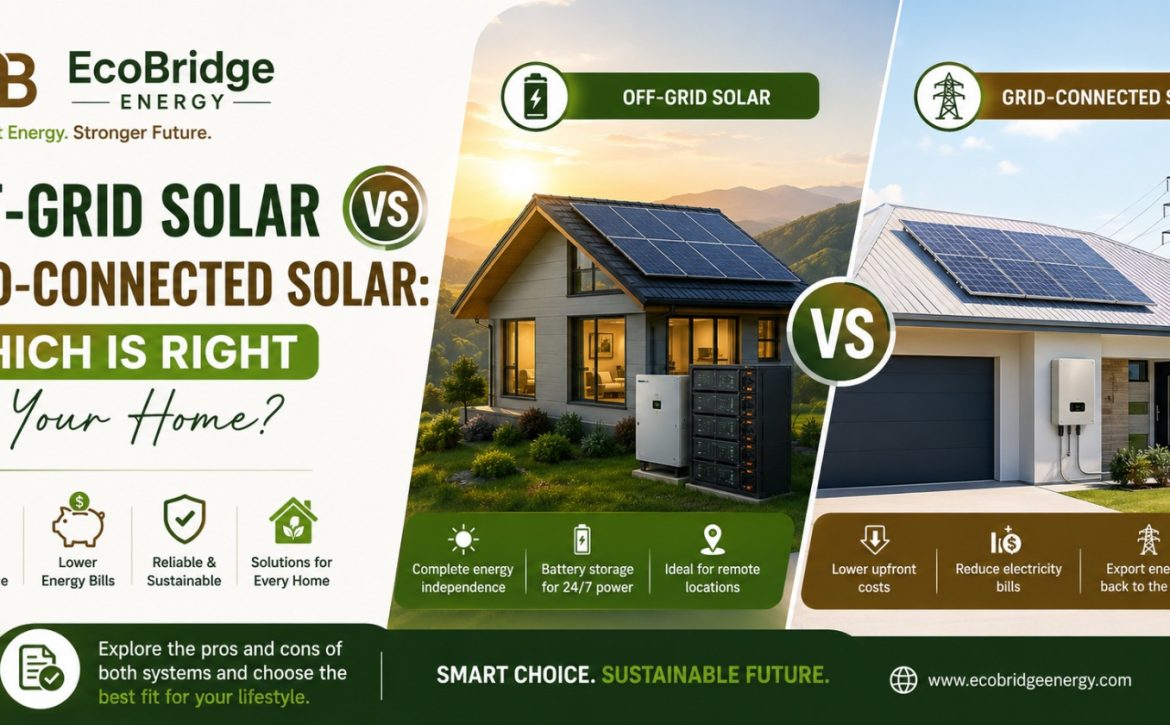
Off-Grid Solar vs Grid-Connected Solar: Which Is Right for Your Home?

Thinking about installing solar but unsure whether you should stay connected to the electricity grid or become completely energy independent?

Choosing between Off-Grid Solar vs Grid-Connected Solar depends on your location, energy consumption, budget, battery requirements and how much independence you want from the electricity grid.

For some homeowners, a grid-connected solar system with battery storage can provide excellent savings while keeping the grid available as a backup. For remote properties, farms and homes where grid access is limited or expensive, an off-grid solar system may be a better solution.

What Is Off-Grid Solar?

An off-grid solar system operates independently from the electricity grid.

A typical system includes:

  • Solar panels
  • Battery storage
  • An off-grid or hybrid inverter
  • Battery management equipment
  • Backup generation where required

The solar panels generate electricity during the day, while batteries store excess energy for use at night or during periods of low solar production.

Because there is no grid available as a backup, the system needs to be carefully designed around your household’s electricity consumption.

What Is Grid-Connected Solar?

A grid-connected solar system remains connected to the electricity network.

Solar panels generate electricity during the day, and your home can use that energy directly. Excess electricity can be exported to the grid, depending on your electricity plan and local requirements.

Adding a battery can allow you to store surplus solar energy and use it later when your panels aren’t producing enough electricity.

This can provide a balance between energy savings, battery storage and grid reliability.

Off-Grid Solar vs Grid-Connected Solar:

  • Feature Off-Grid Solar Grid-Connected Solar
  • Electricity grid Not required Required
  • Battery Essential Optional
  • Energy independence Very high Moderate to high
  • Backup during grid outage Built into system Depends on system design
  • System complexity Higher Generally simpler
  • Upfront investment Usually higher Usually lower
  • Suitable for remote properties Excellent Depends on grid availability
  • Generator backup Sometimes recommended Usually unnecessary

Which System Costs More?

An off-grid system generally requires more equipment because it needs enough solar generation and battery capacity to meet your electricity requirements without relying on the grid.

The cost can increase further if you need:

  • Larger battery storage
  • Additional solar panels
  • High-capacity inverters
  • Generator backup
  • Special installation requirements
  • Larger backup reserves for periods of poor weather

A grid-connected solar system can often be smaller because the electricity grid remains available when solar production isn’t enough.

However, the cheapest system isn’t necessarily the best system.

The right solution should be based on your actual electricity consumption and energy goals.

How Much Battery Storage Do You Need for Off-Grid Solar?

Battery sizing is one of the most important parts of an Off-Grid Solar vs Grid-Connected Solar .

A home using relatively little electricity may require a smaller battery bank, while a larger household running air conditioning, pumps, refrigeration, electric hot water or other high-consumption appliances may require significantly more storage.

You also need to consider how many hours or days of backup energy you want.

For example, designing a system only around average daily consumption may not provide enough energy during several cloudy days.

That’s why professional system design should consider:

Daily consumption + peak demand + solar production + battery capacity + backup requirements.

What Happens During Cloudy Weather?

This is one of the biggest considerations when going off-grid.

Solar production can fall significantly during periods of heavy cloud or poor weather. An off-grid system therefore needs enough battery storage and solar generation to maintain reliable power.

Some properties may also benefit from a backup generator.

A properly designed system should account for seasonal changes rather than relying only on average summer solar production.

Who Should Consider Off-Grid Solar?

Off-grid solar can be particularly attractive for:

  • Rural properties
  • Farms
  • Remote homes
  • Properties with limited grid access
  • New developments where grid connection is expensive
  • Homeowners seeking greater energy independence
  • Properties where extending the electricity network isn’t practical

If your property already has a reliable and affordable grid connection, completely disconnecting from the grid may not always provide the best financial return.

Who Should Choose Grid-Connected Solar?

Grid-connected solar may be more suitable if:

  • You already have a reliable grid connection
  • You want to reduce electricity bills
  • You don’t want to manage a completely independent energy system
  • You want solar without a large battery investment
  • You want the grid available during periods of low solar generation

You can also add battery storage later if your energy needs change.

What About Solar + Battery Instead of Going Completely Off-Grid?

For many homeowners, this can be the middle ground.

A grid-connected solar + battery system can provide significant energy independence while maintaining access to the electricity grid when required.

During the day, solar can power your home and charge the battery. At night, stored energy can be used instead of purchasing as much electricity from the grid.

Depending on the system and installation, battery backup can also provide power to selected loads during a grid outage.

So, Which One Is Right for You?

There isn’t one answer for every property.

Choose off-grid solar if your priority is maximum energy independence and your property is remote or unsuitable for a practical grid connection.

Choose grid-connected solar if your priority is reducing electricity costs while keeping the grid available as a reliable energy source.

Consider solar + battery if you want to reduce your reliance on the grid without completely disconnecting from it.

The most important step is understanding how much energy your property actually uses before deciding on system size.

Get a Solar & Battery System Designed for Your Property

Not sure whether off-grid, grid-connected or solar + battery makes the most sense for you?

Our team can assess your electricity usage, property requirements and energy goals to help determine the right system size and battery capacity.

Get your personalised solar assessment today.

Request a Free Solar & Battery Quote →

No two properties have the same energy requirements. Get a system designed around your consumption, your property and your energy goals rather than choosing a system based only on its advertised size.

Why Choose EcoBridge Australia?

EcoBridge Australia provides customised renewable energy solutions including solar panels, battery storage, and clean energy systems for homes and businesses. Their team helps homeowners assess their energy requirements and select a system designed for efficiency, reliability, and long-term value.

Contact EcoBridge Australia

EcoBridge Australia
Website: https://ecobridgeenergy.com/
Email:info@ecobridgeenergy.com


Frequently Asked Questions (FAQs)

1. Is off-grid solar better than grid-connected solar?

Neither option is better for every homeowner. Off-grid solar provides complete independence but requires a higher investment, while grid-connected solar is usually more affordable and suitable for most homes.

2. Can I install batteries with a grid-connected solar system?

Yes. Many homeowners add battery storage to grid-connected solar systems to store excess energy and use it at night or during outages.

3. Does off-grid solar work during cloudy weather?

Yes, but energy production is reduced during cloudy conditions. A correctly sized battery system helps maintain power availability.

4. How long do solar panels last?

Quality solar panels are generally designed to provide reliable performance for 25 years or more with proper installation and maintenance.

5. Is off-grid solar expensive?

Off-grid solar usually has a higher upfront cost because it requires batteries and additional equipment. However, it can save money in locations where grid connection costs are high.

6. Can solar batteries provide backup power during blackouts?

Yes, solar batteries with backup functionality can keep essential appliances running during power outages.

7. Which solar system is most common in Australia?

Grid-connected solar systems are the most common choice because they provide energy savings while maintaining access to the electricity grid.

8. How do I choose the right solar system size?

The ideal system size depends on your electricity usage, roof space, location, future energy plans, and whether you want battery storage.