


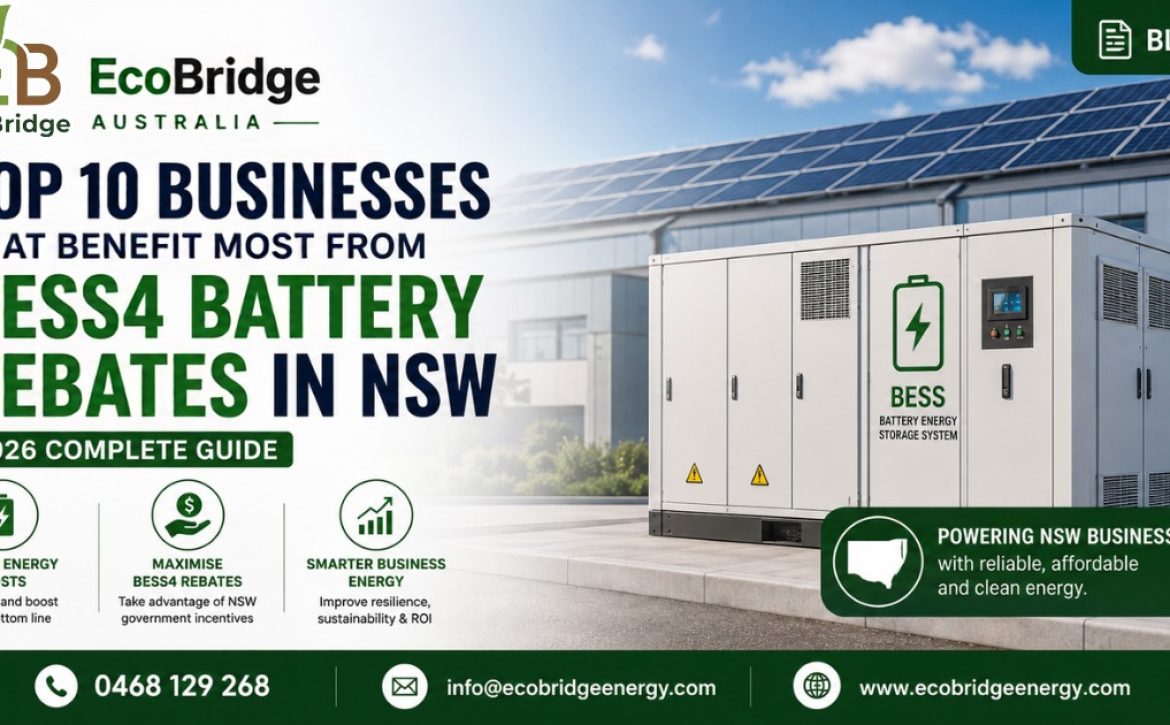
Top 10 Businesses That Benefit Most from BESS4 Battery Rebates in NSW
Introduction
Electricity costs remain one of the largest operating expenses for businesses across New South Wales. Whether you’re running a manufacturing facility, warehouse, farm, hotel, shopping centre or office building, rising energy prices can significantly impact your bottom line.
To help businesses reduce electricity consumption during peak demand periods, the NSW Government has introduced BESS4 under the Peak Demand Reduction Scheme (PDRS). This new incentive supports eligible businesses investing in commercial battery energy storage systems, making battery installation more affordable while helping businesses lower electricity costs and improve energy independence.
If your business already has a solar system—or you’re planning to install one—adding a commercial battery could dramatically improve your return on investment.
In this guide, we’ll explore the top 10 businesses that benefit the most from BESS4 battery rebates in NSW, how the incentive works, and why now is an excellent time to invest in battery storage.
What is BESS4 Battery Rebates in NSW ?
BESS4 is a new activity under the NSW Peak Demand Reduction Scheme (PDRS) designed to encourage businesses to install behind-the-meter battery storage systems.
The objective is simple:
- Reduce electricity demand during peak periods
- Increase renewable energy usage
- Lower business electricity costs
- Improve grid stability across NSW
Commercial batteries store excess electricity—usually generated by rooftop solar—and use it later when electricity prices are highest.
Instead of exporting unused solar energy back to the grid for a relatively low feed-in tariff, businesses can use stored energy during expensive evening periods.
Why Commercial Battery Storage Makes Sense
Battery storage isn’t just about backup power.
For many NSW businesses, batteries provide significant financial benefits.
Key advantages include:
- Lower electricity bills
- Reduced peak demand charges
- Better utilisation of solar energy
- Protection from rising electricity prices
- Reduced reliance on the grid
- Improved sustainability credentials
- Lower carbon emissions
- Faster return on investment for solar systems
Businesses with high daytime electricity usage often see the greatest savings.
1. Manufacturing Facilities
Manufacturing plants typically operate machinery, conveyors, compressors and industrial equipment throughout the day.
These businesses often experience high electricity demand charges that can make up a significant portion of their monthly bill.
Commercial battery storage allows manufacturers to:
- Store excess solar generation
- Reduce afternoon peak demand
- Lower maximum demand charges
- Improve operational efficiency
Industries include:
- Metal fabrication
- Food processing
- Packaging
- Timber manufacturing
- Industrial production
2. Cold Storage & Refrigeration Businesses
Cold storage facilities consume electricity 24 hours a day.
Large refrigeration systems, freezers and temperature-controlled environments require continuous power.
Commercial batteries help by:
- Reducing expensive peak electricity purchases
- Improving solar self-consumption
- Supporting refrigeration during outages (where backup systems are installed)
- Lowering operational costs
Ideal industries include:
- Food wholesalers
- Seafood processing
- Dairy facilities
- Pharmaceutical storage
3. Warehouses & Distribution Centres
Modern warehouses consume significant electricity through:
- LED lighting
- HVAC systems
- Electric forklifts
- Automation equipment
- Charging stations
- Office operations
Battery storage helps reduce demand during peak tariff periods while improving the return on existing rooftop solar installations.
4. Agricultural Businesses & Farms
Agriculture is becoming increasingly energy intensive.
Common electricity loads include:
- Irrigation pumps
- Grain dryers
- Dairy equipment
- Refrigeration
- Water pumping
- Packing facilities
Most farms also have excellent roof space for solar.
Installing battery storage allows farmers to store solar energy generated during the day and use it after sunset, reducing electricity costs throughout the year.
5.Shopping Centres & Retail Complexes
Retail centres experience high electricity consumption from:
- Air conditioning
- Escalators
- Elevators
- Food court refrigeration
- Lighting
- Car park lighting
Commercial batteries help shave peak demand and reduce operating expenses while making better use of rooftop solar generation.
6. Hotels, Resorts & Hospitality Businesses
Hotels consume electricity almost continuously.
Major loads include:
- Air conditioning
- Swimming pools
- Kitchens
- Laundry facilities
- Hot water systems
- Guest room lighting
Battery storage enables hospitality businesses to use stored solar energy during evening peak periods when electricity prices are generally highest.
7.Schools & Educational Facilities
Educational institutions are excellent candidates for commercial battery storage because they typically operate during daylight hours.
Adding batteries enables schools to:
- Store excess solar generation
- Reduce afternoon electricity imports
- Lower operating costs
- Improve sustainability goals
- Support resilience during outages (if configured)
Government schools, private schools, universities and TAFE campuses can all benefit from improved energy efficiency.
8. Medical Centres & Healthcare Facilities
Healthcare providers require reliable electricity for:
- Medical equipment
- Vaccine refrigeration
- Imaging equipment
- IT infrastructure
- Climate control
- Emergency systems
Commercial battery systems improve both energy efficiency and operational reliability.
9. Fitness Centres & Sports Facilities
Gyms often experience their highest electricity demand during mornings and evenings.
Energy is consumed by:
- Air conditioning
- Cardio equipment
- Swimming pools
- Lighting
- Saunas
- Hot water systems
Battery storage helps reduce expensive peak electricity purchases while increasing solar self-consumption.
10. Commercial Office Buildings
Office buildings are becoming increasingly energy efficient, but electricity remains one of the largest operating expenses.
Commercial batteries can reduce:
- HVAC costs
- Lighting expenses
- Peak demand charges
- Grid electricity consumption
Battery storage also contributes to improved NABERS ratings and environmental sustainability targets.
How Much Can Businesses Save?
Savings depend on several factors, including:
- Battery size
- Electricity tariffs
- Existing solar system size
- Business operating hours
- Peak electricity demand
- Energy consumption patterns
Businesses with large daytime electricity usage and existing rooftop solar often achieve the greatest financial benefits.
An energy assessment can determine the optimal battery size for your site and estimate potential savings.
Should You Install Solar and Battery Together?
If your business doesn’t already have solar, installing a commercial solar system alongside a battery often delivers the strongest financial outcome.
The combination allows you to:
- Generate your own electricity during the day
- Store excess energy for later use
- Reduce reliance on the grid
- Lower long-term operating costs
- Improve energy resilience
For businesses that already have solar, adding battery storage can significantly increase solar self-consumption and maximise the value of the energy you generate.
Why Businesses Are Investing Now
Commercial battery technology has become more affordable, while electricity prices continue to rise across NSW. Combined with the introduction of BESS4 Battery Rebates in NSW incentives, businesses now have an opportunity to reduce upfront installation costs and improve long-term returns on their energy investment.
Early adopters can benefit from lower operating expenses, greater energy independence, and improved sustainability outcomes while positioning their businesses for future energy market changes.
Why Choose EcoBridge Australia?
Finding the right commercial battery installer can be challenging. At EcoBridge Australia, our role is to simplify the process by connecting NSW businesses with trusted solar and battery professionals.
When you enquire through EcoBridge, we help you:
- Connect with experienced commercial battery installation partners across NSW.
- Compare battery technologies and system sizes for your business.
- Understand available BESS4 incentives and battery options.
- Receive tailored commercial battery proposals based on your energy needs.
- Save time by dealing with a single point of contact during the enquiry process.
Whether you’re planning a battery for a warehouse, manufacturing facility, farm, retail centre, hotel, or office building, EcoBridge helps you explore suitable commercial energy storage solutions through our network of industry professionals.
EcoBridge Australia – Contact Details
Need Expert Advice on BESS4 Battery Rebates in NSW ?
EcoBridge Australia helps homeowners and businesses across NSW and Victoria with solar battery installations, rebate guidance, and renewable energy solutions. Their team can assess your eligibility, recommend the right battery system, and manage the installation process from start to finish.
Contact EcoBridge Australia
- Website: https://ecobridgeenergy.com/
- Email: info@ecobridgeenergy.com
Get Started Today
If your NSW business is considering commercial battery storage, EcoBridge can help you take the first step.
Submit your enquiry today to discuss your energy requirements, explore BESS4-eligible battery options, and connect with trusted commercial battery specialists who can provide tailored recommendations for your business.
Frequently Asked Questions (FAQs)
1. What is the BESS4 battery rebate in NSW?
The BESS4 Battery Rebates in NSW Government incentive designed to encourage businesses and homeowners to install approved battery storage systems. The program helps reduce upfront installation costs while improving energy reliability.
2. Which businesses benefit the most from the BESS4 rebate?
Businesses with high daytime electricity consumption usually see the greatest savings, including:
- Manufacturing facilities
- Warehouses
- Retail stores
- Hotels
- Restaurants
- Farms
- Medical centres
- Schools
- Shopping centres
- Commercial offices
3. How much can a business save with a battery?
Savings depend on electricity usage, battery size, and solar generation. Many businesses can significantly reduce peak demand charges and improve their return on investment by storing excess solar energy for later use.
4. Can I install a battery without existing solar panels?
Yes. However, combining a battery with rooftop solar generally delivers the greatest financial benefit because excess solar energy can be stored instead of being exported to the grid.
5. Who is eligible for the NSW battery rebate?
Eligibility depends on factors such as:
- Installation location in NSW
- Approved battery products
- Accredited installers
- Compliance with NSW program requirements
Your installer can confirm eligibility before installation.
6. What battery size is best for commercial businesses?
The ideal battery size depends on your:
- Daily electricity consumption
- Peak demand
- Solar system capacity
- Business operating hours
- Future expansion plans
A professional energy assessment will determine the most cost-effective solution.
7. Can batteries provide backup power during blackouts?
Many modern battery systems can provide backup power when paired with compatible backup hardware. The amount of backup available depends on the battery capacity and system configuration.
8. How long do commercial batteries last?
Most quality lithium-ion batteries have a design life of approximately 10–15 years, with many manufacturers offering warranties of around 10 years, depending on usage and product specifications.
9. Is the BESS4 rebate available for new and existing businesses?
Yes. Eligible new and existing businesses can apply, provided the installation meets the current NSW program requirements and uses approved products.
10. Why choose EcoBridge Australia for battery installation?
EcoBridge Australia offers:
- Expert rebate guidance
- Accredited installers
- High-quality battery and solar systems
- End-to-end project management
- Ongoing customer support
- Residential and commercial energy solutions across NSW and Victoria.
