Read More

The Top 5 Solar Batteries in the UK | EcoBridge

Adding a solar battery to your solar panel system is one of the smartest ways to maximise the value of your solar investment. Instead of exporting unused electricity back to the grid, a battery stores excess energy so you can use it later—during the evening, overnight, or when electricity prices are higher.

With battery storage becoming increasingly popular across the UK, homeowners now have more options than ever. But choosing the right battery depends on your home’s energy usage, future expansion plans, budget, and whether you also want features like EV charging or backup power.

At EcoBridge, we help homeowners across the UK choose and install the most suitable solar battery systems. Here’s our guide to the Top 5 Solar Batteries in the UK for 2026.

Why Install a Solar Battery?

A solar battery helps you:

  • Store excess solar energy instead of exporting it.
  • Increase your solar self-consumption.
  • Reduce reliance on the National Grid.
  • Save more by using stored electricity during peak-rate hours.
  • Pair with smart tariffs to charge batteries when electricity is cheapest.

For many households, battery storage can significantly improve the return on investment from a solar panel system.

Our Top 5 Solar Batteries in the UK (2026)

BatteryBest For
Fox ESSFlexible, scalable systems and excellent value.
Anker SOLIXModern homes looking for stylish expandable storage.
SigEnergyLarge households with high energy demand.
PowervaultUK-made smart battery with AI energy management.
Tesla Powerwall 3Premium all-in-one battery with backup power features.

1. Fox ESS – Best Overall Solar Battery

Fox ESS has become one of the UK’s most popular home battery brands thanks to its flexibility, affordability, and excellent performance.

Why We Recommend Fox ESS

Pros

  • Modular battery sizes from approximately 2.3 kWh to 10.4 kWh.
  • Expandable systems up to around 45 kWh.
  • Compact stacked design saves floor space.
  • Cost-effective to upgrade as your energy needs grow.

Fox ESS is ideal for homeowners who want a future-proof system that can grow alongside additional solar panels, EV chargers, or increased household electricity use.

Cons

  • Installation is more technical than some plug-and-play battery systems.
  • Professional design and installation are recommended for optimal performance.

Best for: Most UK homes looking for a scalable and affordable battery solution.

2. Anker SOLIX – Best Design & Expandability

Anker is well known for consumer electronics, and its SOLIX battery range is quickly gaining popularity in the UK solar market.

Why Choose Anker SOLIX?

Pros

  • Sleek, modern appearance.
  • Expandable modular battery design.
  • Single-phase options between approximately 3.68 kW and 6 kW.
  • Excellent smart monitoring through the Anker app.

Cons

  • Only one stackable battery platform is currently available.
  • Larger storage systems require significant vertical space.

Best for: Homeowners who value aesthetics and smart home integration.

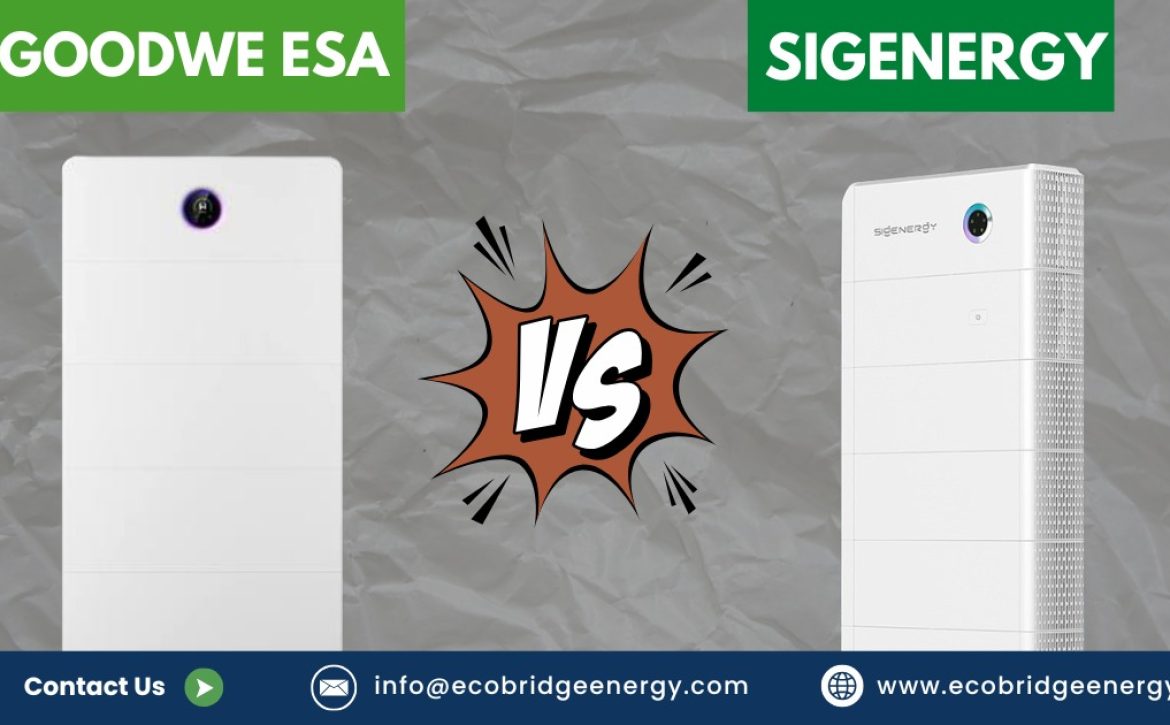
3. SigEnergy – Best for Large Energy Users

SigEnergy combines battery storage, inverter technology, EV charging, and intelligent energy management into one ecosystem.

Why Choose SigEnergy?

Pros

  • Expandable up to around 60 kWh on single-phase systems.
  • High storage capacity for large homes.
  • Integrated smart energy management platform.
  • Suitable for homes with heat pumps and EV charging.

Cons

  • Limited battery module sizes.
  • Module capacities cannot be mixed within one system.

Best for: Large family homes and high electricity consumption households.

4. Powervault – Best UK-Made Smart Battery

Powervault is a British battery manufacturer focused on intelligent home energy storage.

Why Choose Powervault?

Pros

  • Designed and supported in the UK.
  • SMARTSTOR AI software optimises charging and discharging.
  • Learns household energy usage patterns.
  • Strong value for money.

Cons

  • Lower maximum storage capacity than some competitors.
  • Larger storage systems require multiple battery units.

Best for: Homeowners wanting an intelligent battery that automatically maximises savings.

5. Tesla Powerwall 3 – Best Premium Battery

Tesla remains one of the most recognised names in home battery storage.

Why Choose Tesla Powerwall 3?

Pros

  • Integrated hybrid inverter.
  • 13.5 kWh usable battery capacity.
  • High continuous power output.
  • Storm Watch feature prepares for severe weather and potential power outages.
  • Excellent Tesla app and monitoring.

Cons

  • Higher upfront investment.
  • Expanding storage is more expensive than modular battery systems.
  • Earlier Powerwall models are not directly compatible.

Best for: Homeowners wanting a premium, all-in-one battery with backup power capability.

Quick Comparison of the Top 5 Solar Batteries

BatteryScalableBest Feature
Fox ESS✅ Up to 45 kWhAffordable modular expansion.
Anker SOLIX✅ YesStylish design and smart monitoring.
SigEnergy✅ Up to 60 kWhVery large storage capacity.
Powervault✅ Up to 20 kWhAI-powered energy optimisation.
Tesla Powerwall 3⚠ Limited expansionIntegrated inverter and backup power.

Which Solar Battery Is Right for Your Home?

The best battery depends on your household’s electricity usage and future plans.

Your PriorityRecommended Battery
Best overall valueFox ESS
Premium smart batteryTesla Powerwall 3
Large family homeSigEnergy
AI-powered energy savingsPowervault
Modern design and app controlsAnker SOLIX

A professional solar installer can assess your current electricity consumption, solar generation, roof space, and future energy needs before recommending the ideal battery size.

Why Choose EcoBridge for Solar Battery Installation?

EcoBridge provides expert solar battery installation and energy solutions for homeowners across the UK. We help you select the right battery based on your home’s energy requirements and ensure it is installed safely and efficiently.

What You Get with EcoBridge
  • MCS-compliant solar battery installations.
  • Expert advice tailored to your property.
  • High-quality battery brands from trusted manufacturers.
  • Professional installation by qualified engineers.
  • Ongoing support and monitoring guidance.

Whether you’re installing a new solar system or adding battery storage to an existing one, EcoBridge can help you maximise your energy savings.

Contact EcoBridge

EcoBridge Energy

Solar Panels

Battery Storage

EV Chargers

Email: info@ecobridgeenergy.com

Website: https://ecobridgeenergy.com/

Frequently Asked Questions (FAQs)

1. What is the best solar battery in the UK for 2026?

Fox ESS is one of the best all-round choices for many UK homeowners because it offers excellent scalability, strong performance, and competitive pricing. However, the best battery depends on your home’s energy usage and budget.

2. Is a solar battery worth it in the UK?

Yes. A solar battery allows you to store excess solar energy generated during the day and use it later, helping reduce electricity bills and increase your use of renewable energy.

3. How much battery storage does a typical UK home need?

Most UK homes benefit from 5–15 kWh of battery storage, depending on household size, solar panel output, EV charging, and heating systems.

4. Can I add a battery to an existing solar panel system?

Absolutely. Most existing solar PV systems can be upgraded with a compatible battery storage system, although the installation method depends on your current inverter setup.

5. How long do solar batteries last?

Most modern lithium-ion solar batteries last 10–15 years and typically come with warranties of around 10 years, depending on the manufacturer.

6. Can a solar battery power my home during a power cut?

Some batteries, such as the Tesla Powerwall 3, can provide backup power during outages when installed with the appropriate backup configuration. Not all batteries include this feature.

7. Which solar battery is best for homes with an EV charger?

SigEnergy and Fox ESS are excellent choices because they can be expanded for higher energy demand and integrate well with EV charging systems.

8. How much does a solar battery cost in the UK?

The cost typically ranges from £2,500 to £10,000+, depending on battery capacity, brand, installation requirements, and whether an inverter is included.

9. Can I expand my battery storage later?

Yes, many modular battery systems—including Fox ESS, Anker SOLIX, and SigEnergy—allow additional battery modules to be added as your energy needs increase.

10. How do I choose the right solar battery?

Consider your daily electricity consumption, solar panel size, future energy needs (such as EV charging or a heat pump), available installation space, and budget. A professional installer like EcoBridge can recommend the most suitable system for your home.

Final Thoughts

Home battery storage is becoming an essential part of modern solar systems in the UK. Whether you’re looking for affordability, premium features, or maximum storage capacity, there is a battery to suit every household.

At EcoBridge, we help homeowners choose the right battery storage solution to maximise savings, increase energy independence, and get the most from their solar panels.

Read More

10 Mistakes Businesses Make When Buying a Commercial Battery

Commercial battery storage can help businesses reduce electricity costs, improve solar self-consumption and better manage energy usage. But choosing the wrong system can lead to unnecessary costs, poor performance and a longer return on investment.

Whether you operate a warehouse, factory, retail store, office, hospitality venue or other commercial property, there are several important factors to consider before investing in battery storage.

Here are 10 common mistakes businesses make when buying a commercial battery — and how to avoid them.

1. Choosing a Battery Based Only on Its kWh Capacity.

A common mistake is assuming that a larger battery automatically means greater savings.

For example, a 200kWh battery isn’t necessarily better than a 100kWh battery for every business.

The right size depends on factors such as:

  • Your electricity consumption
  • Solar generation
  • Operating hours
  • Evening and overnight consumption
  • Peak demand
  • Electricity tariff structure
  • Available solar capacity
  • Your business’s load profile

A properly sized system can often provide better financial returns than simply choosing the biggest battery available.

Tip: Your battery should be sized around your actual energy usage, not just your property’s available space.

2. Not Looking at the Business’s Electricity Usage

Your electricity bill contains valuable information that can help determine whether battery storage makes financial sense.

Businesses should look at:

  • Total electricity consumption
  • Peak demand
  • Usage patterns throughout the day
  • Energy rates
  • Solar exports
  • Evening consumption
  • Seasonal variations

Two businesses with the same building size can have completely different battery requirements.

Before purchasing a battery, review your electricity bills and consumption profile.

3. Buying a Battery Without Considering Solar

Commercial batteries and solar systems often work best when designed together.

If your business already has solar, the battery can potentially store excess solar generation for use later in the day.

For businesses considering a new system, combining:

Solar + Battery + Energy Management

can provide a more complete energy strategy.

However, simply adding a large battery to a solar system doesn’t guarantee maximum savings. The system needs to be designed around how your business actually consumes electricity.

4. Ignoring Peak Demand

For some commercial customers, reducing peak electricity demand can be just as important as reducing total energy consumption.

A battery may be able to discharge during periods of high demand, depending on the tariff structure and system configuration.

This is why looking only at your total kWh usage can give you an incomplete picture.

A commercial battery assessment should consider both energy consumption and demand patterns.

5. Choosing the Cheapest Quote

Price is important — but the cheapest commercial battery quote isn’t always the best investment.

When comparing quotes, businesses should consider:

  • Battery chemistry
  • Usable capacity
  • Inverter capacity
  • Warranty
  • System efficiency
  • Installation requirements
  • Monitoring
  • Safety features
  • Scalability
  • After-sales support
  • Expected operating conditions

A cheaper system may have different specifications that make direct price comparisons misleading.

Always compare the complete system, not just the advertised battery capacity.

6. Not Checking Battery Usable Capacity

Battery manufacturers may advertise a particular nominal capacity, but the amount of energy that can actually be used can be different.

Businesses should ask about:

Nominal capacity vs usable capacity

For example, two batteries advertised as “100kWh” may not necessarily provide the same usable energy.

Other important specifications include:

  • Depth of discharge
  • Round-trip efficiency
  • Charge/discharge power
  • Operating temperature
  • Expected cycle life

These details can make a significant difference to long-term performance.

7. Forgetting About Inverter Capacity

The battery isn’t the only important component.

The inverter determines how much power the system can deliver or absorb at a particular time.

For example, a large battery paired with an undersized inverter may not be able to deliver the required power during periods of high demand.

That’s why commercial battery design should consider both:

kWh = energy storage capacity

kW = power output

You need the right balance between the two.

8. Not Thinking About Future Energy Requirements

Your business may grow.

You could add:

  • EV chargers
  • Refrigeration
  • Machinery
  • Air conditioning
  • Additional production equipment
  • Larger premises
  • More solar panels

A battery system that works today may not necessarily be ideal five years from now.

When comparing systems, ask whether the solution can be expanded or integrated with future energy upgrades.

Planning for future requirements can prevent expensive system changes later.

9. Assuming a Battery Automatically Provides Backup Power

Another common misconception is that installing a commercial battery automatically means the business will have backup power during a grid outage.

That’s not always the case.

Backup functionality depends on the system design, inverter configuration, switchboard requirements and the loads that need to remain operational.

If backup power is important to your business, discuss it during the initial system design.

For some businesses, keeping critical equipment running during an outage can be a major consideration.

10. Getting a Battery Quote Without a Proper Energy Assessment

Perhaps the biggest mistake is purchasing a system based on a basic phone conversation or a generic battery package.

Every business has different:

  • Energy consumption
  • Operating hours
  • Solar generation
  • Electricity tariffs
  • Peak demand
  • Available installation space
  • Future energy requirements

A proper assessment can help determine whether battery storage is suitable and what system size makes sense.

Ready to See If Commercial Battery Storage Makes Sense for Your Business?

The right commercial battery isn’t necessarily the biggest or cheapest system.

It’s the system that is properly sized around your business’s energy usage, solar generation and financial objectives.

If you’re considering commercial battery storage, start with your latest electricity bill and basic site information. A professional assessment can help identify the appropriate battery size, potential solar integration and the type of system that may suit your business.

Get a commercial solar & battery assessment today.

👉 Request a Quote | Find the Right Battery Size for Your Business

Have your latest electricity bill available? It can help provide a more accurate assessment of your business’s energy requirements.

Ecobridge Contact Details

Contact Ecobridge for Commercial Battery Solutions

If you’re looking for reliable commercial battery solutions for your business, Ecobridge can help you choose the right battery storage system based on your energy needs and budget.

Ecobridge

Get in touch with our team for expert consultation, battery selection, installation, and ongoing support for commercial and industrial energy storage systems

Frequently Asked Questions (FAQs)

1. What is a commercial battery?

A commercial battery is a large-scale energy storage system designed to store electricity for businesses, factories, offices, and commercial buildings. It helps reduce electricity costs, provides backup power, and supports renewable energy systems like solar.

2. How do I choose the right commercial battery for my business?

Choose a commercial battery based on your energy consumption, backup duration requirements, battery capacity, scalability, warranty, and compatibility with your existing electrical or solar system.

3. What is the biggest mistake businesses make when buying a commercial battery?

One of the biggest mistakes is choosing a battery based only on price instead of evaluating performance, lifespan, efficiency, warranty, and long-term operating costs.

4. Are commercial batteries suitable for solar power systems?

Yes. Commercial batteries work well with solar power systems by storing excess solar energy during the day and supplying power during peak hours or outages.

5. How long does a commercial battery last?

Most lithium commercial batteries last 10–15 years or around 4,000–8,000 charge cycles, depending on usage, maintenance, and operating conditions.

6. Can a commercial battery reduce electricity bills?

Yes. Commercial batteries can lower electricity bills by storing energy during off-peak hours or from solar panels and using it during peak tariff periods, reducing demand charges.

7. What maintenance does a commercial battery require?

Modern lithium commercial batteries require minimal maintenance. Regular inspections, software monitoring, and professional servicing help maintain performance and extend battery life.

8. Why choose Ecobridge for commercial battery solutions?

Ecobridge provides customized commercial battery solutions, expert consultation, professional installation, and reliable after-sales support for businesses looking to improve energy efficiency and power reliability.

Read More

Off-Grid Solar System Costs in the UK: A Complete Homeowner’s Guide

As energy prices continue to fluctuate and homeowners look for greater energy independence, Off-Grid Solar System Cost UK are becoming an increasingly popular solution across the UK. Whether you own a remote countryside property, a cabin, a self-build home, or simply want to reduce your reliance on the National Grid, an off-grid solar system can provide reliable, renewable electricity all year round.

But one of the biggest questions homeowners ask is:

How much does an Off-Grid Solar System Cost UK ?

The answer depends on your property’s energy usage, battery storage requirements, and the size of the solar system you install. In this guide, EcoBridge UK explains the average costs, what’s included, and how to choose the right off-grid setup for your home.


Average Off-Grid Solar System Cost UK

The cost of an off-grid solar installation varies depending on how much electricity your property needs and how much battery backup you want during cloudy days or winter months.

System SizeIdeal ForEstimated Cost
1–2kWGarden offices, cabins, tiny homes, workshops£4,000–£7,000
4–6kWSmall to medium homes (2–3 bedrooms)£12,000–£18,000
8–12kWLarge family homes or rural properties£25,000–£45,000+

These estimates typically include:

  • Solar panels
  • Battery storage system
  • Off-grid inverter
  • Charge controller
  • Mounting equipment
  • Professional installation and commissioning

Unlike grid-connected systems, off-grid installations do not qualify for the Smart Export Guarantee because they do not export electricity back to the grid.


What Is an Off-Grid Solar System?

An off-grid solar system generates and stores electricity independently, allowing your property to operate without being connected to the UK’s electricity network.

A complete off-grid setup includes:

  • Solar panels that generate electricity.
  • Lithium battery storage to store excess energy.
  • An off-grid inverter that creates your home’s electricity supply.
  • Charge controllers that safely manage battery charging.
  • Optional backup generators for extended periods of poor weather.

This setup is particularly suitable for:

  • Remote rural homes.
  • Holiday lodges and cabins.
  • Agricultural buildings.
  • Self-build homes.
  • Properties where connecting to the grid is expensive.

What Affects the Cost of an Off-Grid Solar System?

1. Battery Storage

Battery storage is usually the largest investment in an off-grid system because your home depends on stored electricity overnight and during cloudy weather.

Typical battery costs in 2026:

Battery CapacityEstimated Cost
5kWh£2,500–£4,000
10kWh£5,000–£8,000
15–20kWh£8,000–£14,000+

Larger battery banks provide greater resilience during winter when solar generation is lower.

2. Off-Grid Inverter

Unlike standard solar inverters, off-grid inverters create an independent electrical supply for your home.

Typical cost:

£1,500–£3,500

The inverter manages electricity flowing between solar panels, batteries, and household appliances.

3. Solar Panels

Solar panels convert sunlight into electricity. Costs depend on panel efficiency, brand, and output.

Typical costs:

System SizeSolar Panel Cost
2kW£1,500–£2,500
4–6kW£3,000–£5,000
8–12kW£6,000–£10,000

Premium panels may cost more but often deliver better performance in limited roof space.


Installation Costs in the UK

Professional installation is essential for safety and long-term performance.

Typical installation costs:

Installation TypeCost
Small system£2,000–£3,000
Medium system£3,000–£4,000
Large system£4,000–£5,000+

Installation usually includes:

  • Electrical wiring.
  • Mounting framework.
  • Battery integration.
  • System testing.
  • Safety certification.

How Much Maintenance Does an Off-Grid System Need?

Off-grid systems require very little maintenance, but regular inspections help maximise lifespan.

Maintenance ItemTypical Cost
Annual system inspection£150–£250
Solar panel cleaningAround £100 (if required)
Inverter replacement (12–15 years)£800–£2,000

Most solar panels last 25–30 years, while batteries typically last 10–15 years, depending on usage.


What Can an Off-Grid Solar System Power?

Small System (1–2kW)

Suitable for:

  • LED lighting.
  • Wi-Fi router.
  • Laptop and phone charging.
  • Small refrigerator.
  • Television.
Medium System (4–6kW)

Suitable for:

  • Fridge freezer.
  • Washing machine.
  • Microwave.
  • Home office equipment.
  • Lighting throughout the property.
Large System (8–12kW)

Suitable for:

  • Family homes.
  • Dishwasher.
  • Water pumps.
  • Multiple appliances running simultaneously.
  • Electric vehicle charging (with sufficient battery storage).

Is Off-Grid Solar Worth It?

For many rural properties, yes.

A new connection to the National Grid can cost anywhere from £10,000 to £50,000, particularly in remote locations. In these cases, an off-grid solar system may be the more economical long-term solution.

Potential Return on Investment
ScenarioEstimated Payback
Remote property avoiding grid connectionImmediate to 10 years
Existing home switching off-gridAround 10–15 years

The financial benefits include reduced electricity bills and protection against future energy price rises.


Factors That Influence Your Final Quote

Your quotation will depend on several factors:

  • Daily electricity consumption.
  • Number of occupants.
  • Roof size and orientation.
  • Property location within the UK.
  • Battery capacity required.
  • Ground-mounted versus roof-mounted installation.
  • Backup generator requirements.

A detailed site survey helps determine the right system size for your property.


How to Reduce the Cost of Going Off-Grid

Homeowners can maximise savings by:

Choose Energy-Efficient Appliances

Lower electricity demand means fewer panels and smaller batteries.

Use Electricity During the Day

Run washing machines, dishwashers, and other heavy appliances during peak sunlight hours.

Monitor Battery Performance

Smart monitoring apps help you track energy production and battery levels.

Keep Panels Clean

Removing dirt, leaves, and debris helps maintain maximum energy production throughout the year.


Why Choose EcoBridge UK?

At EcoBridge UK, we design and install tailored off-grid solar systems for homes, farms, self-build projects, and commercial properties across the UK.

What We Offer
  • Free consultation and energy assessment.
  • Custom-designed off-grid solar solutions.
  • Premium solar panels and lithium battery systems.
  • Certified professional installation.
  • Ongoing maintenance and technical support.
  • Transparent pricing with no hidden costs.

Our team helps homeowners build reliable renewable energy systems that are designed for long-term performance and energy independence.


Get Your Free Off-Grid Solar Quote Today

Thinking about living independently from the grid?

EcoBridge UK can help you choose the right solar panels, battery storage, and inverter system for your property’s energy needs.

Contact EcoBridge UK today for a free consultation and personalised off-grid solar quote.

Contact EcoBridge UK

EcoBridge UK – Renewable Energy Specialists

Email: info@ecobridgeenergy.com

Website:https://ecobridgeenergy.com/

Frequently Asked Questions (FAQs)

1. How much does an off-grid solar system cost in the UK?

The average cost of an off-grid solar system in the UK ranges from £4,000 to over £45,000 depending on the size of the system, battery storage capacity, and installation requirements. A typical family home usually requires a 4kW–6kW system costing between £12,000 and £18,000.

2. Can I run my entire house off-grid with solar panels?

Yes. A properly designed off-grid solar system with sufficient solar panels and battery storage can power an entire home. Larger homes typically require 8kW–12kW systems combined with 15kWh–20kWh or more battery storage.

3. Do off-grid solar systems work during winter in the UK?

Yes. Off-grid systems continue generating electricity during winter, although production is lower due to shorter daylight hours. Larger battery storage and efficient energy management help maintain power during cloudy periods.

4. How many batteries do I need for an off-grid solar system?

The number of batteries depends on your daily electricity consumption. Most UK homes require 10kWh to 20kWh of battery storage to provide overnight power and backup during poor weather.

5. Is battery storage included in the price?

Most off-grid solar quotes include battery storage because it is an essential part of the system. Battery capacity significantly influences the overall installation cost.

6. Do I need planning permission for an off-grid solar system?

In many cases, rooftop solar panels fall under permitted development rights in the UK. However, listed buildings, conservation areas, or ground-mounted systems may require planning permission. EcoBridge UK can advise during your site survey.

7. Can I add a backup generator to my off-grid system?

Yes. Many homeowners choose to integrate a petrol or diesel backup generator for additional energy security during extended periods of low solar generation.

8. How long do off-grid solar batteries last?

Modern lithium batteries typically last 10–15 years or between 6,000–10,000 charge cycles, depending on usage and maintenance.

9. Is off-grid solar cheaper than connecting to the National Grid?

For remote properties, off-grid solar can often be more affordable than paying £10,000–£50,000 for a new grid connection. It also provides long-term energy independence.

10. How long does an off-grid solar installation take?

Most residential off-grid solar installations take 2–5 days, depending on system size, battery installation, and property complexity.

11. Can I charge an electric vehicle with an off-grid solar system?

Yes. Larger off-grid systems with adequate battery storage can support EV charging, especially when charging during daylight hours when solar production is highest.

12. Why choose EcoBridge UK for an off-grid solar installation?

EcoBridge UK offers customised off-grid solar solutions, certified installation, premium battery storage systems, transparent pricing, and ongoing maintenance support to help homeowners achieve reliable energy independence.