Read More

Why Electricity Bills Keep Rising and How Solar Helps

Electricity bills have become a growing concern for homeowners, businesses, and industries across India. Every year, consumers notice their monthly energy expenses increasing, even when their electricity usage remains relatively unchanged. Rising tariffs, fuel costs, infrastructure upgrades, and growing energy demand are all contributing factors behind this trend.

As energy costs continue to climb, more people are turning to solar power as a long-term solution. Solar energy not only helps reduce electricity bills but also provides energy independence and protection against future tariff hikes.

In this article, we’ll explore why electricity bills keep increasing and how switching to solar can help you save money while contributing to a greener future.

Why Are Electricity Bills Increasing?

1. Rising Fuel Costs

Most electricity in India is still generated using coal, natural gas, and other conventional fuels. As fuel prices increase globally, power generation becomes more expensive. Utility companies often pass these increased costs on to consumers through higher electricity tariffs.

2. Growing Demand for Electricity

India’s population growth, urbanization, and increasing use of electrical appliances have significantly raised electricity demand. To meet this demand, power companies must invest in new infrastructure and generation capacity, which contributes to higher electricity rates.

3. Grid Maintenance and Infrastructure Upgrades

Maintaining and upgrading transmission lines, substations, and power distribution networks requires substantial investment. These costs are often recovered through consumer electricity bills.

4. Government Policy Changes and Regulatory Charges

Changes in regulations, taxes, and energy policies can impact electricity pricing. Additional charges such as fuel adjustment costs, surcharges, and distribution fees can cause monthly bills to fluctuate.

5. Seasonal Consumption Patterns

During summer and winter months, increased use of air conditioners, heaters, and other appliances leads to higher electricity consumption. Combined with peak demand pricing, this can result in significantly larger bills.

The Impact of Rising Electricity Costs

Higher electricity bills affect both households and businesses.

For homeowners, rising utility costs reduce disposable income and increase monthly financial pressure.

For businesses, higher energy expenses can impact profitability, operating costs, and long-term growth plans.

As electricity prices continue to rise, finding a sustainable and cost-effective energy alternative becomes increasingly important.

How Solar Energy Helps Reduce Electricity Bills

Generate Your Own Electricity

Solar panels convert sunlight into electricity, allowing you to generate power directly from your rooftop. This reduces your dependence on the utility grid and significantly lowers monthly electricity bills.

Protection from Future Tariff Increases

Once a solar system is installed, your energy production costs remain relatively stable. While utility electricity rates may continue to rise, solar helps shield you from future tariff hikes.

Significant Long-Term Savings

A solar system can provide savings for 25 years or more. Most homeowners and businesses recover their investment within a few years and continue enjoying reduced energy costs for decades.

Net Metering Benefits

With net metering, excess electricity generated by your solar system can be exported to the grid. In return, you receive credits that further reduce your electricity bills.

Low Maintenance Costs

Modern solar systems require minimal maintenance. Occasional cleaning and periodic inspections are usually sufficient to maintain optimal performance.

Why Choose EcoBridge for Solar Solutions?

When investing in solar energy, choosing the right installation partner is just as important as selecting the right equipment.

EcoBridge is committed to helping homeowners and businesses transition to clean, affordable, and reliable solar energy solutions.

What Makes EcoBridge Different?
Expert Consultation

EcoBridge’s experienced solar specialists assess your energy needs and recommend customized solutions designed to maximize savings and efficiency.

High-Quality Solar Technology

EcoBridge uses trusted, high-performance solar panels, inverters, and components that ensure long-term reliability and energy production.

End-to-End Project Management

From site assessment and system design to installation, approvals, and commissioning, EcoBridge manages every step of the solar journey.

Financial Savings and ROI Focus

The team helps customers understand available incentives, financing options, and expected return on investment, ensuring maximum value from their solar investment.

Dedicated Customer Support

EcoBridge provides ongoing support, maintenance guidance, and performance monitoring to ensure your solar system continues delivering optimal results.

Solar Is More Affordable Than Ever

Advancements in solar technology, improved efficiency, and government support programs have made solar energy more accessible and affordable than ever before.

Whether you’re a homeowner looking to reduce monthly expenses or a business seeking to lower operational costs, solar offers a smart and sustainable investment.

The Future of Energy Is Solar

Electricity prices are unlikely to decrease significantly in the coming years. As demand grows and infrastructure costs continue to rise, consumers can expect ongoing increases in utility bills.

Solar energy provides a practical solution by reducing dependence on traditional power sources, lowering monthly expenses, and contributing to a cleaner environment.

By making the switch today, you can take control of your energy costs and enjoy long-term savings for decades.

Get Your Free Solar Quote Today

Ready to reduce your electricity bills and start saving with solar?

Contact EcoBridge today for a FREE customized solar assessment and quote. Our experts will evaluate your energy needs, estimate your potential savings, and design the perfect solar solution for your home or business.

Get your free quote now and discover how much you can save with EcoBridge Solar Solutions.
Read More

Zero Upfront Solar: Is PPA Really Free?

As energy prices continue to rise across Australia, more homeowners and businesses are looking for smarter ways to reduce electricity bills without large upfront investments. One solution gaining attention is Power Purchase Agreements (PPA)—often promoted as “zero upfront solar.”


But is PPA really free? And is it the right choice for your property?


At EcoBridge Australia, we help customers understand the real value behind solar solutions so they can make confident, informed decisions. As your trusted solar consultant, we’re here to break it down simply.


What Is a Power Purchase Agreement (PPA)?

A Power Purchase Agreement (PPA) is a financing model where a solar provider installs and maintains a solar system on your property with little to no upfront cost.

Instead of buying the solar system yourself, you agree to purchase the electricity generated by that system at a fixed rate—usually lower than standard grid electricity prices.

This means:

  • No large upfront installation cost
  • Lower electricity bills from day one
  • Maintenance often included
  • Long-term contract agreement

It sounds like free solar—but there’s more to understand.


Is PPA Really Free?

The short answer is: Not exactly.

While you may not pay upfront for the system itself, you are still paying for the electricity generated by the solar panels over time.

Think of it as replacing your electricity retailer—not getting free electricity.

You save money because:

  • Solar energy rates are usually cheaper than grid electricity
  • You avoid major installation costs
  • You gain predictable energy pricing

However:

  • You usually sign a long-term agreement (often 10–20 years)
  • You may not own the solar system
  • Contract terms can affect future property sales or upgrades

So, PPA is better described as “zero upfront cost solar” rather than completely free solar.


Who Is PPA Best For?

PPA works especially well for:

Commercial Properties

Businesses with high daytime electricity usage often benefit the most from PPA because they consume more solar power during operating hours.

Property Owners Wanting Cash Flow Protection

If preserving capital is important, PPA allows you to save on energy bills without large upfront investment.

Businesses Focused on Sustainability

PPA helps companies reduce carbon emissions while improving ESG goals and environmental responsibility.


When Buying Solar May Be Better

For some homeowners and businesses, purchasing a solar system outright may offer greater long-term savings.

Buying solar can mean:

  • Full ownership of the system
  • Access to government rebates
  • Higher long-term ROI
  • Greater control over upgrades and battery additions

At EcoBridge Australia, we help compare both options so you can choose what truly works best for your needs.


Key Questions to Ask Before Signing a PPA

Before committing to any PPA agreement, ask:

  • What is the electricity rate per kWh?
  • How long is the contract?
  • Who handles maintenance and repairs?
  • What happens if I sell my property?
  • Can I buy the system later?
  • Are there exit fees?

Understanding these details can save you major costs later.


EcoBridge Australia: Your Solar Consultant

At EcoBridge Australia, we believe solar should be simple, transparent, and genuinely beneficial.

We don’t just install systems—we guide you through the best financial decision for your home or business. Whether that’s PPA, outright purchase, battery storage, or hybrid solutions, our team provides expert consultation based on your real energy needs.

No sales pressure. Just smart solar advice.


Final Thoughts

PPA solar is not “free,” but it can be a powerful way to reduce electricity costs without major upfront investment.

The key is understanding the contract, comparing your options, and choosing a solution built for long-term savings—not just short-term promises.

Before signing any solar agreement, speak with a trusted expert.


Talk to EcoBridge Australia Today

Looking for honest advice on zero upfront solar or commercial PPA solutions?

EcoBridge Australia is here to help.

📞 Call Us Today: 0485 985 213
🌐 Website: www.ecobridgeenergy.com
📧 Email: info@ecobridgeenergy.com

Let’s build a smarter, greener energy future together.

Read More

Is Solar Leasing Right for Your Business?

As energy prices continue to rise across Australia, more businesses are exploring solar as a way to cut costs and improve sustainability. One option gaining traction is solar leasing, which allows companies to access solar power without paying large upfront installation costs.

At EcoBridge Australia, we’ve seen increasing interest in this flexible financing model. But is it the right fit for your business? Let’s break down how it works, along with the advantages and potential drawbacks.


What Is Solar Leasing?

Understanding the Concept

Solar leasing is a financing arrangement that allows businesses to use solar energy without owning the system. Instead of purchasing equipment outright, you pay a monthly fee to access the electricity generated by the solar panels.

This makes it easier for businesses to transition to renewable energy without heavy upfront investment.


How Solar Leasing Works

With a solar lease:

  • A solar provider installs the system on your property
  • The provider owns and maintains the system
  • Your business pays a fixed monthly fee for the energy produced

In most cases, this monthly cost is lower than traditional electricity bills, delivering immediate savings.


Leasing vs Buying Solar Panels

Buying Solar:
  • You own the system
  • You handle maintenance (or contract it)
  • You benefit from full long-term savings and incentives
Leasing Solar:
  • No ownership
  • No maintenance responsibility
  • Lower upfront cost, but reduced long-term financial gains

💡 EcoBridge Tip: Leasing is great for businesses wanting low-risk entry into solar, while purchasing suits those focused on maximum long-term ROI.


Who’s Involved in a Solar Lease?

A typical solar leasing agreement includes:

  • Your Business (Lessee): Uses the solar energy and pays a monthly fee
  • Solar Provider (Lessor): Installs, owns, and maintains the system
  • Utility Provider: Supplies backup electricity when needed

In some cases, financial institutions or energy service providers may also be involved.


Financial Impact of Solar Leasing

Businesses in Australia can typically reduce energy costs by 10% to 30% with a solar lease.

However, it’s important to review contract details carefully. Some agreements include annual price increases (escalators) that can affect long-term savings.

👉 EcoBridge recommends getting expert advice before signing any agreement.


Why Solar Leasing Makes Sense

Immediate Savings

Solar leasing allows businesses to start saving on energy bills from day one, without waiting to recover installation costs.


No Upfront Investment

Traditional solar systems require significant capital. Leasing removes this barrier, allowing businesses to preserve cash flow for other priorities.


Predictable Energy Costs

Fixed monthly payments make budgeting easier and protect against rising electricity prices.


Maintenance-Free Operation

The solar provider handles:

  • Repairs
  • Monitoring
  • Maintenance

This makes leasing a hands-off solution for busy businesses.


Potential Tax Benefits

Lease payments may be considered operating expenses, which can offer tax advantages.

(Always consult a financial advisor for tailored advice.)

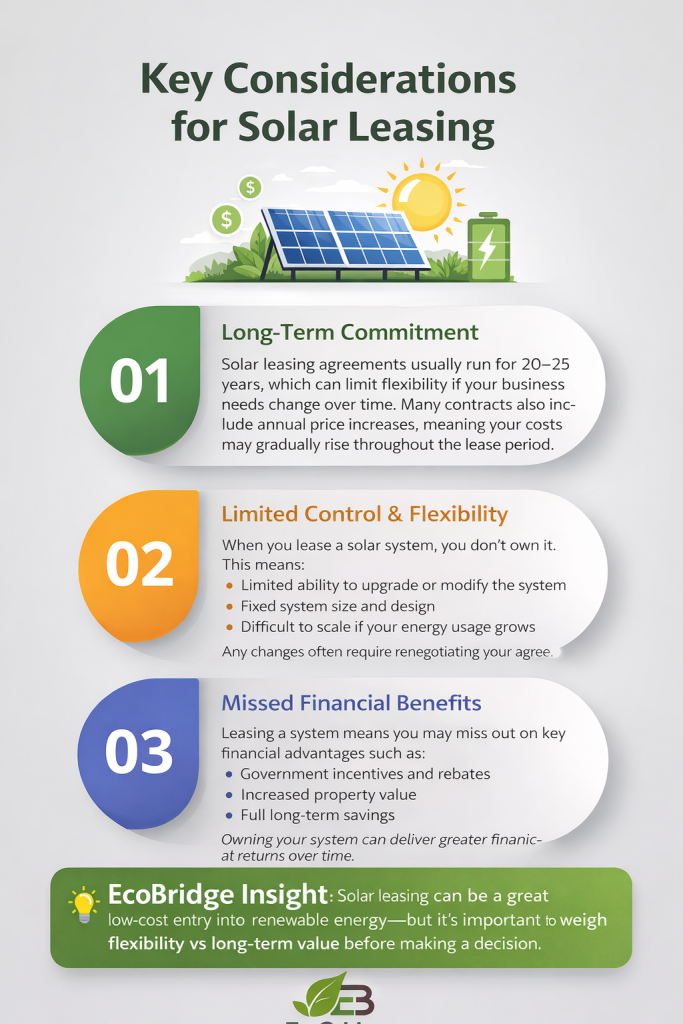
Key Considerations for Solar Leasing

Risks & Considerations


Long-Term Contracts

Most solar leases run for 20–25 years, which can limit flexibility.

  • Early exit fees can be costly
  • Business relocation may complicate agreements


Limited Control

Since you don’t own the system:

  • You can’t easily upgrade technology
  • System expansion may require renegotiation


Complex Agreements

Solar leases can include:

  • Escalation clauses
  • Performance guarantees
  • Hidden fees (insurance, removal costs)

👉 Always review contracts carefully with a professional.


Lower Long-Term Savings

While leasing offers convenience, businesses that purchase systems outright typically enjoy greater lifetime savings.


Final Thoughts Solar Leasing in Australia

Solar leasing can be a smart option for businesses looking to:

  • Reduce energy costs
  • Avoid upfront investment
  • Transition to renewable energy quickly

However, it’s not a one-size-fits-all solution. Factors like business growth, energy usage, and financial goals should guide your decision.


Why Choose EcoBridge Australia?

At EcoBridge Australia, we help businesses:

  • Compare solar financing options
  • Understand leasing vs ownership
  • Maximise savings with tailored solutions

Whether you’re considering leasing or buying, our team provides expert guidance every step of the way.


FAQs

1. Is solar leasing available in Australia?

Yes, many providers offer solar leasing and similar models like Power Purchase Agreements (PPAs) for businesses.


2. How much can my business save?

Most businesses save 10–30% on electricity costs, depending on system size and usage.


3. How long do solar leases last?

Typically 20 to 25 years, depending on the agreement.


4. Who maintains the system?

The solar provider is responsible for all maintenance and repairs.


5. Can I upgrade the system later?

Upgrades can be limited under a lease and may require contract changes.


6. Is leasing better than buying?

Leasing is ideal for low upfront cost, while buying offers higher long-term savings.


🚀 Ready to Go Solar?

Solar leasing could be the key to lowering your business energy costs without upfront investment.

Contact EcoBridge Australia today for expert advice and a FREE consultation