


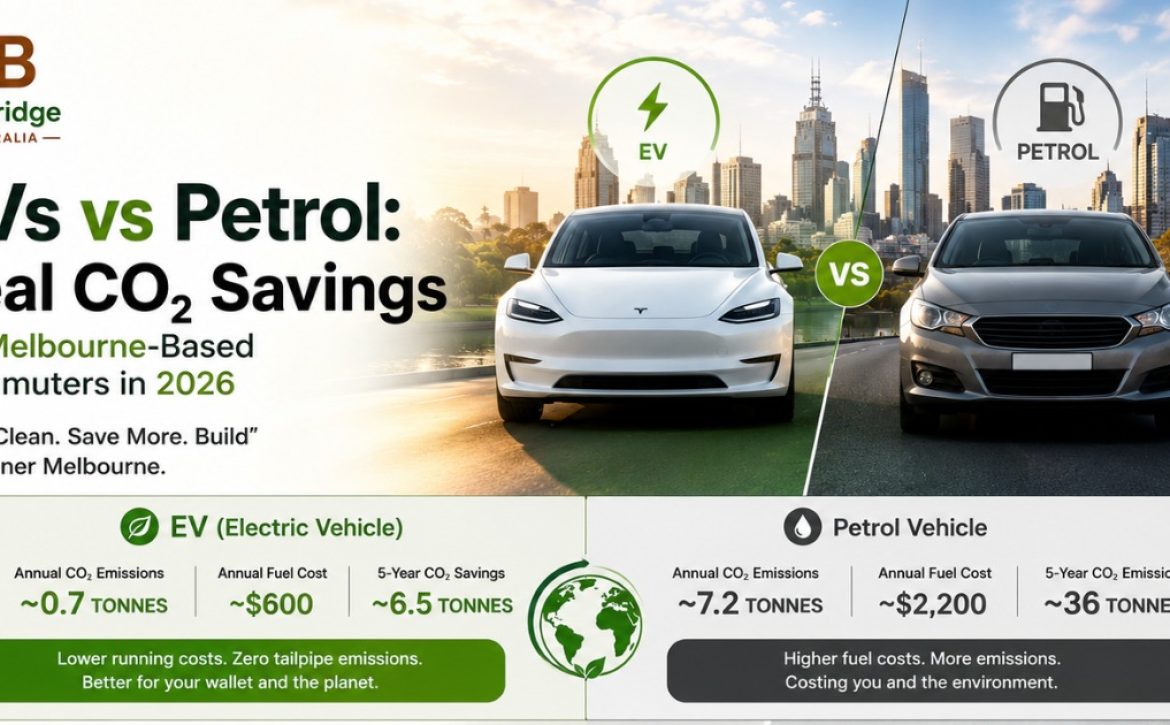
EV vs Petrol Cars: How Much CO2 Can Melbourne Drivers Save in 2026?
Making the switch to an electric vehicle (EV) is one of the most effective ways to reduce your carbon footprint. But have you ever wondered how much carbon dioxide (CO₂) you’re actually saving compared to driving a petrol car?
The answer depends on one important factor—how you charge your EV.
Many Melbourne households are now combining their EVs with rooftop solar and home battery storage to maximise renewable energy use, lower electricity bills, and significantly reduce reliance on the grid.
At EcoBridge Australia, we help homeowners create smarter, more sustainable energy systems that power both their homes and their vehicles.
Let’s explore what the numbers look like for Melbourne commuters in 2026.
EV vs Petrol: The CO₂ Difference
The average Melbourne commuter travels approximately 30–35 km per day, equating to around 8,000–9,000 km annually.
Here’s how the emissions compare.
| Vehicle | Annual CO₂ Emissions | 15-Year Lifecycle* |
|---|---|---|
| Average Petrol Car | 2.5 tonnes | 55 tonnes |
| EV Charged from Grid | 1.5 tonnes | 30 tonnes |
| EV Charged with Solar | Near 0 tonnes | 25 tonnes |
*Approximate lifecycle emissions including manufacturing.
Switching from a petrol vehicle to an EV can reduce transport emissions by 40–60% even when using grid electricity.
Charging your EV using rooftop solar can reduce operational emissions to almost zero.
Why Charging Method Matters
Many EV owners assume their vehicle is completely emissions-free.
However, consider this common scenario:
- You return home from work around 6 pm.
- Your solar panels stopped generating electricity earlier in the afternoon.
- Your EV begins charging from the electricity grid.
Although your vehicle produces no tailpipe emissions, the electricity used may still come from fossil fuel generation.
This is where a home battery makes a significant difference.
How Solar Batteries Make EV Charging Cleaner
A home battery stores excess solar energy generated during the day.
Instead of exporting unused electricity back to the grid, your battery stores it for later use.
When you arrive home:
- Your EV charges using stored solar power.
- Household appliances continue running on renewable energy.
- Dependence on the electricity grid is greatly reduced.
The result is lower emissions, lower electricity costs, and better use of the energy your solar panels produce.
Real CO₂ Savings for Melbourne Households
For a household travelling approximately 35 km per day, annual charging emissions can vary considerably.
| Setup | Annual CO₂ from Charging | Annual Saving vs Petrol |
|---|---|---|
| Petrol Car | 2.5 tonnes | — |
| EV Using Grid Electricity | 1.5 tonnes | 1 tonne |
| EV + Rooftop Solar | 0.3 tonnes | 2.2 tonnes |
| EV + Solar + Battery | Near 0 tonnes | 2.5 tonnes |
A combination of rooftop solar and battery storage delivers the greatest environmental benefits while also reducing long-term energy costs.
Home Battery Rebates Available in Victoria (2026)
Government incentives continue to make battery storage more affordable.
Federal Cheaper Home Batteries Program
Eligible Victorian households can receive approximately 30% off the upfront cost of installing a home battery through the Federal Government’s Cheaper Home Batteries Program.
Key benefits include:
- Available across Victoria
- Covers battery systems from 5–100 kWh
- Approximately $3,300 off a typical 10 kWh battery
- Discount applied at installation
- Most households qualify
- STC values gradually reduce each year until 2030
Installing sooner allows homeowners to secure a higher rebate.
Solar Victoria Solar Panel Rebate
Eligible homeowners installing rooftop solar may still access the Solar Victoria PV Rebate of up to $1,400.
Although this rebate does not apply to batteries, it can be combined with the Federal battery incentive when installing both solar panels and battery storage.
Victorian Energy Upgrades (VEU)
The Victorian Energy Upgrades (VEU) Program supports households upgrading their homes with more energy-efficient technologies, including:
- Heating and cooling
- Heat pump hot water systems
- Energy-efficient lighting
- Other eligible home energy improvements
An accredited provider can help identify available rebates and suitable upgrades.
Why EV Owners Benefit Most from Battery Storage
Adding an EV typically increases household electricity usage significantly.
Without solar and battery storage, this often means:
- Higher electricity bills
- Greater reliance on the grid
- Higher indirect carbon emissions
Adding battery storage allows homeowners to:
- Store excess daytime solar energy
- Charge their EV overnight using renewable electricity
- Reduce household electricity costs
- Improve energy independence
- Maintain backup power during outages (where supported)
For many households, battery storage becomes the natural next step after purchasing an electric vehicle.
Start with a Home Energy Assessment
Every home has different energy usage patterns.
A professional Home Energy Assessment can help determine:
- The right battery size
- Whether your existing solar system is sufficient
- How your EV charging affects household electricity use
- Which government rebates you may qualify for
This personalised assessment helps ensure you invest in the right solution for your home.
Think Beyond Your Vehicle
Reducing emissions isn’t just about changing your car.
Your home’s biggest energy users often include:
- Hot water systems
- Heating and cooling
- Kitchen appliances
- General electricity consumption
Combining rooftop solar, battery storage, efficient heating, and modern hot water systems can dramatically reduce both emissions and ongoing energy costs.
At EcoBridge Australia, we help homeowners take a whole-home approach to clean energy, making it easier to maximise savings while reducing environmental impact.
Ready to Power Your EV with Clean Energy?
Switching to an electric vehicle is a great first step.
The next step is ensuring the electricity powering your vehicle is just as clean.
If you’re considering solar panels, battery storage, or energy-efficient home upgrades, our team can help you understand the best solution for your property and explain the rebates currently available in Victoria.
Contact EcoBridge Australia
📧 Email:info@ecobridgeenergy.com
Website:https://ecobridgeenergy.com/
Book your Home Energy Assessment today and discover how much you could save on energy bills while reducing your household’s carbon footprint.
Frequently Asked Questions (FAQs)
1. How much CO₂ can an EV save compared to a petrol car?
An electric vehicle charged from Victoria’s electricity grid can reduce emissions by around 40–60% compared to a petrol vehicle. Charging with rooftop solar can reduce operational emissions to almost zero.
2. Is it better to charge an EV with solar panels?
Yes. Charging an EV using solar energy significantly lowers your carbon footprint and reduces electricity costs compared to relying solely on the grid.
3. Do I need a battery if I already have solar panels?
Not necessarily, but a battery allows you to store excess solar energy generated during the day and use it to charge your EV or power your home at night, increasing your solar self-consumption.
4. Are battery rebates available in Victoria in 2026?
Yes. Eligible households can access the Federal Government’s Cheaper Home Batteries Program, which provides approximately 30% off eligible battery installations through Small-scale Technology Certificates (STCs).
5. Can I charge my EV at night using stored solar energy?
Yes. With a home battery system, excess solar energy collected during the day can be stored and used to charge your EV after sunset.
6. Will installing a home battery reduce my electricity bills?
Yes. A properly sized battery can reduce reliance on grid electricity, helping lower household energy costs while improving energy independence.
7. Is a Home Energy Assessment worth it?
Absolutely. A Home Energy Assessment provides personalised recommendations based on your home’s energy usage, helping you choose the right solar, battery, and energy-efficiency upgrades.
8. Why choose EcoBridge Australia?
EcoBridge Australia helps homeowners transition to cleaner, more energy-efficient homes through expert advice, energy assessments, and guidance on available government rebates and sustainable energy solutions.
