Is Solar Leasing Right for Your Business?
As energy prices continue to rise across Australia, more businesses are exploring solar as a way to cut costs and improve sustainability. One option gaining traction is solar leasing, which allows companies to access solar power without paying large upfront installation costs.
At EcoBridge Australia, we’ve seen increasing interest in this flexible financing model. But is it the right fit for your business? Let’s break down how it works, along with the advantages and potential drawbacks.
What Is Solar Leasing?
Understanding the Concept
Solar leasing is a financing arrangement that allows businesses to use solar energy without owning the system. Instead of purchasing equipment outright, you pay a monthly fee to access the electricity generated by the solar panels.
This makes it easier for businesses to transition to renewable energy without heavy upfront investment.
How Solar Leasing Works
With a solar lease:
- A solar provider installs the system on your property
- The provider owns and maintains the system
- Your business pays a fixed monthly fee for the energy produced
In most cases, this monthly cost is lower than traditional electricity bills, delivering immediate savings.
Leasing vs Buying Solar Panels
Buying Solar:
- You own the system
- You handle maintenance (or contract it)
- You benefit from full long-term savings and incentives
Leasing Solar:
- No ownership
- No maintenance responsibility
- Lower upfront cost, but reduced long-term financial gains
💡 EcoBridge Tip: Leasing is great for businesses wanting low-risk entry into solar, while purchasing suits those focused on maximum long-term ROI.
Who’s Involved in a Solar Lease?
A typical solar leasing agreement includes:
- Your Business (Lessee): Uses the solar energy and pays a monthly fee
- Solar Provider (Lessor): Installs, owns, and maintains the system
- Utility Provider: Supplies backup electricity when needed
In some cases, financial institutions or energy service providers may also be involved.
Financial Impact of Solar Leasing
Businesses in Australia can typically reduce energy costs by 10% to 30% with a solar lease.
However, it’s important to review contract details carefully. Some agreements include annual price increases (escalators) that can affect long-term savings.
👉 EcoBridge recommends getting expert advice before signing any agreement.
Why Solar Leasing Makes Sense
Immediate Savings
Solar leasing allows businesses to start saving on energy bills from day one, without waiting to recover installation costs.
No Upfront Investment
Traditional solar systems require significant capital. Leasing removes this barrier, allowing businesses to preserve cash flow for other priorities.
Predictable Energy Costs
Fixed monthly payments make budgeting easier and protect against rising electricity prices.
Maintenance-Free Operation
The solar provider handles:
- Repairs
- Monitoring
- Maintenance
This makes leasing a hands-off solution for busy businesses.
Potential Tax Benefits
Lease payments may be considered operating expenses, which can offer tax advantages.
(Always consult a financial advisor for tailored advice.)
Risks & Considerations
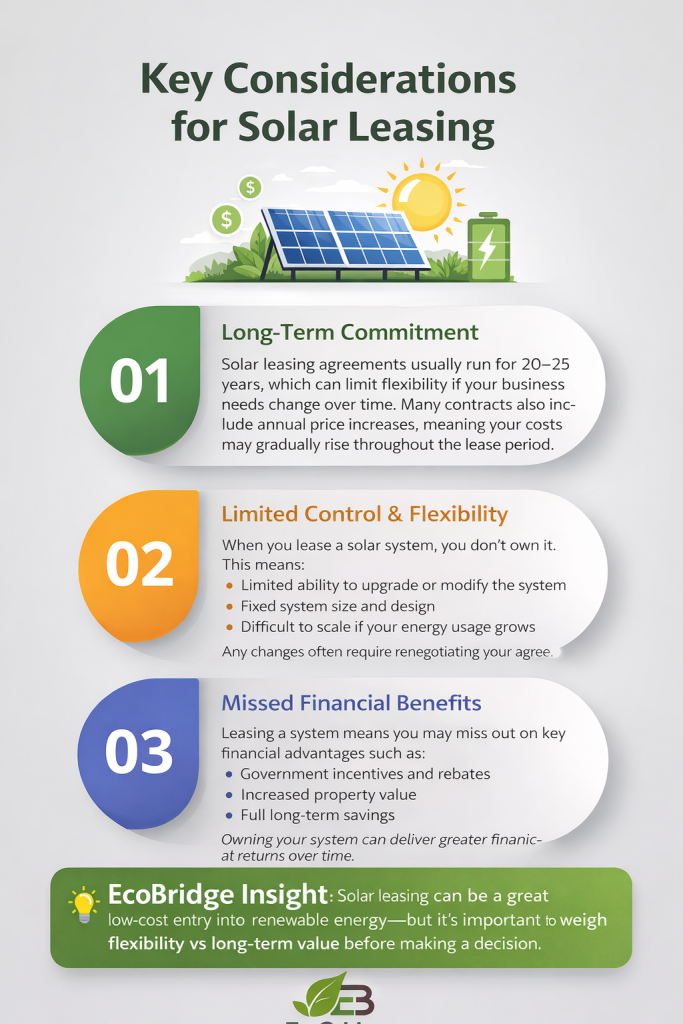
Long-Term Contracts
Most solar leases run for 20–25 years, which can limit flexibility.
- Early exit fees can be costly
- Business relocation may complicate agreements
Limited Control
Since you don’t own the system:
- You can’t easily upgrade technology
- System expansion may require renegotiation
Complex Agreements
Solar leases can include:
- Escalation clauses
- Performance guarantees
- Hidden fees (insurance, removal costs)
👉 Always review contracts carefully with a professional.
Lower Long-Term Savings
While leasing offers convenience, businesses that purchase systems outright typically enjoy greater lifetime savings.
Final Thoughts Solar Leasing in Australia
Solar leasing can be a smart option for businesses looking to:
- Reduce energy costs
- Avoid upfront investment
- Transition to renewable energy quickly
However, it’s not a one-size-fits-all solution. Factors like business growth, energy usage, and financial goals should guide your decision.
Why Choose EcoBridge Australia?
At EcoBridge Australia, we help businesses:
- Compare solar financing options
- Understand leasing vs ownership
- Maximise savings with tailored solutions
Whether you’re considering leasing or buying, our team provides expert guidance every step of the way.
FAQs
1. Is solar leasing available in Australia?
Yes, many providers offer solar leasing and similar models like Power Purchase Agreements (PPAs) for businesses.
2. How much can my business save?
Most businesses save 10–30% on electricity costs, depending on system size and usage.
3. How long do solar leases last?
Typically 20 to 25 years, depending on the agreement.
4. Who maintains the system?
The solar provider is responsible for all maintenance and repairs.
5. Can I upgrade the system later?
Upgrades can be limited under a lease and may require contract changes.
6. Is leasing better than buying?
Leasing is ideal for low upfront cost, while buying offers higher long-term savings.
🚀 Ready to Go Solar?
Solar leasing could be the key to lowering your business energy costs without upfront investment.
Contact EcoBridge Australia today for expert advice and a FREE consultation