Category: Guide for Homes

Read More

The Top 5 Solar Batteries in the UK | EcoBridge

Adding a solar battery to your solar panel system is one of the smartest ways to maximise the value of your solar investment. Instead of exporting unused electricity back to the grid, a battery stores excess energy so you can use it later—during the evening, overnight, or when electricity prices are higher.

With battery storage becoming increasingly popular across the UK, homeowners now have more options than ever. But choosing the right battery depends on your home’s energy usage, future expansion plans, budget, and whether you also want features like EV charging or backup power.

At EcoBridge, we help homeowners across the UK choose and install the most suitable solar battery systems. Here’s our guide to the Top 5 Solar Batteries in the UK for 2026.

Why Install a Solar Battery?

A solar battery helps you:

  • Store excess solar energy instead of exporting it.
  • Increase your solar self-consumption.
  • Reduce reliance on the National Grid.
  • Save more by using stored electricity during peak-rate hours.
  • Pair with smart tariffs to charge batteries when electricity is cheapest.

For many households, battery storage can significantly improve the return on investment from a solar panel system.

Our Top 5 Solar Batteries in the UK (2026)

BatteryBest For
Fox ESSFlexible, scalable systems and excellent value.
Anker SOLIXModern homes looking for stylish expandable storage.
SigEnergyLarge households with high energy demand.
PowervaultUK-made smart battery with AI energy management.
Tesla Powerwall 3Premium all-in-one battery with backup power features.

1. Fox ESS – Best Overall Solar Battery

Fox ESS has become one of the UK’s most popular home battery brands thanks to its flexibility, affordability, and excellent performance.

Why We Recommend Fox ESS

Pros

  • Modular battery sizes from approximately 2.3 kWh to 10.4 kWh.
  • Expandable systems up to around 45 kWh.
  • Compact stacked design saves floor space.
  • Cost-effective to upgrade as your energy needs grow.

Fox ESS is ideal for homeowners who want a future-proof system that can grow alongside additional solar panels, EV chargers, or increased household electricity use.

Cons

  • Installation is more technical than some plug-and-play battery systems.
  • Professional design and installation are recommended for optimal performance.

Best for: Most UK homes looking for a scalable and affordable battery solution.

2. Anker SOLIX – Best Design & Expandability

Anker is well known for consumer electronics, and its SOLIX battery range is quickly gaining popularity in the UK solar market.

Why Choose Anker SOLIX?

Pros

  • Sleek, modern appearance.
  • Expandable modular battery design.
  • Single-phase options between approximately 3.68 kW and 6 kW.
  • Excellent smart monitoring through the Anker app.

Cons

  • Only one stackable battery platform is currently available.
  • Larger storage systems require significant vertical space.

Best for: Homeowners who value aesthetics and smart home integration.

3. SigEnergy – Best for Large Energy Users

SigEnergy combines battery storage, inverter technology, EV charging, and intelligent energy management into one ecosystem.

Why Choose SigEnergy?

Pros

  • Expandable up to around 60 kWh on single-phase systems.
  • High storage capacity for large homes.
  • Integrated smart energy management platform.
  • Suitable for homes with heat pumps and EV charging.

Cons

  • Limited battery module sizes.
  • Module capacities cannot be mixed within one system.

Best for: Large family homes and high electricity consumption households.

4. Powervault – Best UK-Made Smart Battery

Powervault is a British battery manufacturer focused on intelligent home energy storage.

Why Choose Powervault?

Pros

  • Designed and supported in the UK.
  • SMARTSTOR AI software optimises charging and discharging.
  • Learns household energy usage patterns.
  • Strong value for money.

Cons

  • Lower maximum storage capacity than some competitors.
  • Larger storage systems require multiple battery units.

Best for: Homeowners wanting an intelligent battery that automatically maximises savings.

5. Tesla Powerwall 3 – Best Premium Battery

Tesla remains one of the most recognised names in home battery storage.

Why Choose Tesla Powerwall 3?

Pros

  • Integrated hybrid inverter.
  • 13.5 kWh usable battery capacity.
  • High continuous power output.
  • Storm Watch feature prepares for severe weather and potential power outages.
  • Excellent Tesla app and monitoring.

Cons

  • Higher upfront investment.
  • Expanding storage is more expensive than modular battery systems.
  • Earlier Powerwall models are not directly compatible.

Best for: Homeowners wanting a premium, all-in-one battery with backup power capability.

Quick Comparison of the Top 5 Solar Batteries

BatteryScalableBest Feature
Fox ESS✅ Up to 45 kWhAffordable modular expansion.
Anker SOLIX✅ YesStylish design and smart monitoring.
SigEnergy✅ Up to 60 kWhVery large storage capacity.
Powervault✅ Up to 20 kWhAI-powered energy optimisation.
Tesla Powerwall 3⚠ Limited expansionIntegrated inverter and backup power.

Which Solar Battery Is Right for Your Home?

The best battery depends on your household’s electricity usage and future plans.

Your PriorityRecommended Battery
Best overall valueFox ESS
Premium smart batteryTesla Powerwall 3
Large family homeSigEnergy
AI-powered energy savingsPowervault
Modern design and app controlsAnker SOLIX

A professional solar installer can assess your current electricity consumption, solar generation, roof space, and future energy needs before recommending the ideal battery size.

Why Choose EcoBridge for Solar Battery Installation?

EcoBridge provides expert solar battery installation and energy solutions for homeowners across the UK. We help you select the right battery based on your home’s energy requirements and ensure it is installed safely and efficiently.

What You Get with EcoBridge
  • MCS-compliant solar battery installations.
  • Expert advice tailored to your property.
  • High-quality battery brands from trusted manufacturers.
  • Professional installation by qualified engineers.
  • Ongoing support and monitoring guidance.

Whether you’re installing a new solar system or adding battery storage to an existing one, EcoBridge can help you maximise your energy savings.

Contact EcoBridge

EcoBridge Energy

Solar Panels

Battery Storage

EV Chargers

Email: info@ecobridgeenergy.com

Website: https://ecobridgeenergy.com/

Frequently Asked Questions (FAQs)

1. What is the best solar battery in the UK for 2026?

Fox ESS is one of the best all-round choices for many UK homeowners because it offers excellent scalability, strong performance, and competitive pricing. However, the best battery depends on your home’s energy usage and budget.

2. Is a solar battery worth it in the UK?

Yes. A solar battery allows you to store excess solar energy generated during the day and use it later, helping reduce electricity bills and increase your use of renewable energy.

3. How much battery storage does a typical UK home need?

Most UK homes benefit from 5–15 kWh of battery storage, depending on household size, solar panel output, EV charging, and heating systems.

4. Can I add a battery to an existing solar panel system?

Absolutely. Most existing solar PV systems can be upgraded with a compatible battery storage system, although the installation method depends on your current inverter setup.

5. How long do solar batteries last?

Most modern lithium-ion solar batteries last 10–15 years and typically come with warranties of around 10 years, depending on the manufacturer.

6. Can a solar battery power my home during a power cut?

Some batteries, such as the Tesla Powerwall 3, can provide backup power during outages when installed with the appropriate backup configuration. Not all batteries include this feature.

7. Which solar battery is best for homes with an EV charger?

SigEnergy and Fox ESS are excellent choices because they can be expanded for higher energy demand and integrate well with EV charging systems.

8. How much does a solar battery cost in the UK?

The cost typically ranges from £2,500 to £10,000+, depending on battery capacity, brand, installation requirements, and whether an inverter is included.

9. Can I expand my battery storage later?

Yes, many modular battery systems—including Fox ESS, Anker SOLIX, and SigEnergy—allow additional battery modules to be added as your energy needs increase.

10. How do I choose the right solar battery?

Consider your daily electricity consumption, solar panel size, future energy needs (such as EV charging or a heat pump), available installation space, and budget. A professional installer like EcoBridge can recommend the most suitable system for your home.

Final Thoughts

Home battery storage is becoming an essential part of modern solar systems in the UK. Whether you’re looking for affordability, premium features, or maximum storage capacity, there is a battery to suit every household.

At EcoBridge, we help homeowners choose the right battery storage solution to maximise savings, increase energy independence, and get the most from their solar panels.
Read More

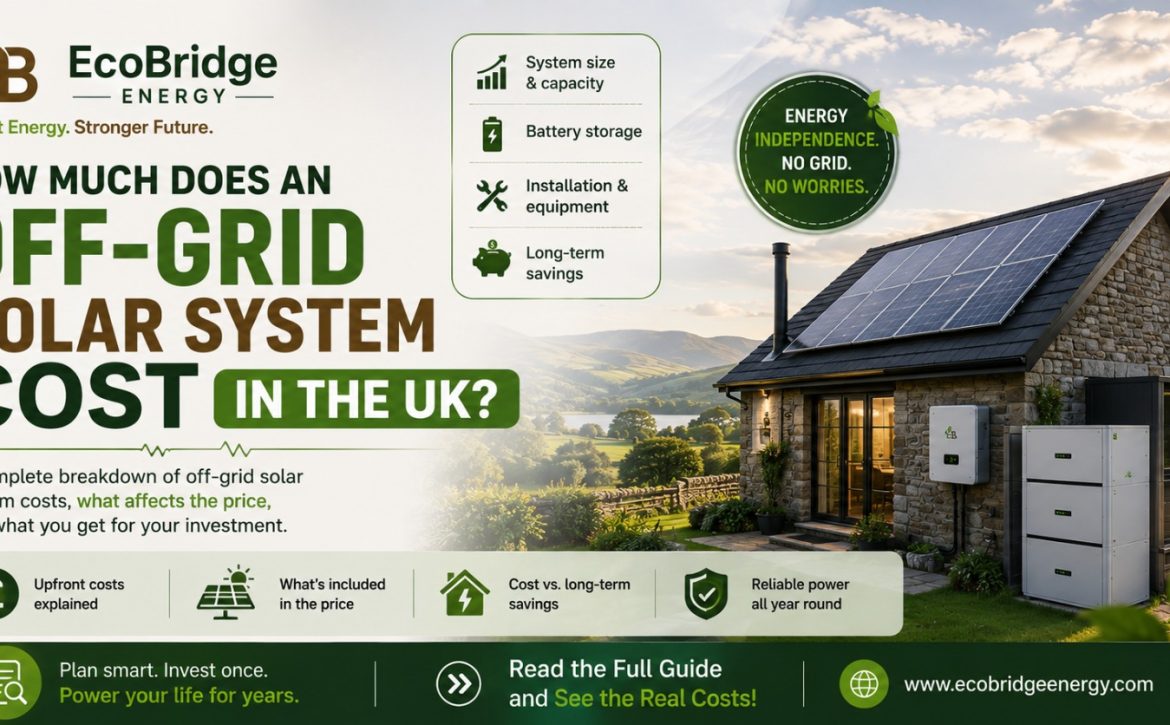
Off-Grid Solar System Costs in the UK: A Complete Homeowner’s Guide

As energy prices continue to fluctuate and homeowners look for greater energy independence, Off-Grid Solar System Cost UK are becoming an increasingly popular solution across the UK. Whether you own a remote countryside property, a cabin, a self-build home, or simply want to reduce your reliance on the National Grid, an off-grid solar system can provide reliable, renewable electricity all year round.

But one of the biggest questions homeowners ask is:

How much does an Off-Grid Solar System Cost UK ?

The answer depends on your property’s energy usage, battery storage requirements, and the size of the solar system you install. In this guide, EcoBridge UK explains the average costs, what’s included, and how to choose the right off-grid setup for your home.


Average Off-Grid Solar System Cost UK

The cost of an off-grid solar installation varies depending on how much electricity your property needs and how much battery backup you want during cloudy days or winter months.

System SizeIdeal ForEstimated Cost
1–2kWGarden offices, cabins, tiny homes, workshops£4,000–£7,000
4–6kWSmall to medium homes (2–3 bedrooms)£12,000–£18,000
8–12kWLarge family homes or rural properties£25,000–£45,000+

These estimates typically include:

  • Solar panels
  • Battery storage system
  • Off-grid inverter
  • Charge controller
  • Mounting equipment
  • Professional installation and commissioning

Unlike grid-connected systems, off-grid installations do not qualify for the Smart Export Guarantee because they do not export electricity back to the grid.


What Is an Off-Grid Solar System?

An off-grid solar system generates and stores electricity independently, allowing your property to operate without being connected to the UK’s electricity network.

A complete off-grid setup includes:

  • Solar panels that generate electricity.
  • Lithium battery storage to store excess energy.
  • An off-grid inverter that creates your home’s electricity supply.
  • Charge controllers that safely manage battery charging.
  • Optional backup generators for extended periods of poor weather.

This setup is particularly suitable for:

  • Remote rural homes.
  • Holiday lodges and cabins.
  • Agricultural buildings.
  • Self-build homes.
  • Properties where connecting to the grid is expensive.

What Affects the Cost of an Off-Grid Solar System?

1. Battery Storage

Battery storage is usually the largest investment in an off-grid system because your home depends on stored electricity overnight and during cloudy weather.

Typical battery costs in 2026:

Battery CapacityEstimated Cost
5kWh£2,500–£4,000
10kWh£5,000–£8,000
15–20kWh£8,000–£14,000+

Larger battery banks provide greater resilience during winter when solar generation is lower.

2. Off-Grid Inverter

Unlike standard solar inverters, off-grid inverters create an independent electrical supply for your home.

Typical cost:

£1,500–£3,500

The inverter manages electricity flowing between solar panels, batteries, and household appliances.

3. Solar Panels

Solar panels convert sunlight into electricity. Costs depend on panel efficiency, brand, and output.

Typical costs:

System SizeSolar Panel Cost
2kW£1,500–£2,500
4–6kW£3,000–£5,000
8–12kW£6,000–£10,000

Premium panels may cost more but often deliver better performance in limited roof space.


Installation Costs in the UK

Professional installation is essential for safety and long-term performance.

Typical installation costs:

Installation TypeCost
Small system£2,000–£3,000
Medium system£3,000–£4,000
Large system£4,000–£5,000+

Installation usually includes:

  • Electrical wiring.
  • Mounting framework.
  • Battery integration.
  • System testing.
  • Safety certification.

How Much Maintenance Does an Off-Grid System Need?

Off-grid systems require very little maintenance, but regular inspections help maximise lifespan.

Maintenance ItemTypical Cost
Annual system inspection£150–£250
Solar panel cleaningAround £100 (if required)
Inverter replacement (12–15 years)£800–£2,000

Most solar panels last 25–30 years, while batteries typically last 10–15 years, depending on usage.


What Can an Off-Grid Solar System Power?

Small System (1–2kW)

Suitable for:

  • LED lighting.
  • Wi-Fi router.
  • Laptop and phone charging.
  • Small refrigerator.
  • Television.
Medium System (4–6kW)

Suitable for:

  • Fridge freezer.
  • Washing machine.
  • Microwave.
  • Home office equipment.
  • Lighting throughout the property.
Large System (8–12kW)

Suitable for:

  • Family homes.
  • Dishwasher.
  • Water pumps.
  • Multiple appliances running simultaneously.
  • Electric vehicle charging (with sufficient battery storage).

Is Off-Grid Solar Worth It?

For many rural properties, yes.

A new connection to the National Grid can cost anywhere from £10,000 to £50,000, particularly in remote locations. In these cases, an off-grid solar system may be the more economical long-term solution.

Potential Return on Investment
ScenarioEstimated Payback
Remote property avoiding grid connectionImmediate to 10 years
Existing home switching off-gridAround 10–15 years

The financial benefits include reduced electricity bills and protection against future energy price rises.


Factors That Influence Your Final Quote

Your quotation will depend on several factors:

  • Daily electricity consumption.
  • Number of occupants.
  • Roof size and orientation.
  • Property location within the UK.
  • Battery capacity required.
  • Ground-mounted versus roof-mounted installation.
  • Backup generator requirements.

A detailed site survey helps determine the right system size for your property.


How to Reduce the Cost of Going Off-Grid

Homeowners can maximise savings by:

Choose Energy-Efficient Appliances

Lower electricity demand means fewer panels and smaller batteries.

Use Electricity During the Day

Run washing machines, dishwashers, and other heavy appliances during peak sunlight hours.

Monitor Battery Performance

Smart monitoring apps help you track energy production and battery levels.

Keep Panels Clean

Removing dirt, leaves, and debris helps maintain maximum energy production throughout the year.


Why Choose EcoBridge UK?

At EcoBridge UK, we design and install tailored off-grid solar systems for homes, farms, self-build projects, and commercial properties across the UK.

What We Offer
  • Free consultation and energy assessment.
  • Custom-designed off-grid solar solutions.
  • Premium solar panels and lithium battery systems.
  • Certified professional installation.
  • Ongoing maintenance and technical support.
  • Transparent pricing with no hidden costs.

Our team helps homeowners build reliable renewable energy systems that are designed for long-term performance and energy independence.


Get Your Free Off-Grid Solar Quote Today

Thinking about living independently from the grid?

EcoBridge UK can help you choose the right solar panels, battery storage, and inverter system for your property’s energy needs.

Contact EcoBridge UK today for a free consultation and personalised off-grid solar quote.

Contact EcoBridge UK

EcoBridge UK – Renewable Energy Specialists

Email: info@ecobridgeenergy.com

Website:https://ecobridgeenergy.com/

Frequently Asked Questions (FAQs)

1. How much does an off-grid solar system cost in the UK?

The average cost of an off-grid solar system in the UK ranges from £4,000 to over £45,000 depending on the size of the system, battery storage capacity, and installation requirements. A typical family home usually requires a 4kW–6kW system costing between £12,000 and £18,000.

2. Can I run my entire house off-grid with solar panels?

Yes. A properly designed off-grid solar system with sufficient solar panels and battery storage can power an entire home. Larger homes typically require 8kW–12kW systems combined with 15kWh–20kWh or more battery storage.

3. Do off-grid solar systems work during winter in the UK?

Yes. Off-grid systems continue generating electricity during winter, although production is lower due to shorter daylight hours. Larger battery storage and efficient energy management help maintain power during cloudy periods.

4. How many batteries do I need for an off-grid solar system?

The number of batteries depends on your daily electricity consumption. Most UK homes require 10kWh to 20kWh of battery storage to provide overnight power and backup during poor weather.

5. Is battery storage included in the price?

Most off-grid solar quotes include battery storage because it is an essential part of the system. Battery capacity significantly influences the overall installation cost.

6. Do I need planning permission for an off-grid solar system?

In many cases, rooftop solar panels fall under permitted development rights in the UK. However, listed buildings, conservation areas, or ground-mounted systems may require planning permission. EcoBridge UK can advise during your site survey.

7. Can I add a backup generator to my off-grid system?

Yes. Many homeowners choose to integrate a petrol or diesel backup generator for additional energy security during extended periods of low solar generation.

8. How long do off-grid solar batteries last?

Modern lithium batteries typically last 10–15 years or between 6,000–10,000 charge cycles, depending on usage and maintenance.

9. Is off-grid solar cheaper than connecting to the National Grid?

For remote properties, off-grid solar can often be more affordable than paying £10,000–£50,000 for a new grid connection. It also provides long-term energy independence.

10. How long does an off-grid solar installation take?

Most residential off-grid solar installations take 2–5 days, depending on system size, battery installation, and property complexity.

11. Can I charge an electric vehicle with an off-grid solar system?

Yes. Larger off-grid systems with adequate battery storage can support EV charging, especially when charging during daylight hours when solar production is highest.

12. Why choose EcoBridge UK for an off-grid solar installation?

EcoBridge UK offers customised off-grid solar solutions, certified installation, premium battery storage systems, transparent pricing, and ongoing maintenance support to help homeowners achieve reliable energy independence.

Read More

Battery Storage Without Solar Panels: Is It Worth It for UK Homes? | EcoBridge

Battery storage is often seen as something that only makes sense alongside solar panels. But that’s changing. Across the UK, more homeowners are asking whether they can install a home battery without solar panels and still reduce their electricity bills.

The short answer is yes — a standalone battery system can work without solar, and for some households it can be a smart investment. With time-of-use electricity tariffs, smart meters, and growing concerns about rising energy costs and power outages, battery-only systems are becoming increasingly popular.

In this guide, EcoBridge explains how standalone battery storage works, when it makes financial sense, and what to consider before installing one.

What Is a Standalone Home Battery?

A standalone Battery Storage Without Solar Panels system is connected to your home’s electrical supply and the National Grid, but not to solar panels.

Instead of storing excess solar energy, the battery charges using electricity from the grid during cheaper off-peak hours. It then powers your home during expensive peak-rate periods, helping you avoid buying electricity when prices are highest.

In simple terms, you’re storing low-cost electricity and using it later when electricity costs more.

How Battery Storage Saves Money Without Solar

The biggest advantage of a battery-only system is energy arbitrage — buying electricity at a low price and using it when prices increase.

Many UK energy suppliers now offer smart tariffs where electricity prices vary throughout the day.

Example of a Typical Time-of-Use Tariff
Time PeriodTypical Electricity Price
Overnight (off-peak)7–10p per kWh
Daytime15–25p per kWh
Evening Peak30–40p per kWh

For example, if your battery charges overnight at 8p per kWh and supplies electricity during a 35p per kWh evening peak, you could save around 27p per unit of electricity used, before accounting for battery efficiency losses.

A 10kWh battery that cycles daily could potentially reduce electricity costs by several hundred pounds per year, depending on your tariff and household usage.

How a Battery-Only System Works

Modern battery systems operate automatically using smart scheduling.

Here’s a typical daily cycle:

  1. Charge overnight during low-cost electricity hours.
  2. Store electricity until it’s needed.
  3. Discharge during peak hours when electricity is most expensive.
  4. Repeat automatically every day based on your tariff settings.

Many batteries integrate with smart meters and supplier tariffs, allowing charging and discharging schedules to be optimised without manual input.

Unlike a solar battery system, however, all electricity still comes from the grid — you’re simply changing when you buy it.

Can a Battery Provide Backup Power During a Power Cut?

Yes — but only if the system is designed for backup power.

A compatible inverter and backup configuration can keep essential circuits running during a power outage, including:

  • Lighting
  • Wi-Fi router
  • Fridge and freezer
  • Heating controls
  • Phone charging
  • Selected sockets

This can provide several hours of backup power depending on battery size and household demand.

It’s important to note that not all battery systems include backup functionality. This feature requires compatible hardware and should be planned during installation.

When Does Battery Storage Without Solar Make Sense?

A standalone battery can be an excellent option in several situations.

Battery-Only May Be Right for You If:
  • Your roof isn’t suitable for solar panels.
  • You use most of your electricity during evenings.
  • You have access to a smart off-peak tariff.
  • You want protection against rising electricity prices.
  • You want backup power during outages.
  • You’re planning to install solar panels in the future and want a compatible battery now.

Households with electric heating, electric vehicles, or high evening electricity use often benefit the most.

When Solar and Battery Is Still the Better Option

For many UK homeowners, combining Battery Storage Without Solar Panels delivers greater long-term value because it can:

  • Reduce electricity imported from the grid.
  • Store surplus solar generation for later use.
  • Earn income through export tariffs.
  • Improve your home’s EPC rating.
  • Increase energy independence.
  • Add appeal to your property for future buyers.

A battery-only system reduces costs through tariff optimisation, while a solar-plus-battery system also generates your oBattery Storage Without Solar Panelswn electricity.

Things to Consider Before Installing a Battery

Tariff Dependency

Savings depend on the difference between off-peak and peak electricity prices. Smaller price differences reduce potential savings.

Battery Efficiency

Most home batteries have a round-trip efficiency of around 85–95%, meaning a small amount of energy is lost during charging and discharging.

Battery Lifespan

Quality lithium batteries are typically designed for 6,000–10,000 charge cycles, which can equate to well over 10 years of daily use.

Future Energy Plans

If you’re considering solar panels later, choosing a battery that is compatible with future solar integration can reduce installation costs down the line.

Is Battery Storage Without Solar Worth It?

The answer depends on your household.

A battery-only system is most worthwhile if:

  • You have a smart tariff with cheap overnight electricity.
  • You consume a significant amount of electricity during expensive evening periods.
  • You value energy resilience during power cuts.
  • You want lower electricity bills without installing solar immediately.

Every home uses electricity differently, so the best way to evaluate savings is by analysing your actual consumption rather than relying on estimates.

Why Choose EcoBridge?

At EcoBridge, we help homeowners across the UK find the most cost-effective battery storage solution for their property and lifestyle.

What EcoBridge Offers
  • Free, no-obligation battery storage consultations.
  • Tailored savings calculations using your electricity usage.
  • Battery-only and solar battery system design.
  • Smart tariff optimisation.
  • Professional installation by qualified engineers.
  • Ongoing support and advice for future solar integration.

Our approach is simple: we recommend solutions based on real household energy data, helping you understand the costs, savings, and long-term benefits before you invest.

Frequently Asked Questions (FAQs)

1. Can I install a home battery without solar panels?

Yes. A standalone battery can be installed without solar panels and charged directly from the National Grid using off-peak electricity tariffs.

2. How does a battery save money without solar?

It charges when electricity is cheapest, usually overnight, and supplies your home during expensive peak-rate hours, reducing the cost of electricity you buy from the grid.

3. Do I need a smart meter for a battery-only system?

A smart meter isn’t always mandatory, but it’s highly recommended because most time-of-use tariffs require one to access cheaper off-peak electricity rates.

4. Which UK tariffs work best with battery storage?

Time-of-use tariffs offered by suppliers such as Octopus Energy, OVO Energy, E.ON Next, and other providers with off-peak pricing are generally the most suitable.

5. Can a battery power my home during a power cut?

Yes, if the battery system includes backup functionality and is installed with a compatible inverter and backup circuit. Not every battery provides this feature as standard.

6. How long does a home battery last?

Most modern lithium battery systems last between 10 and 15 years and are rated for approximately 6,000 to 10,000 charging cycles.

7. Can I add solar panels to my battery later?

Yes. Many battery systems are designed to be compatible with future solar PV installations, making it possible to expand your energy system later.

8. Is battery storage without solar worth it in the UK?

It can be, especially for households with high evening electricity usage, access to low overnight tariffs, and a desire for backup power or protection against rising energy prices.

9. What size battery do I need without solar?

The right battery size depends on your daily electricity consumption and how much energy you want to shift from off-peak to peak hours. Many homes choose systems between 5kWh and 15kWh.

10. How can EcoBridge help me choose the right battery?

EcoBridge analyses your electricity usage, tariff, budget, and future energy plans to recommend the battery system that offers the best value and realistic long-term savings.